
Wilhelm Furtwängler rose to the most important conductorships available, replacing Richard Strauss at the Staatskapelle Berlin in 1920, and then, following the sudden death of Arthur Nikisch, the Leipzig Gewandhaus Orchestra and the Berlin Philharmonic. Through the 1930s and ‘40s, his career was defined by his opposition to Nazism, and the determination of the regime to use his international reputation as propaganda to promote their cause. But in his own estimation, Furtwängler was most importantly a composer, and he learned to conduct primarily so he could promote his own works. He wrote three symphonies, of which the second, performed by the Estonian national Symphony Orchestra under the direction of Neeme Järvi, is the best known. Furtwängler completed it in Switzerland shortly after fleeing Nazi Germany to evade arrest by the Gestapo on suspicion of involvement with resistance activity. The 74-minute work in four movements shows more influence from composers like Bruckner, Mahler, and Wagner than his contemporaries such as Bartók, Hindemith, or Schoenberg.

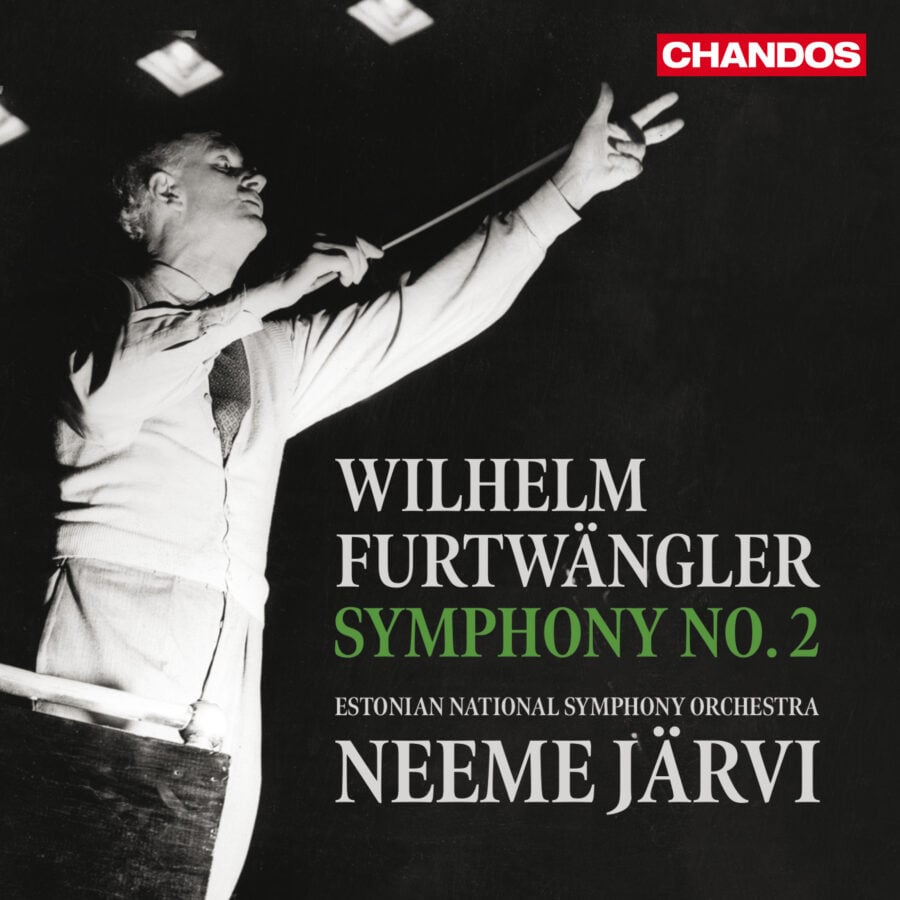
Furtwängler: Symphony No. 2 in E Minor
Similar Releases
-
 Alfven & Rautavaara: Orchestral WorksNeeme Järvi, Gothenburg Symphony Orchestra
 -
 A Romantic From Kharkiv: Music of Sergei BortkiewiczAnna Shelest, Estonian National Symphony Orchestra, Neeme Järvi
 -
 While the Flood RagesMax Richter, Tenebrae, John Parricelli
 -
 Resound: Music by British ComposersJohn Andrews, Manchester Camerata, Rachael Clegg, Alex Mitchell, Alexandra Dariescu
 -
 AmourCity of Prague Philharmonic Orchestra, Esther Abrami, Irene Delgado-Jiménez
 -
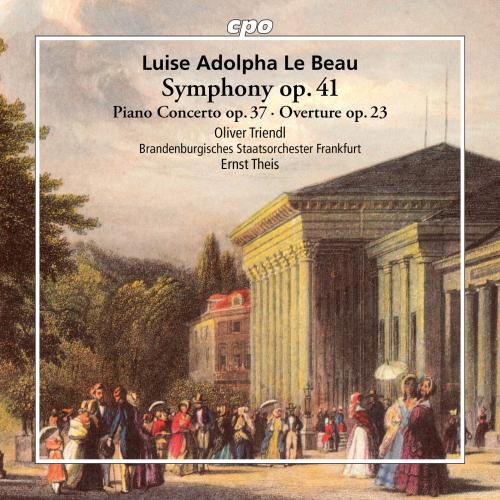 Luise Adolpha le Beau: Symphony Op. 41; Piano Concerto Op. 37; Overture Op. 23Ernst Theis, Brandenburg State Orchestra, Oliver Triendl