A wide variety of music is showcased in the selection for this week’s new releases. Two beloved choral groups — Cantus and The St. Charles Singers — present world premiere recordings of works written expressly for them; Italy’s influence on the development of violin music and symphonies are explored by Duo Dorado and the Munich Chamber Orchestra; and a leading scholar-pianist continues her survey of the complete piano works of Louise Farrenc.
New Releases August 25: Maria Stratigou, Cantus, and more
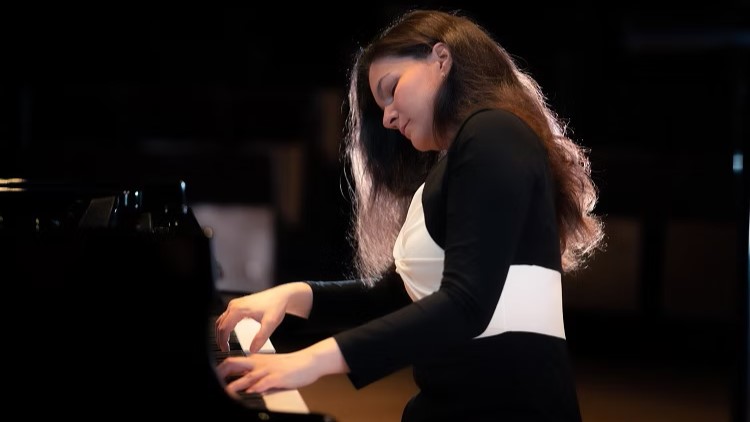
Maria Stratigou (Photo: Artist's website)

Cantus’s new album new album examines stories of forbidden love discovered in passionate letters spanning millennia. Music by composers including Abbie Betinis, Mohammed Fairouz, Leoš Janáček, Libby Larsen, Francis Poulenc, Steven Sametz, Mari Esabel Valverde, and Consuelito Velázquez woven together with excerpts from letters by Marcus Aurelius, Oscar Wilde, Walt Whitman, Emily Dickinson, and others whose stories bear witness and celebrate queer love that has always existed. “This program aims to shed light on the resilience and courage of those who dared to love boldly, despite the risks and obstacles they faced,” says Cantus baritone Rod Kelly Hines. “From Canto a Eleggua by the Afro-Cuban group Sexto Sentido that we’ve included because of its themes of unity and social justice, to Saunder Choi’s new work Light Years to Lebanon that tells the story of lovers forcefully separated by war and exile, The Secret Letter celebrates the indomitable spirit and timeless allure of love.”
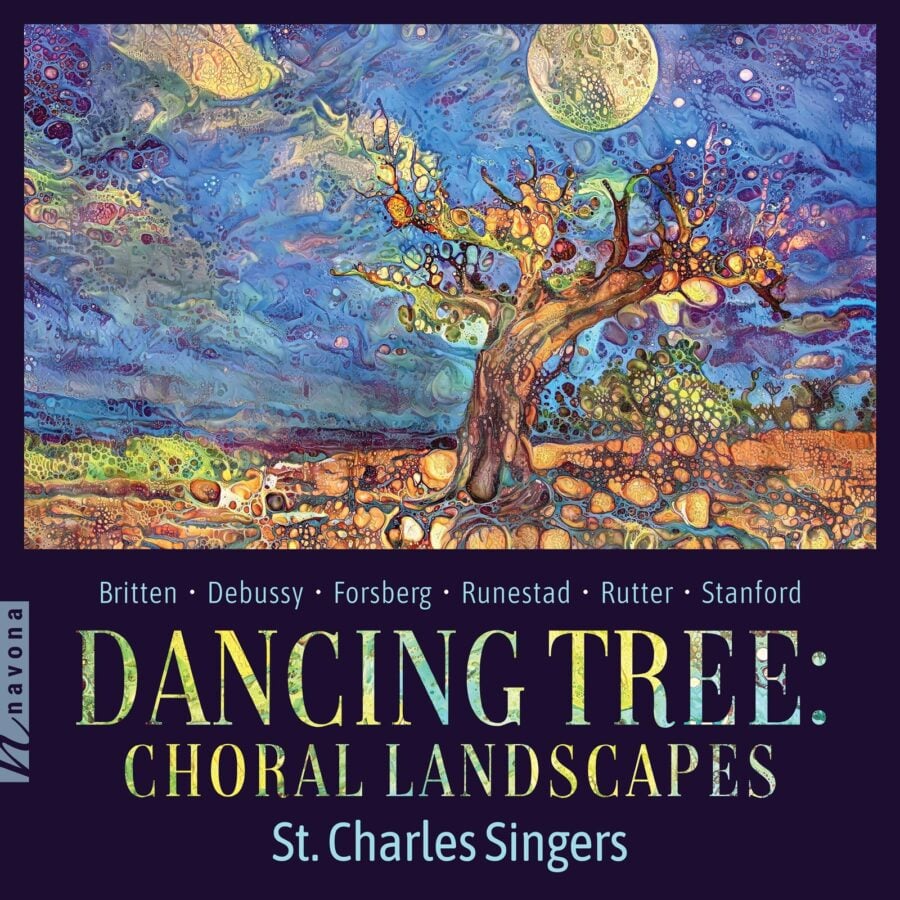
The latest album from the St. Charles Singers, led by founder and music director Jeffrey Hunt, centers two works written expressly for them. In the spring of 2025, the St. Charles Singers and harpist Erin Freund gave the John Rutter’s Dancing Tree, a suite of eight songs with harp accompaniment on texts by the 20th century British poet Charles Causley. “The music is quintessential John Rutter,” Hunt says. “It reflects his own heartfelt connection to nature and admiration for English folk music.” Scored for choir, cello, and piano, Cello Songs by Jake Runestad was premiered by the St. Charles Singers with cellist Cameron Grimes and pianist Stephen Uhl in October of 2021. With text by poet Todd Boss, the work’s four movements are named for the seasons of the year. For the world premiere recording, the choir is accompanied by Stephen Uhl and Jean Hatmaker, a favorite Chicago-area cellist. The program is rounded out with some of the ensemble’s signature repertoire that fits the album’s theme of nature: Stanford’s “The Blue Bird,” Debussy’s Trois Chansons, Britten’s Hymn to St. Cecilia, and Charles Forsberg’s “Buttercup Days,” commissioned by the St. Charles Singers in 1998.
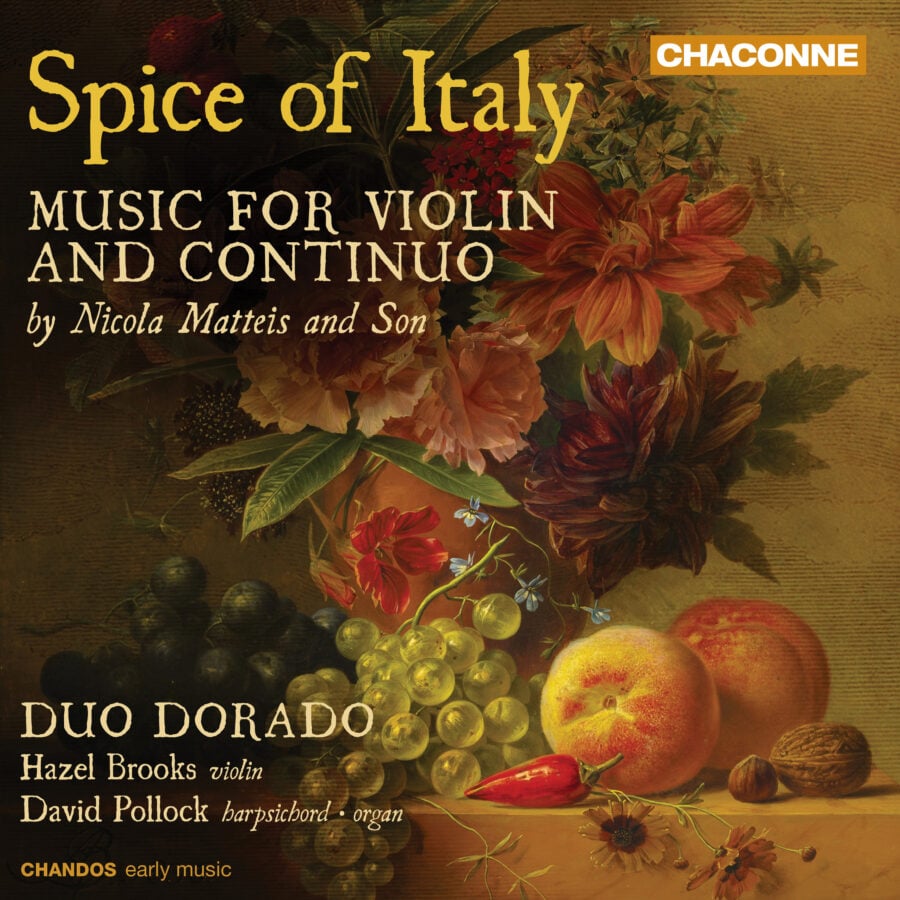
Duo Dorado presents virtuoso violin music by Nicola Matteis and his son by the same name. It was Matteis’s playing that helped draw taste in restoration London from the French to the Italian style. The elder Matteis is thought to have arrived in London from Naples in the late 1660s, the first significant Italian violinist to arrive in England. As Hazel Brooks says in the album notes: “His influence, through his performing, teaching, and publications, cannot be overestimated. Violin playing and musical taste shifted wholeheartedly towards the Italian style, and in [biographer Roger] North’s words, which inspired the title of this recording, ‘nothing in towne had a relish without a spice of Itally.’” Trained by his father, the younger Nicola was also a notable violin virtuoso who emigrated to Vienna to take up a post at the Imperial Court.
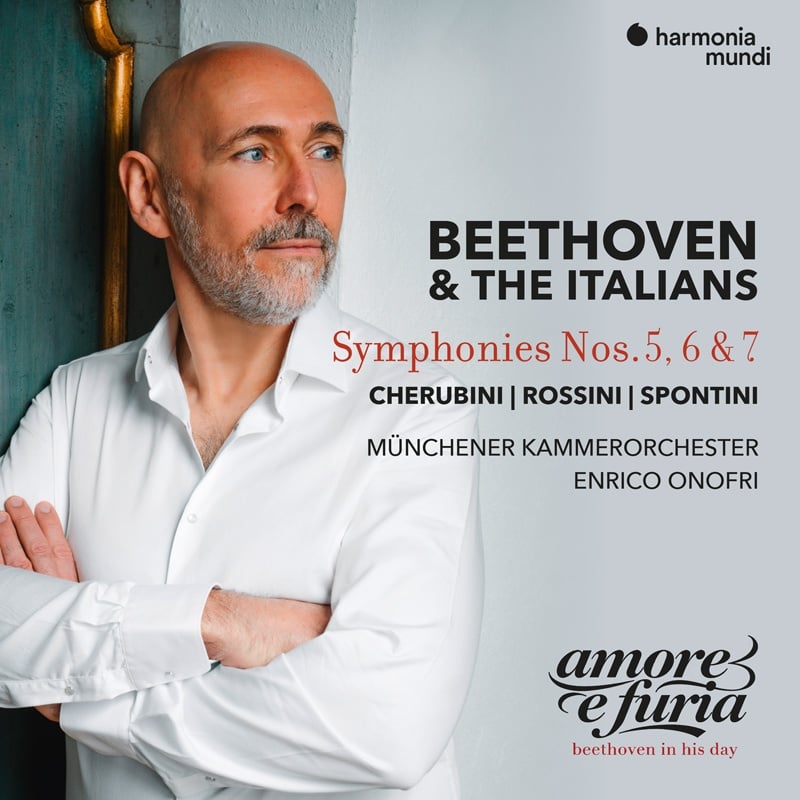
As an admirer of Luigi Cherubini, an attentive follower of Gaspare Spontini’s dramatic daring, and a critical but deeply fascinated witness of Gioachino Rossini’s public success, Beethoven was shaping his language in a musical landscape in which the symphony was in constant dialogue with the opera. This fertile state of tension has been newly uncovered by Enrico Onofri and the Munich Chamber Orchestra. Heard alongside overtures from Cherubini’s Médée, Rossini’s Guillaume Tell, and Spontini’s Olimpie, Beethoven’s Fifth, Sixth, and Seventh symphonies appear newly charged with a theatrical urgency, dramatic impulse, and unparalleled intensity. The 3-CD album also includes Cherubini’s Symphony in D major and the world premiere recording of the alternate finale of the second movement of Beethoven’s “Pastoral” Symphony.
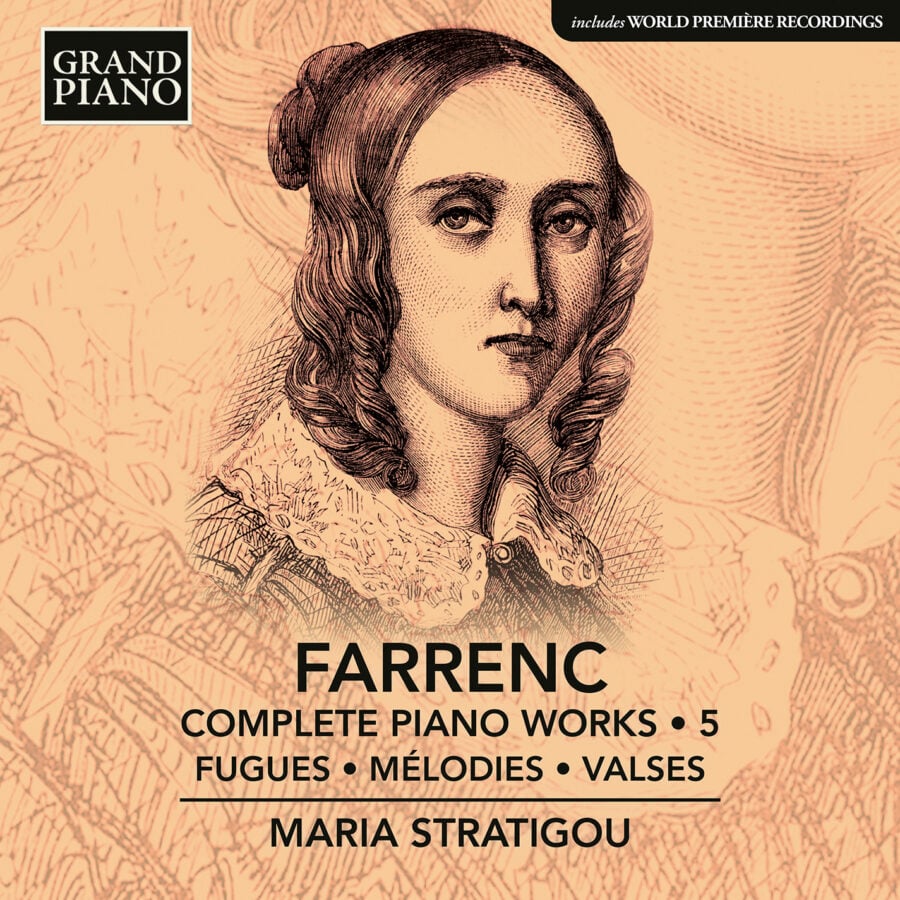
Pianist and musicologist Maria Stratigou is one of the leading scholars in 19th century music by women composers with a specific expertise in the piano works of Louise Farrenc. Her fifth volume of recordings dedicated to Farrenc collects fugues, melodies, and waltzes. Farrenc’s graceful Mélodie in A flat major was included in an 1846 anthology of works by an array of composers inspired by Beethoven’s music. The Impromptu in B minor appeared in another publication, Vogt’s Musical Album of Autographs, alongside compositions by 62 other musicians including Berlioz, Gounod, and Liszt. The fugues were never published in Farrenc’s lifetime and are heard here in a world-premiere recording.