
Inspired by the polyptchs (altarpieces composed of multiple panels, often depicting scenes from the Bible or religious figures) of the 14th century Italian painter Duccio, Swiss composer Frank Martin composed a work in six tableaux based on the Passion of Christ. Polyptyque, a concerto for violin and two small orchestras rooted in the music of Bach, Martin sets out to transpose musically the scenes of the Crucifixion. Polyptyque is the centerpiece for the new recording by violinist Marianne Piketty and her Concert Idéal, a string ensemble that tackles repertoire ranging from the 18th century to contemporary with an emhasis on world music and women composers. Martin’s concerto is interspersed with works by Vivaldi, Bach, Lotti and Victoria, like so many tableaux responding to Poylptyque. By opening up a dialogue between ancient and modern, sacred and secular, Marianne Piketty explores the continuum of human emotions, reminding us that they are at once universal and ephemeral, and yet a source of beauty and plenitude.

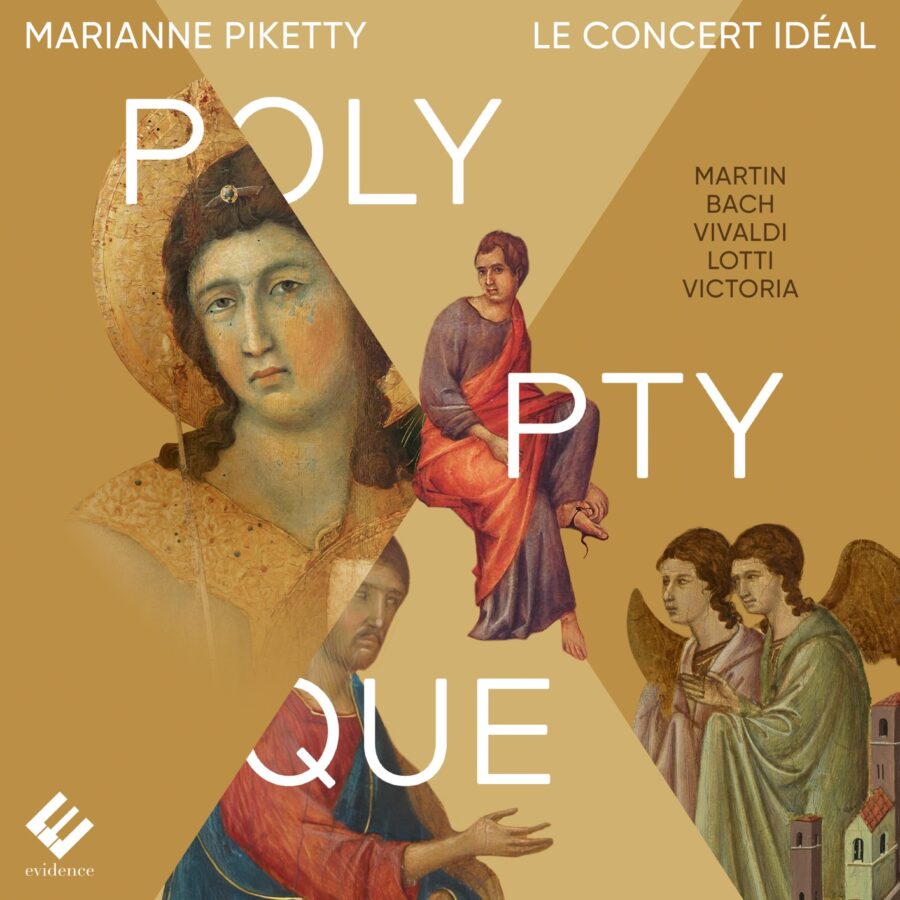

Inspired by medieval altarpieces, Frank Martin’s Polyptyque feels both ancient and deeply human, and Piketty’s violin brings it all to life with warmth and clarity. Between the work’s six scenes, short pieces by Vivaldi, Bach, Lotti, and Victoria act like little echoes across time — a moving back-and-forth between old and new. Starting with the first tableau of Polyptyque pulls you right into the emotional world they’ve built.
Similar Releases
-
 Hough: Piano Concerto, Sonatina & PartitaStephen Hough, Mark Elder, The Hallé
 -
 Mozart: Piano Concertos Nos. 9 & 22Jan Lisiecki, Bamberger Symphoniker, Manfred Honeck
 -

 Close HarmonyKing's Singers
 -
 Clair de LuneSakura Cello Quintet
 -
 Baroque ConcertosTrevor Pinnock, Alison Balsom, Pinnock's Players
 -
 Haydn 2032, Vol. 18: Il maestro di scuolaKammerorchester Basel, Giovanni Antonini