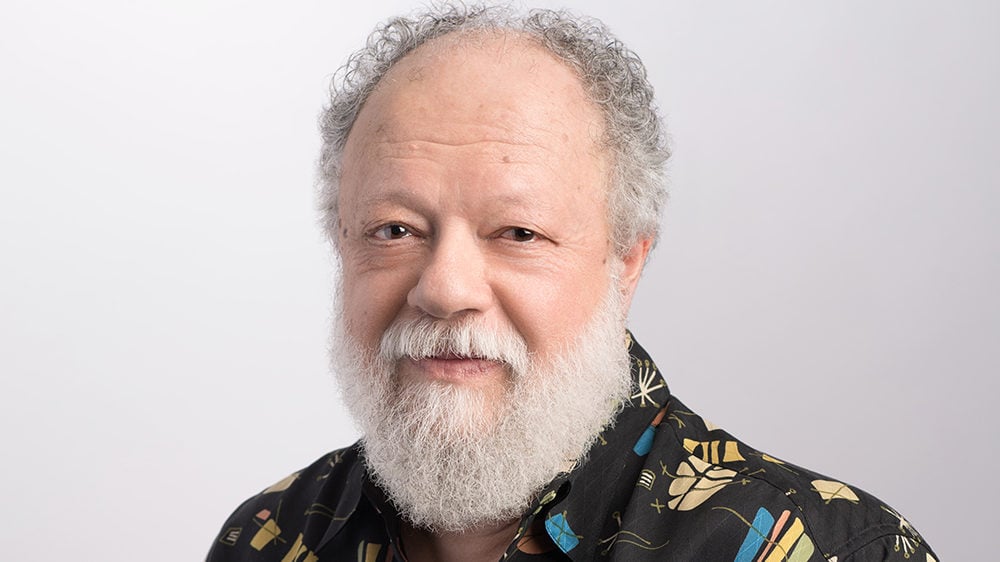
Kerry Frumkin
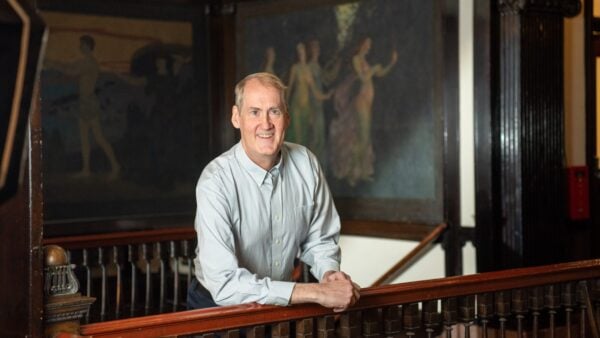
This week marks the retirement of WFMT’s award-winning announcer Kerry Frumkin. After a distinguished career and countless memorable broadcasts, today we celebrate his final regular shifts on the air with deep gratitude and admiration.
In anticipation of this bittersweet occasion, we sat down with Kerry, whose voice in conversation is every bit as warm and sonorous as it is on the air.
“I love doing this,” Kerry reflects on his time at WFMT. “It’s not like a job. It’s something that’s become a part of me!”
Kerry grew up in the Chicago area, and his parents were avid WFMT fans. “I grew up with classical music in my house all the time. The value of WFMT was enormous to them, and I think it passed onto me as well.” This helped nurture his lifelong love for music. He took up the piano and brass instruments, playing in high school orchestras and bands. “I suppose you could call me a musician — a bad one — in grammar school and high school, but I never thought I was good enough to be a professional,” he recalls, with characteristic modesty.
When he got to college at the University of Wisconsin, Kerry became involved with the campus radio station.
And he never looked back. “Music was always my love. And if I wasn’t going to be able to make music myself, I was going to make sure to be a good and informed listener. The importance was being able to share what I love with other people.”
Before long, he was the program director of Wisconsin Public Radio. And in 1976, he arrived at WFMT.
Pivotal figures of WFMT history made their mark on his career: Lois Baum, Ray Nordstrand, and Norm Pellegrini. Especially through Pellegrini, the station’s longtime and influential program director, Kerry recalls, “we were encouraged to do whatever we wanted to do.” For him, that was getting involved with the Profiles series, which spoke with influential musicians. And through these assignments, he discovered a love for interviewing artists. Over the course of his time at WFMT, he would interview some of the most respected figures in the field, from Carlo Maria Giulini to Itzhak Perlman to Jessye Norman.
And then, there was Studs Terkel. “He would do many of his programs live. If you were doing a shift that happened to correspond with his program, you would just simply engineer the program for him. He would come with a list of records that he wanted to play or with some amazing guest. It was all kind of spontaneous but in the process, you were not only working with this amazing human being, but you’d also get to hear these recordings that he would sprinkle through the program. Woody Guthrie or Mahalia Jackson. He opened my ears to a lot of wonderful things.”
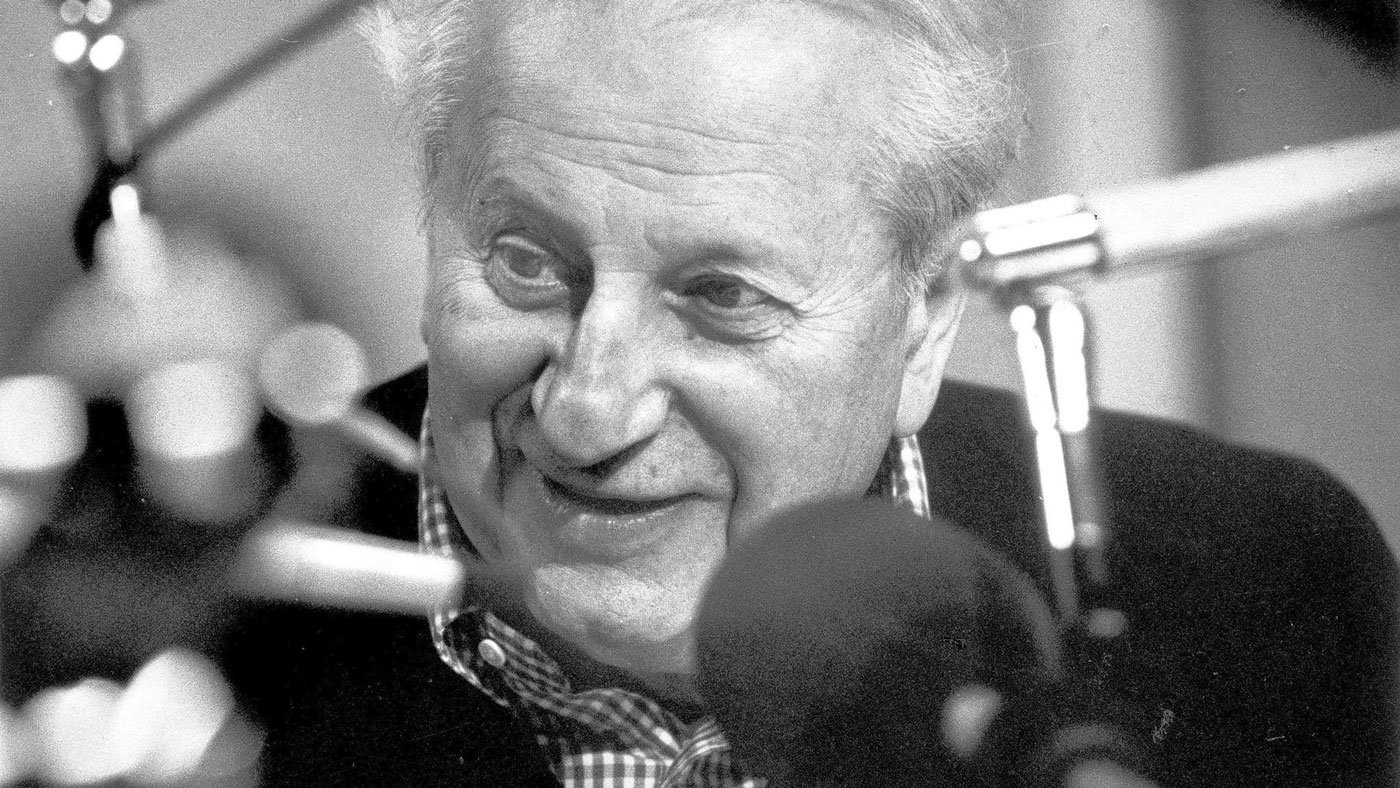
Studs Terkel
That spirit of discovery has continued throughout his career. With a grin, he reflects that “just wandering through the amazing music library can be just a journey. There’s just about everything you’d want here musically…”
Over his decades at WFMT, the highlights have been countless — hosting CSO broadcasts and Dame Myra Hess Memorial Concerts and Ravinia performances. Other extraordinary memories include collaborations with Kurt Masur when producing the New York Philharmonic series and “an amazing morning” interviewing Leontyne Price. And a noteworthy career moment came in 1981, winning the Peabody Award for producing the radio drama series of Homer’s Odyssey with Yuri Raskovsky.
A guiding philosophy has shaped his work: “sharing is the essential element. Always making sure that the focus is on the music and not on me. I’m there to just let you know why I love what I’m presenting and not draw attention to myself as a personality.”
So, as usual his final Friday evening shift will be all about the music. “I’ll certainly be playing something by Schubert; he’s probably one of my favorite composers. His music is deeply human. He speaks to me!” He’ll also feature recordings by Giulini and Carlos Kleiber — another legendary conductor who Kerry got to interview at WFMT.
As for what Kerry’s future holds? Listeners will still hear his familiar voice WFMT’s upcoming Ravinia Festival series. And he’s looking forward to spending time with family and enjoying life. “I plan to relax a little bit and go to a lot of concerts. Do a lot of reading. Do a lot of swimming.”
It’s a fitting finale for a career dedicated to music and its unifying power. “Especially in difficult times,” he concludes, “we need music more than ever.”