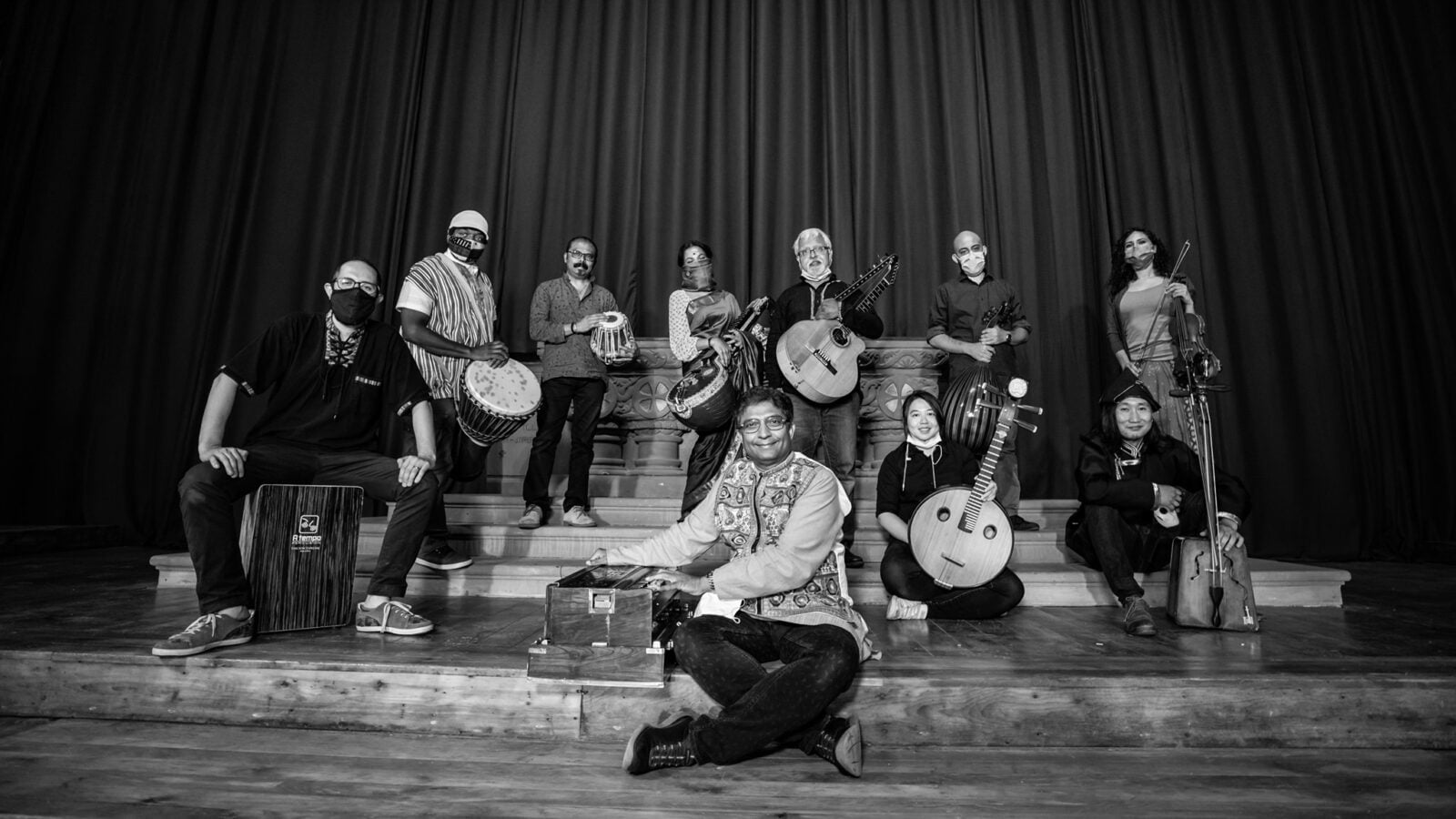
Chicago Immigrant Orchestra poses for promotional photo (Photo: Chicago Immigrant Orchestra)
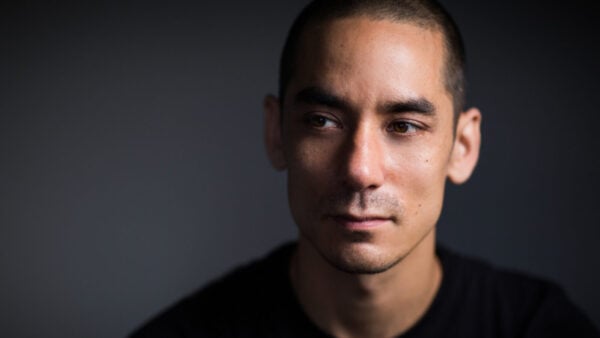
Fareed Haque is an American guitarist and composer with Pakistani and Chilean roots. Wanees Zarour is an award-winning Palestinian-American composer and an accomplished player of the oud, buzuq, and violin. This weekend, the two collaborators are preparing to release an album at the Epiphany Center – the venue that housed the very first Chicago Immigrant Orchestra concert five years ago. Yet the roots of this Chicago-based ensemble of immigrants stretches back much further than the pandemic of 2020.
The original Chicago Immigrant Orchestra was first founded in 1999 by the Chicago Department of Cultural Affairs. Spearheaded by Michael Orlove, the ensemble was founded in tandem with the Chicago World Music Festival. “For several years, [the orchestra] was one of the headliners, and kind of a staple,” mentions Zarour. “Michael Orlove put the group together himself, and the original vision was similar to ours in many ways: to represent Chicago’s musical landscape.”
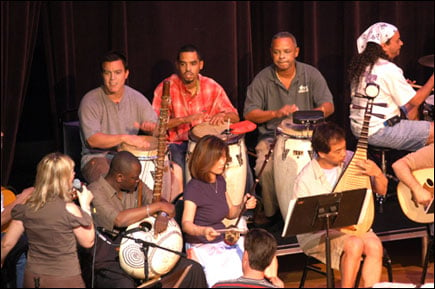
Chicago Immigrant Orchestra circa 2004 (Photo: Willy Schwartz)
After its initial five-year contract ran out, The Chicago Immigrant Orchestra went on indefinite hiatus in 2004. Twenty years went by before Carlos Tortolero, DCASE’s cultural affairs coordinator, and World Music Festival curator/producer David Chavez reached out to Haque and Zarour to explore whether the two artists might be interested in reviving the group.
Haque recalls, “When they asked us to re-up the orchestra, we grabbed it with both fists and have been going ever since.”
After accepting roles as co-directors of the new Chicago Immigrant Orchestra, Haque and Zarour dedicated months to finding the right musicians. Then, the pandemic hit. The group was first scheduled to debut at the World Music Festival, then the Epiphany Arts Center, but changing guidelines forced the concert to be scaled down to a video recording instead. “Most of us had never played with each other before,” Zarour remembers.
It turned out that some shared music was all these strangers needed. “All of these musicians from different backgrounds, speaking different languages musically and culturally, were able to blend together almost effortlessly,” Haque marvels.
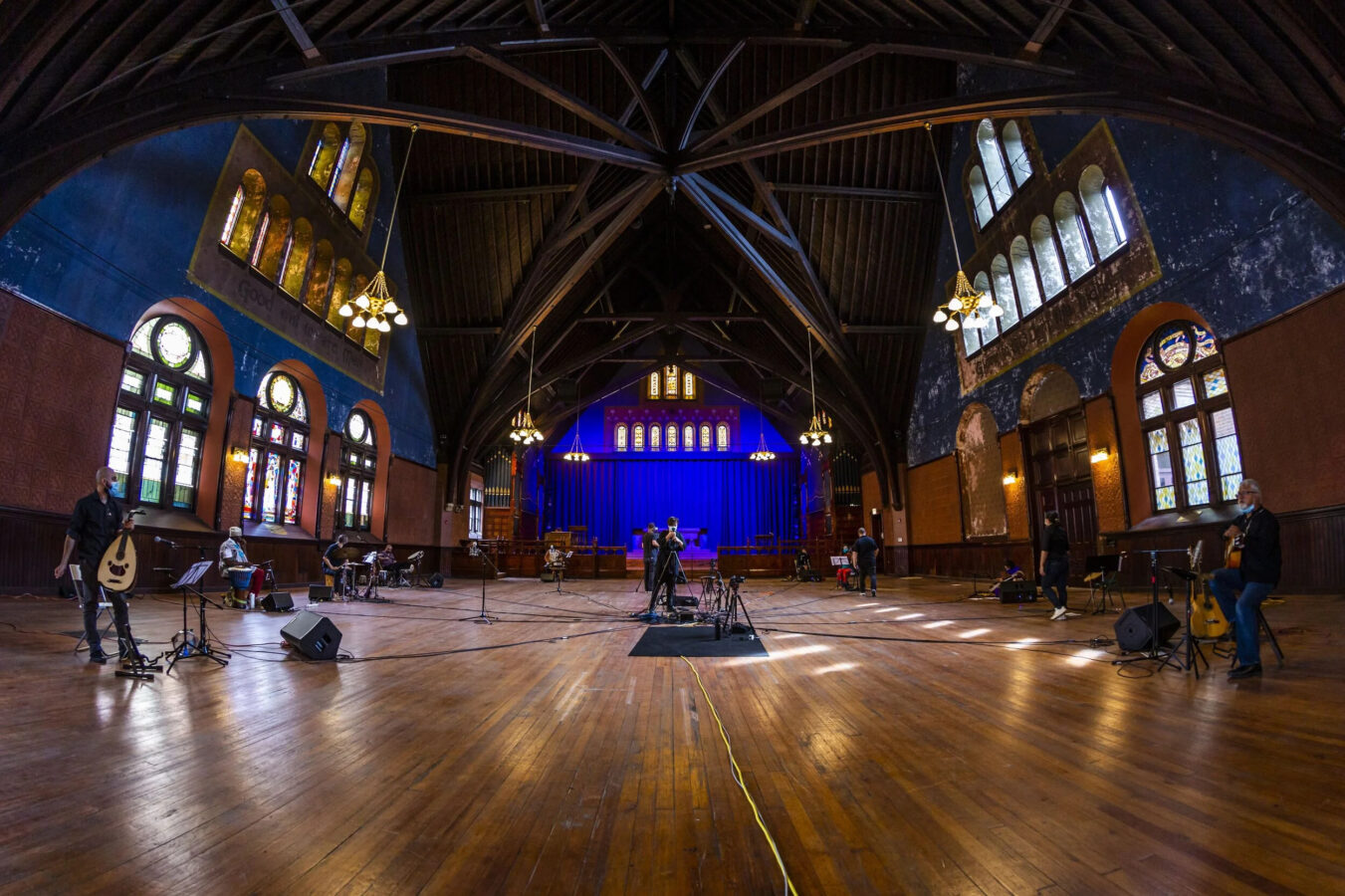
Chicago Immigrant Orchestra recording at the Epiphany Center for the Arts, 2020 (Photo: Christopher Andrew)
The current members of Chicago Immigrant Orchestra were handpicked to include cultures from all corners of Chicago’s immigrant communities, and the list of instruments is extensive, ranging from more Western instruments such as violin and guitar, to Chinese zhongruan, veena, horsehair fiddle, and oud, not to mention dozens of different percussion instruments.
Preserving folk songs of various traditions is a cornerstone of the CIO. Zarour explains, “Most world music groups represent one tradition. Or if they represent multiple traditions, it’s more like a collage than a tapestry. What we’re doing is a little different.”
The biggest factor in helping the group achieve cohesive, intricate arrangements across cultural and language barriers is, simply, humility. “Rarely do we have a situation where two people are trying to compete for the same role in the music,” says Haque. “And there have been many instances where we arranged a song literally on stage as we were playing.”
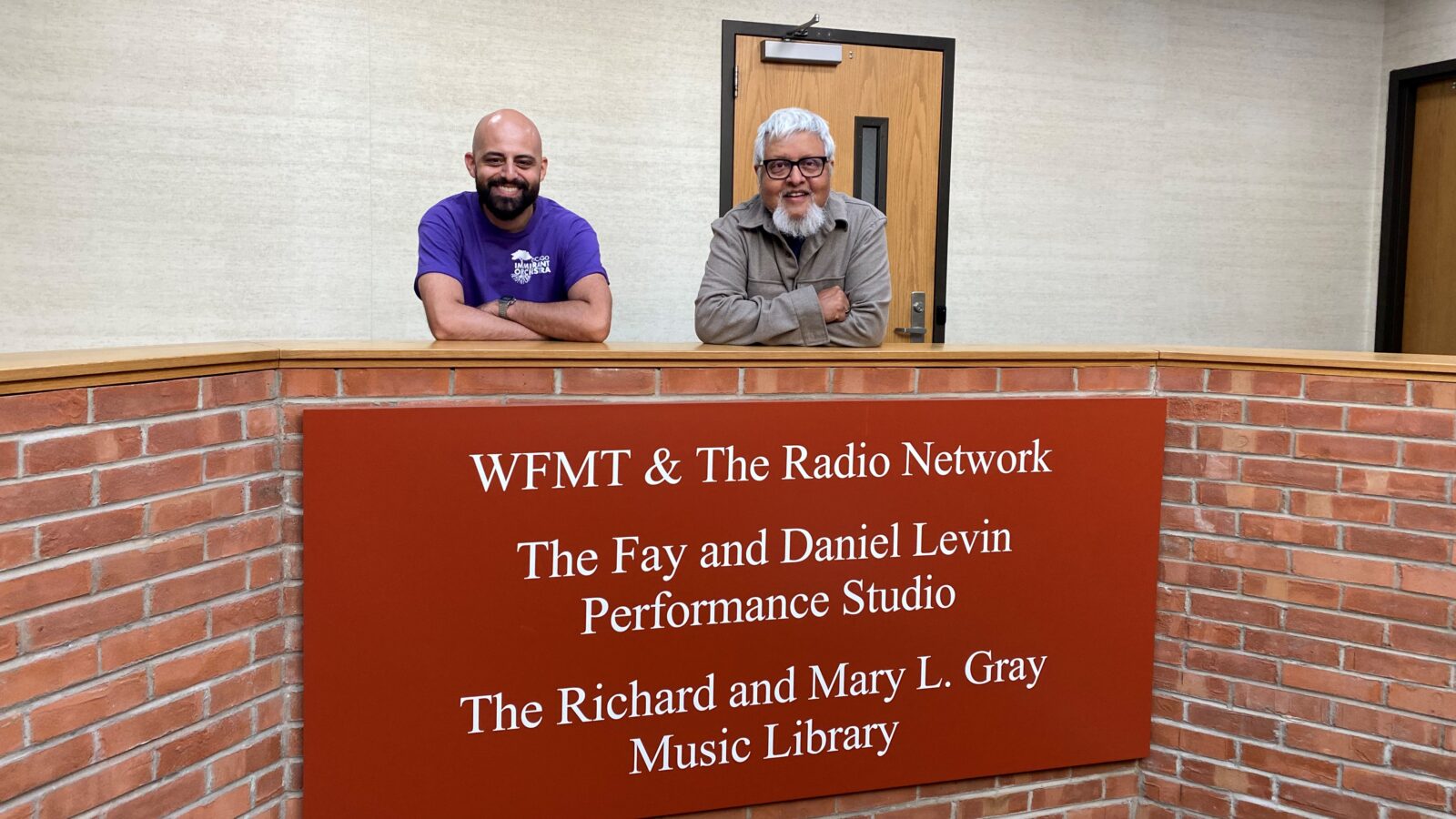
Wanees Zarour and Fareed Haque at WFMT (Photo: WFMT)
Any differences that do come up are worked out through rehearsals – or as Haque calls them, parties. “Somebody brings in food, people are having a good time, and we allow everyone’s different processes to happen – we don’t rush it.”
The importance of the CIO’s visibility as a united front of immigrants isn’t lost on them; especially as the release of their new album coincides with heightened levels of federal involvement in Chicago deportations. Zarour explains, “We consciously decided to keep the name Chicago Immigrant Orchestra, despite several suggestions to change it to the World Music Orchestra or something like that.” Even the name of the new album, Sanctuary, is intentional. Haque adds, “We, in our own way, are doing what we can to represent the sanctuary that Chicago and Illinois are providing on the national scene. It’s the idea that all of us are going to have to venture out of our comfort zones for us to be able to acknowledge your own understanding of culture while also appreciating someone else’s, for the sum of the parts to be greater than the individuals.”
This interview has been edited for length and clarity. “Sanctuary” releases on September 14, 2025.