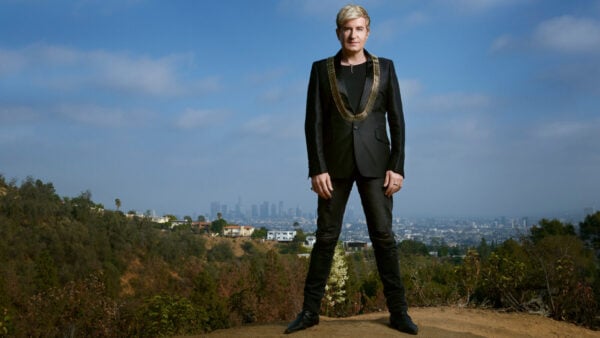
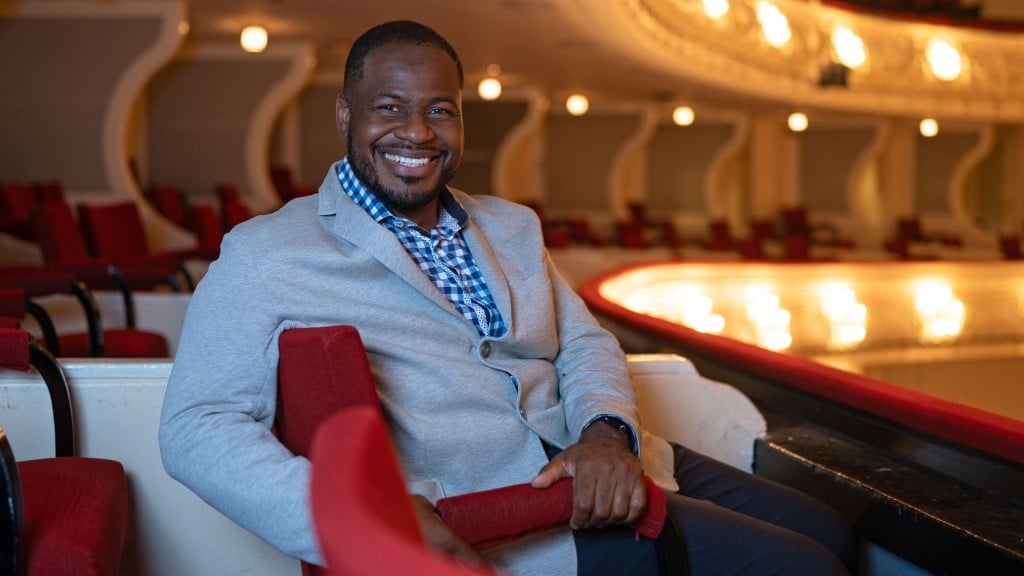
Sidney P. Jackson, Jr. (Photo: Sandy Morris | Sally Blood Photo)
The 2025-26 season of the Chicago Sinfonietta marks a leadership transition as well as a new slate of programming. It is the orchestra’s first season under Sidney P. Jackson, who joined the organization this year as president and chief executive officer.
Jackson comes to Chicago Sinfonietta from the New Jersey Symphony, where he served as vice president of development. His previous roles include positions at Lincoln Center for the Performing Arts and the Harlem School of the Arts.
Ahead of the orchestra’s annual MLK Tribute Concert, WFMT asked Jackson five questions about his early impressions of Chicago, his professional background, and how he sees the Sinfonietta’s role within the city’s classical music landscape.
WFMT: What are your impressions of Chicago so far?
Jackson: Let me illustrate this with a story: I have a 4 year old and she loves french fries. We went into a restaurant, let’s say on Tuesday, and they were $7. We went the next day right around the same time…they were $11.
I told the guy about the price change, ready to bring my New York/New Jersey attitude to confront the issue… when they suddenly say, oh, they were $7 yesterday? OK, $7 it is! I was so confused! You all are just so nice here.
As for the arts, I’m really glad I came in the summer. I said to someone yesterday, you should only hire people in the summer so they get a chance to experience all the events that happen here.
The highlight so far was seeing The Beauty and the Beast with my daughter. Plus, a woman that I did musicals with in high school played the role of Madame, so I got to see her in the tour!
WFMT: What are you bringing with you into this new role at Chicago Sinfonietta from your previous roles?
Jackson: What I’m bringing is a lifelong journey with social justice, art, and music.
As a young kid, I started singing because I wanted other black and brown kids to know this was an art form for us. I went to school to be a professional opera singer; I started at the Met, then Lincoln Center, and spent a lot of time in social justice before going on to the New Jersey Symphony, and then finally here to Chicago Sinfonietta.
Most importantly, I’m really excited to make sure that the nation knows that we’re really a cultural mecca here in Chicago. I can’t stress that enough.
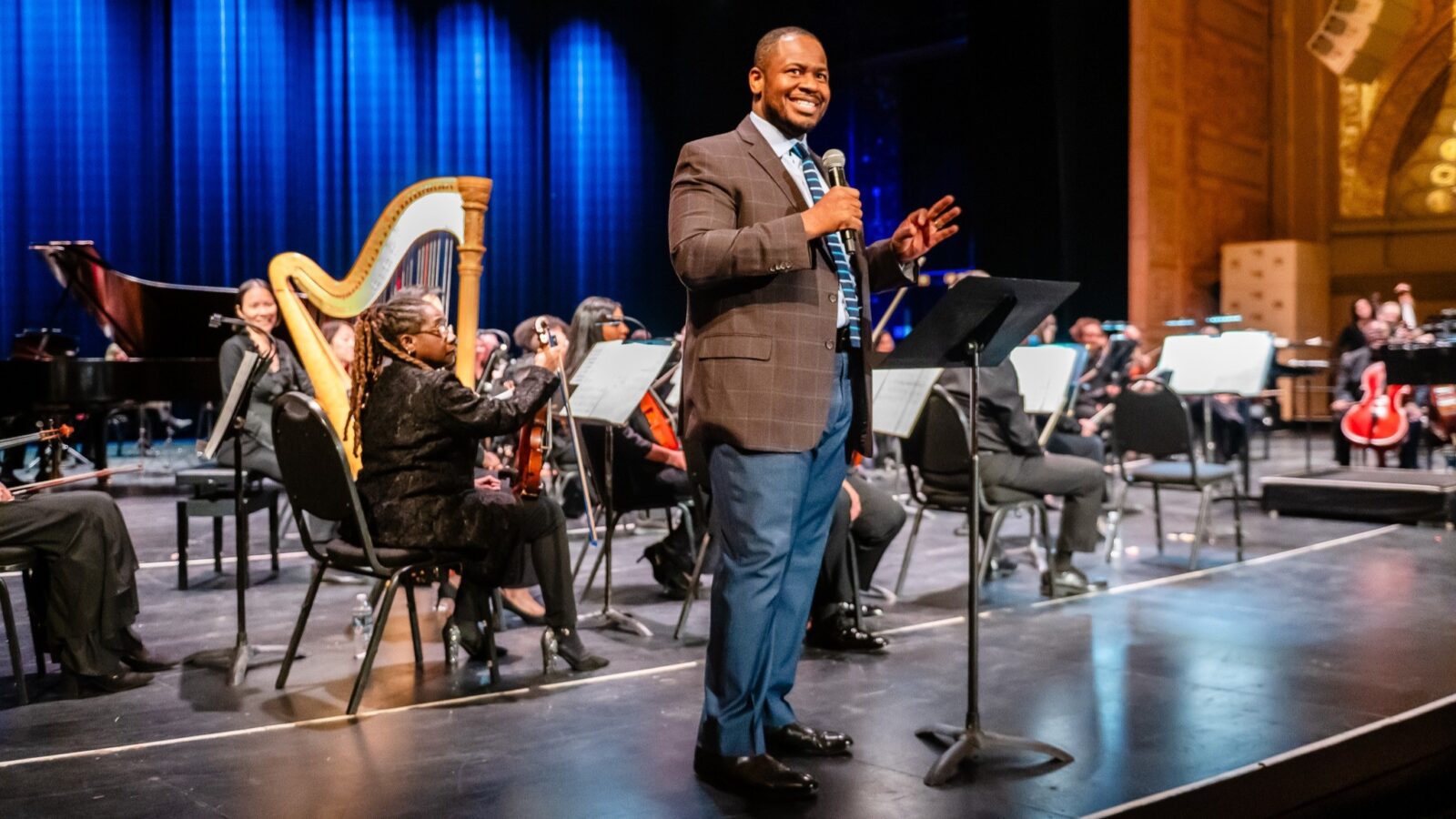
Sidney P. Jackson, Jr. on stage with the Chicago Sinfonietta (Photo: Peter Pawinski)
WFMT: Where do you see the Chicago Sinfonietta fitting into Chicago’s classical music ecosystem?
Jackson: We were founded as a social impact orchestra to break down barriers and create a safe place for black and brown artists – not only on the stage, but through our guest artists, conductors, and compositions.
There’s a collaborative element to our orchestra. For example, we’re using so many of our Sinfonietta family this season: from Roger Kalia, a past Freeman Fellow, to Seth Pae, our assistant violist, composing a new piece. Many of our founding members have even grown up together: one son got married in October, and they’re all reminiscing about when he was a little boy.
I think what I have witnessed already in this orchestra is that people can bring ideas from their travels and figure out a way for them to live and breathe here on the Sinfonietta stage.
WFMT: At this new junction in your career, what do you see as the future of classical music?
Jackson: What I see is a little different from what I think needs to be addressed. Music lovers are not a monolith, despite us sometimes treating them that way. I don’t wanna put words into people’s mouths about what needs to change, but I think we have to more often meet people where they are at.
One of the questions on my mind lately is, how can we make sure as an orchestra that we’re at the intersection of music and wellness? To be an orchestra that helps bring the arts into a juvenile detention center or jail. To think about how music and maternal health go together.
Who’s to say, for example, that you couldn’t have a summer arts and science camp, where we find an old bus or an old tractor trailer, and have young people build a solar-powered stage that they take throughout their community for music. That’s what I’m interested in exploring: how to do things like that.
I say this all the time: in classical music, orchestras are the classic Oreo cookie, right? But the classic Oreo cookie is not upset at the sale of double-stuffed, mega-stuffed, birthday cake varieties, etc. because the original is still on the shelf. Our orchestra can coexist with other genres, or other approaches to the orchestral art form, without worry.
That’s what I’m trying to put out into the classical music world: one Oreo cookie at a time.
WFMT: Finally…what is a piece of music on your playlist right now?
Jackson: Oh I have Brahms’s The Schicksalslied, Op. 54 on repeat recently. I’m a singer, so I love the choral and orchestra pairing. I mean, it’s banging. Also The Montgomery Variations – one of our Freeman Conducting Fellows, Kellen Gray, is on the recording with the Royal Scottish National Orchestra.