An expressive debut from a young pianist, many nods to Slavic culture, and more interesting musical selections offer plenty to choose from as March begins.
Alexander Malofeev was just thirteen when he won first prize at the junior edition of the prestigious International Tchaikovsky Competition. A little over a decade later, his debut solo album features nostalgic melodies by four Russian-born composers who died far from their homeland. Elsewhere in Eastern Europe, Szymon Nehring teams up with Marin Alsop for an album dedicated to the Polish composer Karol Szymanowski, while Mūza Rubackytė, a longtime friend of Krzysztof Penderecki, presents a live recording of the late Polish master’s Piano Concerto “Resurrection”.
The remaining three albums present unique and interesting musical settings. The latest album from Italian composer and pianist Olivia Belli features various pieces inspired by Homer’s Odyssey. Cellist Sonia Wieder-Atherton sets off on an “odyssey” of her own accord by combining acoustic cello with layered, tasteful electronic effects. Finally, it’s the CD debut of Harmarket Opear’s Artaserse production – a rare recording of Leonardo Vinci’s opera.
Born in Moscow in 2001, Alexander Malofeev has already become one of the most captivating pianists of his generation thanks to his phenomenal technique and the remarkable expressiveness of his playing. In 2014, at just thirteen, he won first prize at the junior edition of the prestigious International Tchaikovsky Competition. For his debut solo album, Malofeev has selected four composers who were all born in Russia but died far from their homeland: Alexander Glazunov in Paris, Mikhail Glinka in Berlin, Sergei Rachmaninoff in Beverly Hills, and Nikolai Medtner in London. Alongside Medtner’s cycle Forgotten Melodies, the most extensive work on the album is Sergei Rachmaninoff’s Second Piano Sonata, composed while he was still in Russia and revised nearly two decades later in Switzerland. In addition to the common theme of exile, what moves Malofeev most is another idea: “They all share a similar feeling of nostalgia,” he explains. “But you cannot really figure out which moment in time they are actually nostalgic for. It’s almost as if they are nostalgic for a very similar setting which never really existed in history. It’s like it is totally made up, almost a dream world — and you can find it everywhere on this album.”
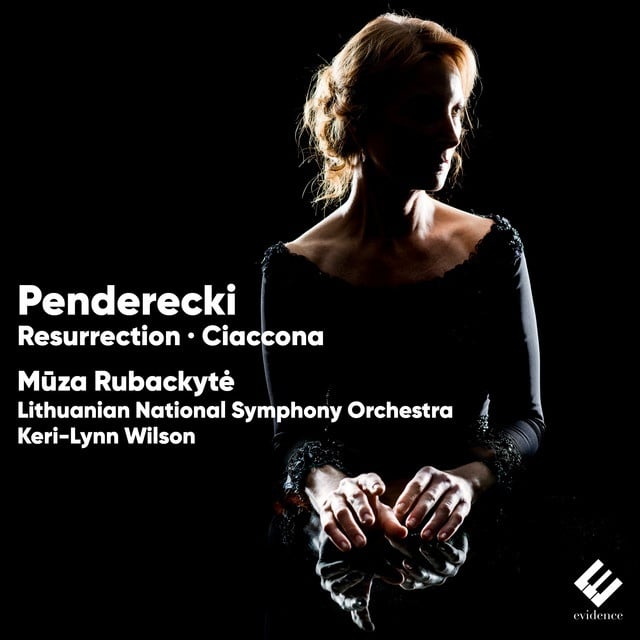
The legendary Lithuanian pianist Mūza Rubackytė, a longtime friend of Krzysztof Penderecki, presents a live recording of the late Polish master’s Piano Concerto “Resurrection” with the Lithuanian National Symphony Orchestra under the direction of Keri-Lynn Wilson. Completed in 2006, Penderecki dedicated it to the events of 9/11, saying: “The title ‘Resurrection’ should be understood in a broader, symbolic, and universal context. It arises from the chorale that crowns the work and expresses the victory of life over death. I composed the chorale, a symbol of comfort and faith, immediately after the tragedy in New York. It was a purely human gesture and a sign of protest against cruelty.” Rubackytė has been a champion of this monumental, powerful, and tormented score, whose melodic richness, bell-like sonorities, and dramatic intensity reflect the unique imagination of a composer marked by war, inspired by faith, and guided by humanism. The album includes the Ciaccona in memoriam Giovanni Paolo II, arranged for solo piano.
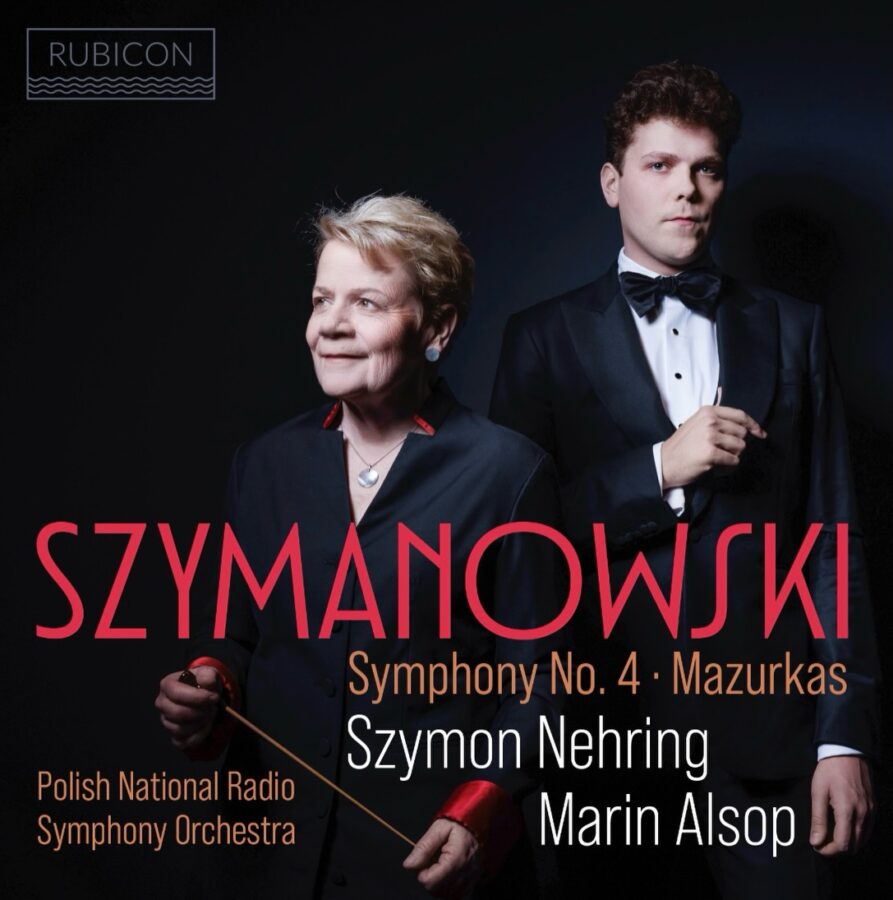
Considered to be the most gifted and promising pianist of his generation in Poland, Szymon Nehring is the only Pole to have won first prize at the Arthur Rubinstein International Piano Competition in Tel Aviv (2017). He was also a finalist at the Chopin Competition in Warsaw at age 19. His new album is dedicated to Karol Szymanowski, one of Poland’s greatest composers after Chopin. Like Chopin, Szymanowski composed many mazurkas. His are based on the folk music of the Polish Highlanders, from the Tatra Mountain region. Nehring pairs the Op. 50 Mazurkas with Szymanowski’s Symphony No. 4, “Symfonie concertante,” a masterpiece of the symphonic repertoire with a prominent piano part, now recognized as his piano concerto. The Polish National Radio Symphony Orchestra is conducted by Marin Alsop.
Known for her refined neoclassical voice, the new album from Italian composer and pianist Olivia Belli draws inspiration from Homer’s Odyssey. Belli was fascinated by Odysseus’s destined return to Ithaca and the idea that every life follows a journey toward its true purpose. This concept shaped her new piano concerto, Daimon, recorded with the German Chamber Orchestra Berlin and influenced by Italian Baroque traditions. The concerto unfolds in three movements — “The Departure”, “The Journey”, and “The Return”. “The Journey” forms the emotional core, reflecting both Odysseus’s trials and Belli’s own path through hardship and catharsis. The album also features Belli’s Ithaca Suite for mixed chamber ensemble, portraying the figures Odysseus encounters upon his return including his son Telemachus and wife Penelope. Guest artists include the Canea Quartett, violinist Eldbjørg Hemsing, saxophonist Jess Gillam, and cellist Raphaela Gromes. The album concludes with the Sonatina for Nausica, inspired by the princess who aided the shipwrecked Odysseus — a reminder, Belli notes, of the value of compassion in a world that often measures worth by success.
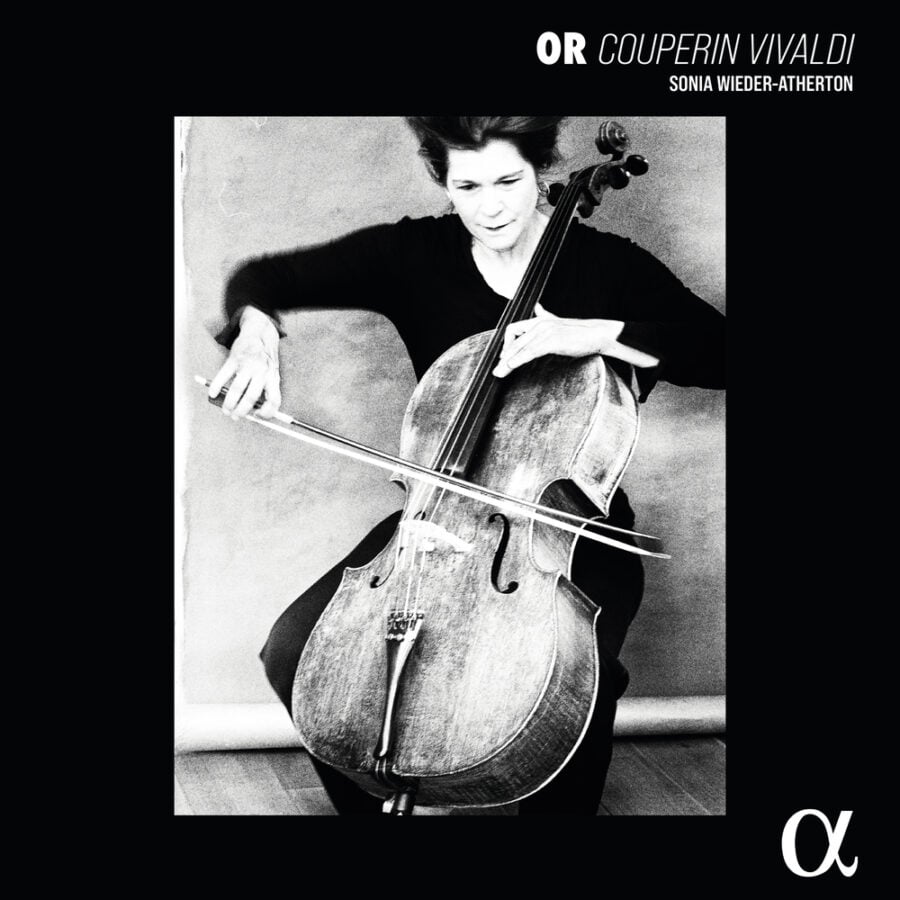
For her new recording, entitled Or (light), Franco-American cellist Sonia Wieder-Atherton presents arrangements of works by Couperin and Vivaldi. The album begins with the first and third of Couperin’s Leçons de ténèbres — the Lamentations of Jeremiah, originally scored for soprano and continuo. Wieder-Atherton says, “I had long been looking for an instrument that could accompany my cello in the uninterrupted singing that is the first Leçon. One day, almost by chance, I heard the sound I sought. A sound that came out of the mist: an MS20 monophonic synthesizer played by Marius Atherton. I could hear the vibration of lives in danger in these layers of sound.” For the third Leçon, a setting for two sopranos, the cellist “twinned” the voices by multitracking herself, and Marius Atherton accompanies that setting on electric guitar. The final third of the album turns to a set of extracts by Vivaldi selected by Wieder-Atherton from his operas and violin concertos. The cellist has arranged the set for what she calls “a polyphony of cellos to accompany the solo parts,” and percussionist Mahut is also featured on these last arrangements, as is Nicolas Worms on synthesizer.
Acclaimed for their historically informed productions 17th- and 18th-century operas and oratorios, Haymarket Opera Company, presents the rare operatic gem Artaserse (1730) by composer Leonardo Vinci. This three-act opera seria centers on the Persian prince, Artaserse, who must bring his father’s murderer to justice amid betrayal, deceit, and mistaken identity. All female roles in the original performances of this opera were performed by castrati, with countertenors usually performing them in more modern productions. The recording features the original cast from the American stage premiere in June 2025, along with the period instrument Haymarket Opera Orchestra conducted by Artistic Director Craig Trompeter. Marking only the second full-length recording of this rarely heard work, the album features mezzo-soprano Emily Fons, male soprano Elijah McCormack, tenor Eric Ferring, and countertenors Kangmin Justin Kim, Key’mon Murrah, and Ryan Belongie. Opera Magazine praised the cast who “proved themselves fully prepared to engage with the drama through… spectacular flights of virtuosic vocalism.”