As some stars rise, others quietly exit the stage. This week we share the final album of British pianist Dame Imogen Cooper. The acclaimed interpreter of classical and romantic repertoire shares a strong working relationship with Dame Jane Glover, and will be retiring in early 2027 after 60 years on stage.
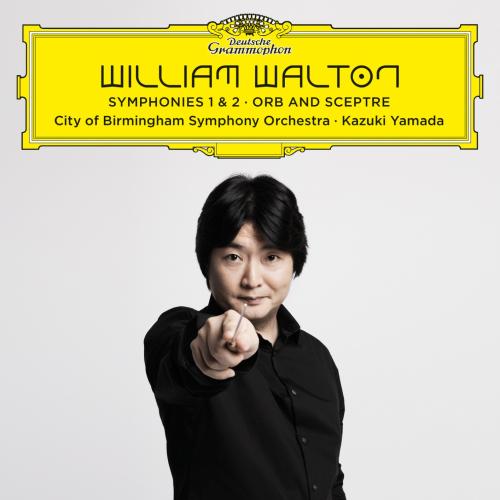
In the realm of rising stars, we have the debut solo album of soprano Hannah de Priest: a vocalist whose reputation as an interpreter of 17th and 18th century repertoire continues to grow. Two more debuts also appear: the first album by sister strings Trio Sypniewski, as well as the City of Birmingham Symphony Orchestra’s first collection with new Music Director Kazuki Yamada.
Finally, The Tallis Scholars return with a collection of Nico Muhly world premieres, including a composition written to honor Music Director Peter Phillips’ 70th birthday.
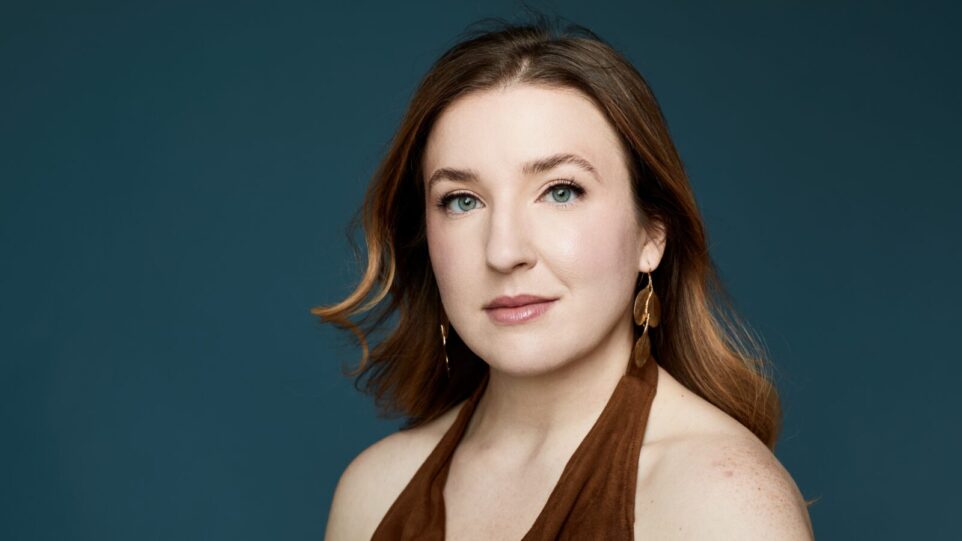
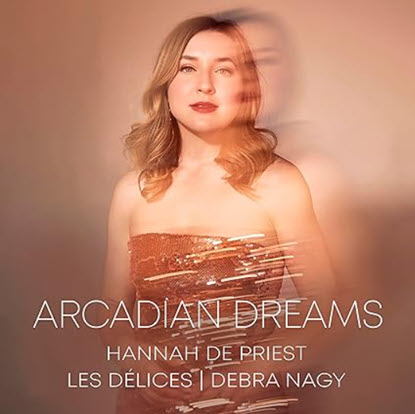
Soprano Hannah De Priest, who is on an upward trajectory as a leading interpreter of 17th and 18th century repertoire, caps a breakout season (including performances with Haymarket Opera and Bella Voce, leading roles with Boston Early Music Festival, and debuts with Music of the Baroque and Bach in the City) with her debut solo album. Referencing both Greek mythology and the Arcadian Academy in 17th century Rome, Arcadian Dreams features secular Baroque cantatas by Rameau, Handel, Thomas Louis Bourgeois, and Louis Lefebvre with Les Délices, an early music ensemble founded by baroque oboist Debra Nagy. De Priest’s rise as a Baroque specialist is linked with Les Délices and their breakout debut at the 2023 Boston Early Music Festival where De Priest was also performing in the festival’s centerpiece opera Circé by Henri Desmarets. The Boston Globe praised Les Délices’s French Baroque program with Hannah De Priest who “was magnetic, driving 18th-century composer François Colin de Blamont’s own Circé cantata with dramatic poise and shimmering, subtle ornamentations that entwined with founder Debra Nagy’s oboe and recorder.” The album also includes Albinoni’s Oboe Sonata in C major and a keyboard sonata by Domenico Scarlatti, showcasing Nagy and harpsichordist Mark Edwards.
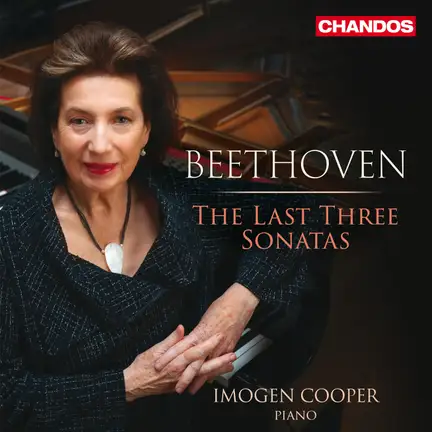
Regarded as one of the finest interpreters of classical and romantic repertoire, Dame Imogen Cooper presents Beethoven’s Sonatas No. 30 in E major, Op. 109, No. 31 in A-flat major, Op. 110, and No. 32 in C minor, Op. 111. “It has taken many years for me to perceive the last three sonatas by Beethoven as the evolving journey I now feel them to be,” writes Cooper. “Now it would be hard for me to play any of the last three sonatas alone, so potent is the journey from first to last. And how privileged my hands feel, having wondered and wandered in the heavenly heights of the last pages of Op. 111, to travel down the keyboard and bring this astonishing last sonata, and indeed the whole body of thirty-two sonatas, to a close, with a quiet chord of C major – no long note value, no fermata. Just silence.” This marks the final recording of the acclaimed British pianist who has announced her retirement from public performance, concluding her illustrious 60-year career in early 2027.
Peter Phillips and The Tallis Scholars present world premiere recordings of works written for them by Nico Muhly. Phillips says that Muhly “immediately understood our particular sound and a succession of masterpieces followed, each as powerful as the last.” The title work is a setting of Jeremiah’s Lamentations, interspersed with contemporary interviews with people from the Windrush generation of Caribbean migrants to the UK who, as Muhly says, “found themselves in various ways stateless, detained, and denied benefits.” Recordare, Domine also sets texts from Lamentations, while Marrow is a setting of Psalm 63, which treats similar themes of bodily hardship and danger in an alien environment. Rough Notes, using austere counterpoint and unstable harmonies, draws from Captain Scott’s diary on his doomed mission to the Antarctic. Prosperitie was written to celebrate Peter Phillips’s 70th birthday, and A Glorious Creature praises the glory of the soul and celebrates the 50th anniversary of the Tallis Scholars.
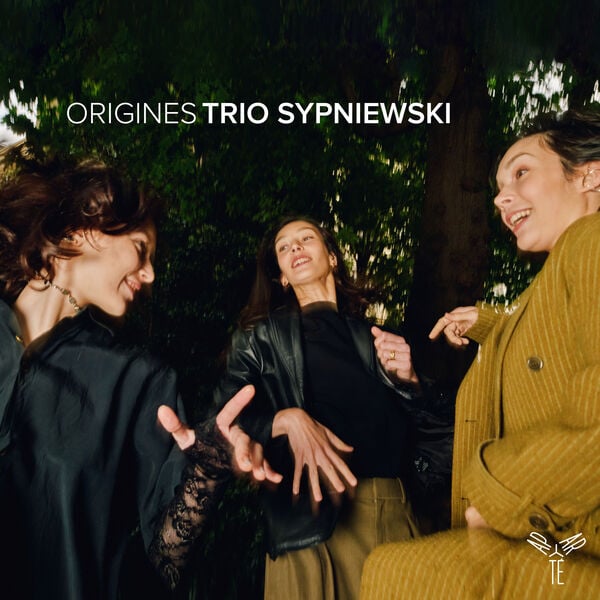
Established in 2016, Trio Sypniewski comprises violinist Magdalena, violist Anna, and cellist Caroline Sypniewski. For their debut album, the three sisters return both to the birth of the string trio and to the origins of their own ensemble. The program includes Purcell’s fantasias for viols – intimate pieces enriched by the musicians’ historically informed performance practice – alongside trios by Sibelius and Beethoven (the third of the Op. 9 set, the most ardent and innovative of his works in the genre), as well as Kaija Saariaho’s intense Cloud Trio. These varied musical landscapes offer the Sypniewski sisters the opportunity to play with virtuosity on the paradox of the trio format, where individuality and cohesion serve a single musical narrative, which they shape with precision and poetry in a spirit of total commitment.
The City of Birmingham Symphony Orchestra presents its first recording led by Kazuki Yamada who took the helm as music director in 2023, continuing the work of such eminent predecessors as Sir Simon Rattle, Sakari Oramo, Andris Nelsons, and Mirga Gražinytė-Tyla. The rogram, recorded live at Birmingham’s Symphony Hall, showcases three works by William Walton: the Coronation March Orb and Sceptre and the composer’s two symphonies. The choice of an English composer for their first recording together seemed appropriate to Yamada. Orb and Sceptre was written in 1953 for the coronation of the late Queen Elizabeth II, the centenary of whose birth will be marked in 2026. Walton’s First Symphony (1932-35) poses a raft of challenges to the performers, with its energy, passion, and intensity. “It’s a little bit like surfing!”, says Yamada. “If you catch the waves of excitement, the piece goes well.” Written 25 years later, the Second Symphony is equally inventive, but more introspective in feel. It is of course the work of an older, more experienced composer, and its music emerged from a post-war world. As Yamada notes, “there is a feeling of peace – but is it real?”