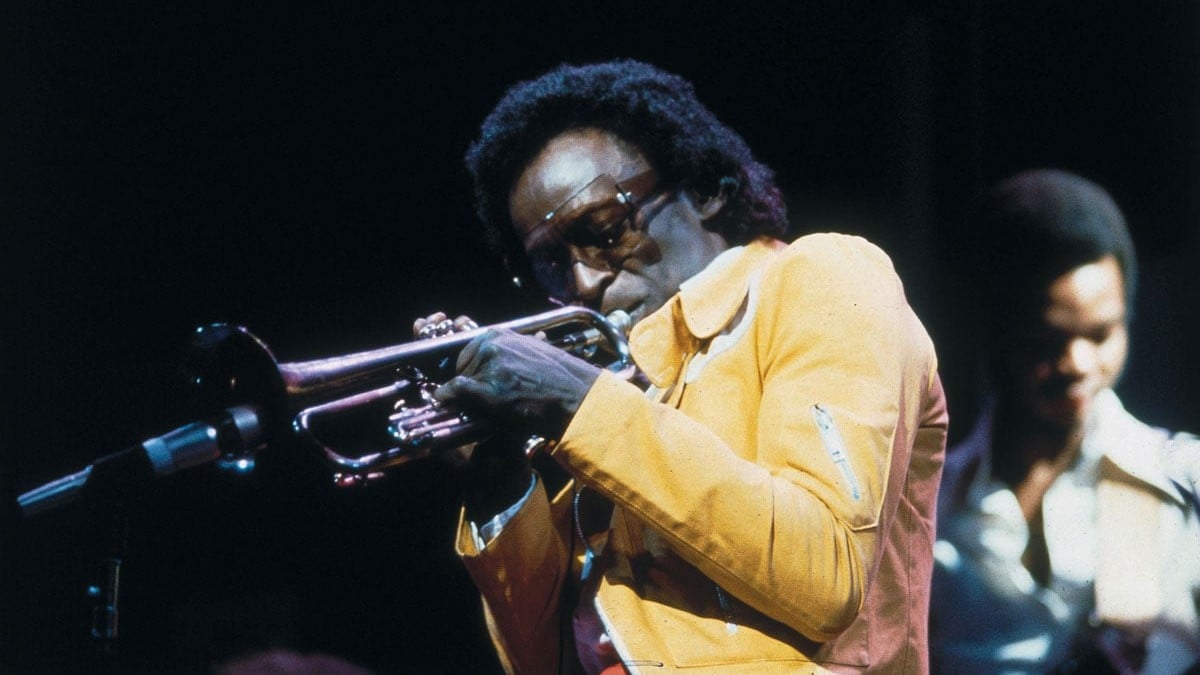
Miles Davis (Photo: Miles Davis webstie)
100 years ago, in the small town of Alton Illinois, a child was born that would change the course of jazz history. Although jazz musicians are rarely discussed alongside their classical counterparts, WFMT host Dave Schwan suggests that Miles Davis’s influence rivals that of classical music’s most defining figures. From his early studies at Juilliard School to his use of quoted melodies and experiments with “third stream” music, Davis repeatedly crossed paths with the classical tradition – even if he did not always see eye to eye with its performers.
WFMT caught up with Dave Schwan, host of the Dame Myra Hess Memorial Concerts and the Grant Park Music Festival, as well as a contributor to the WFMT Jazz Network, to mark the centennial of Miles Davis and explore the ways his musical language intersected with the classical tradition.
WFMT: What made Miles Davis a pivotal figure in jazz music?
Schwan: Well, that sound he created with his muted trumpet was unlike anything else. As a composer, he wrote pieces of music that still sound wonderful, even though they may be 60 years old or older. But more than anything else, Miles Davis was a leader.
He learned from great people like Charlie Parker, and used his own gifts as a musician and leader to choose the right people to play with him. He was someone who always knew what he wanted and what direction to take.
I think of Davis overall as someone who is out front, taking the music in a direction that others followed.
WFMT: Miles Davis had a bit of classical training. Did that influence the way he composed?
Schwan: When Miles went to New York, he first studied at Juilliard. During the day, he would go to his composition classes, performance classes, or music theory classes, even though his real education as a jazz musician took place at the jazz clubs at night.
You can draw a parallel between the way Miles' career evolved and the way Stravinsky's career changed over time. Stravinsky also started out more conservative, being influenced so much by the late Romantic era. In the late 1920s and ’30s, Stravinsky moved into his neoclassical era, and then finally became very cerebral, writing serial music/twelve-tone music in the 1950s and to the end of his life.
Miles did this, too. He started out playing with musicians such as Charlie Parker in the bebop era, then evolved into what everybody refers to as the “cool period” in the 1950s and ’60s - with the album Kind of Blue being the supreme example. And then into the 1970s and ’80s, he moved towards what's called the “fusion era” – a mixture of rock and jazz that yielded groups like Weather Report. The two chief architects there – Joe Zawinul on keyboards and Wayne Shorter on tenor – both played with Miles Davis. So, once again, we circle back to Miles being that leader, changing the direction of the music around him.
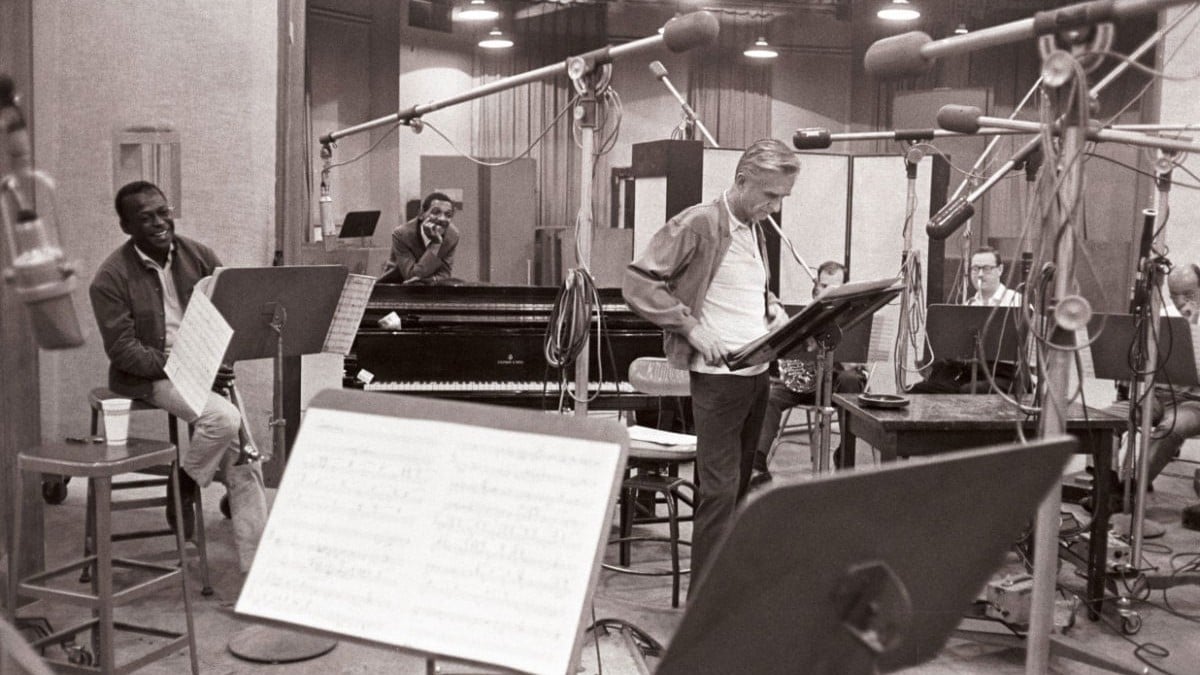
Gil Evans and Miles Davis during the "Birth of the Cool" recording session. (Photo: Miles Davis website)
WFMT: In what ways did Miles Davis interact with classical music throughout his career?
Schwan: We very often hear the guitar concerto by Joaquin Rodrigo called Concierto de Aranjuez on WFMT. Well, listen to the first few cuts of Sketches of Spain: it is note-for-note the melodic line from the slow movement of that concerto.
Sketches of Spain is one of the most famous recordings in Miles Davis’ collaboration with Gil Evans, a Brazilian composer and arranger. Gil Evans has this incredible way of writing harmonies which is rather dissonant but very interesting and carries the sound forward. They also worked on an arrangement of Porgy and Bess, George Gershwin's great opera, for jazz ensemble.
Davis also knew Leonard Bernstein. When Bernstein did an album in the mid-1950s called What Is Jazz, explaining the basic outlines of jazz, Bernstein and Miles worked together on a couple of tunes.
I can’t speak to how Miles Davis felt about classical music or classical musicians, but these are a few names that relate to a WFMT listener: Bernstein, Rodrigo, and George Gershwin each had their place in Davis’ discography.
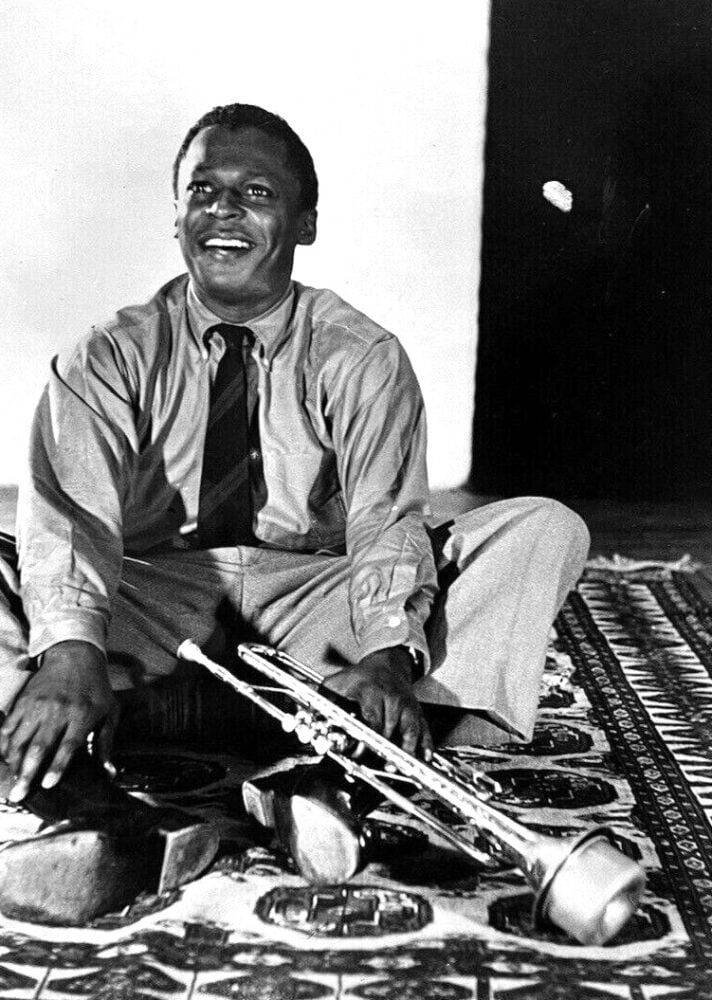
Miles Davis from a 1967 press photo (Photo: distributed by Tempo Press, Public domain, via Wikimedia Commons)
WFMT: What does the work of Miles Davis mean to you, and how are you celebrating his centennial?
Schwan: I think for me, his music just transcends time. His music is the centerpiece of the jazz world: I don't care who you talk to, you can always incorporate something that Miles played in a playlist, and it's always going to be effective.
He’s at the core of jazz repertoire just like the three B's are in the repertoire of classical. Bach, Beethoven, Brahms…Miles is that key figure, not only in jazz, but in music for the mid- to late 20th century. It's a powerful legacy.
I tried my best to honor Miles Davis through a special jazz program I created. It’s impossible to incorporate all of what Miles did in just an hour's time, so I focused on some of his earlier work, including rare recordings of him playing with Charlie Parker. I also added an album of Davis’s that is still much discussed these days called Birth of the Cool, featuring nine or ten top jazz players. After that, I tried to hit on all of the important aspects of his career, even including one song by Michael Jackson, Human Nature, while always getting back to what Miles is probably best known for – that period in the 1950s and 60s when he played with people like John Coltrane, Bill Evans, Wayne Shorter, Ron Carter, and even Herbie Hancock. I tried to incorporate all of that. Very, very tough to do, but I hope I did my best.
WFMT: What are two starter pieces you would recommend for anyone looking to get into Davis’ work
Schwan: We'll start out with a piece of music called “So What” that opens the Kind of Blue album from the 1950s. There's also an amazing piece of music at the end of that album called “Flamenco Sketches.” For me, that piece transcends categories: we're no longer talking jazz or classical or anything here, simply great music.
Another mandatory piece would be his recording of Thelonious Monk's tune, Round About Midnight, which featured the muted trumpet sound that also appears in “Flamenco Sketches.”