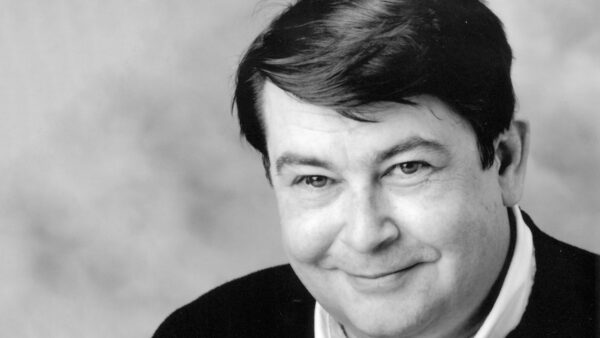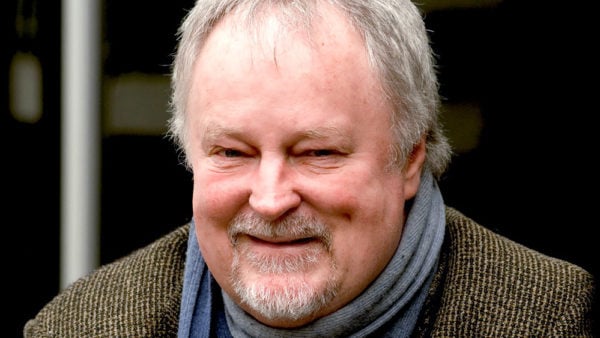
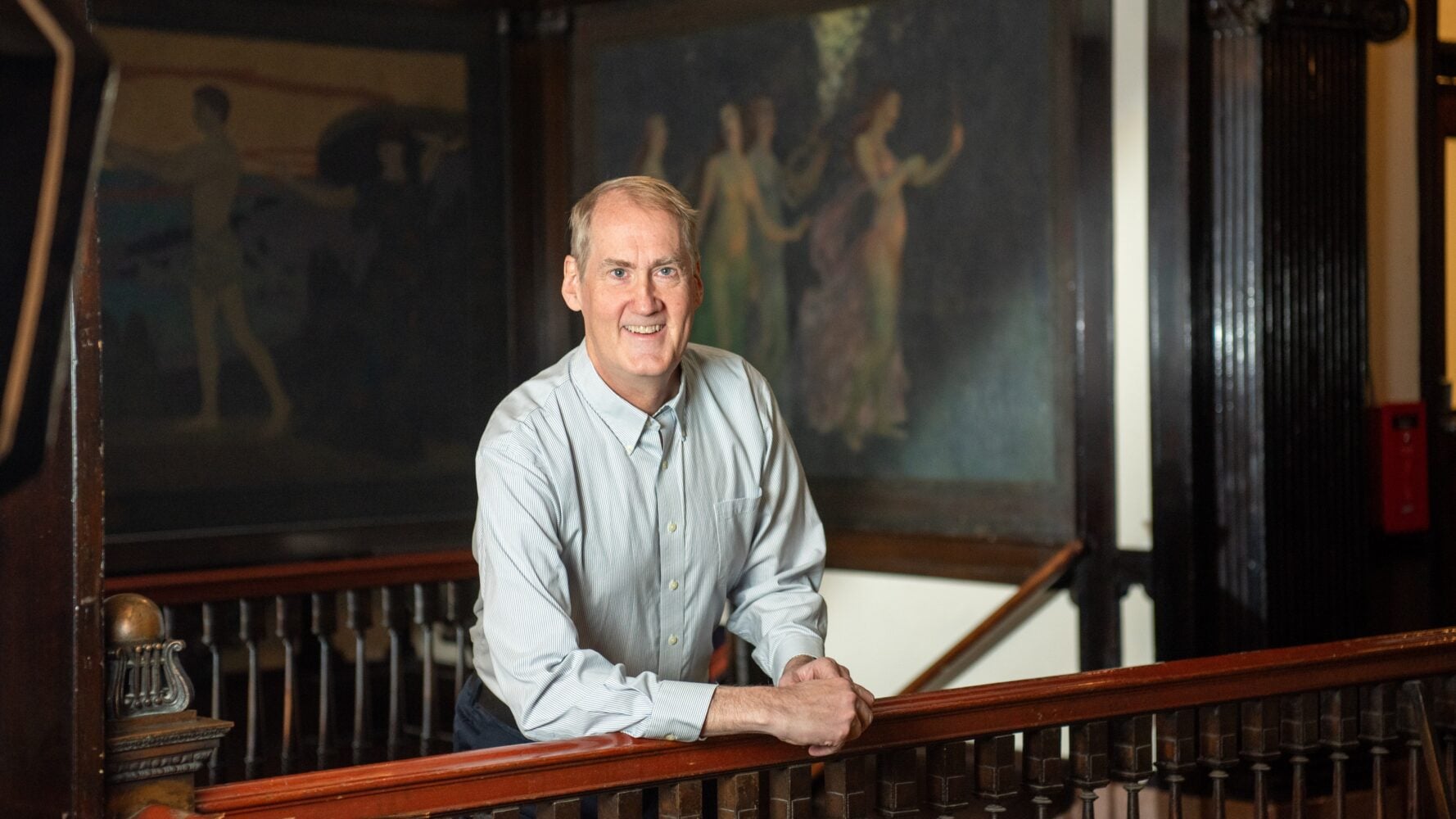
Peter van de Graaff. (Photo: Liz Markel)
Peter van de Graaff has spent more than three decades as one of the defining voices of WFMT. Best known as the longtime host of Through the Night, he has become a familiar presence to generations of listeners, known for his deep knowledge of classical music and thoughtful, approachable style.
On Monday, August 24, van de Graaff begins a new chapter as host of Exploring Music, WFMT's nationally syndicated weekday series built around a different musical theme each week. Through carefully curated recordings and lively storytelling, the program uncovers connections among composers, history, literature, culture, and the ideas that have shaped classical music, inviting listeners to hear familiar works – and discover new ones – in fresh ways.
Ahead of his first week as host, we spoke with van de Graaff about his long career at WFMT, his approach to Exploring Music, and what listeners can expect as he guides them through the program's next chapter.
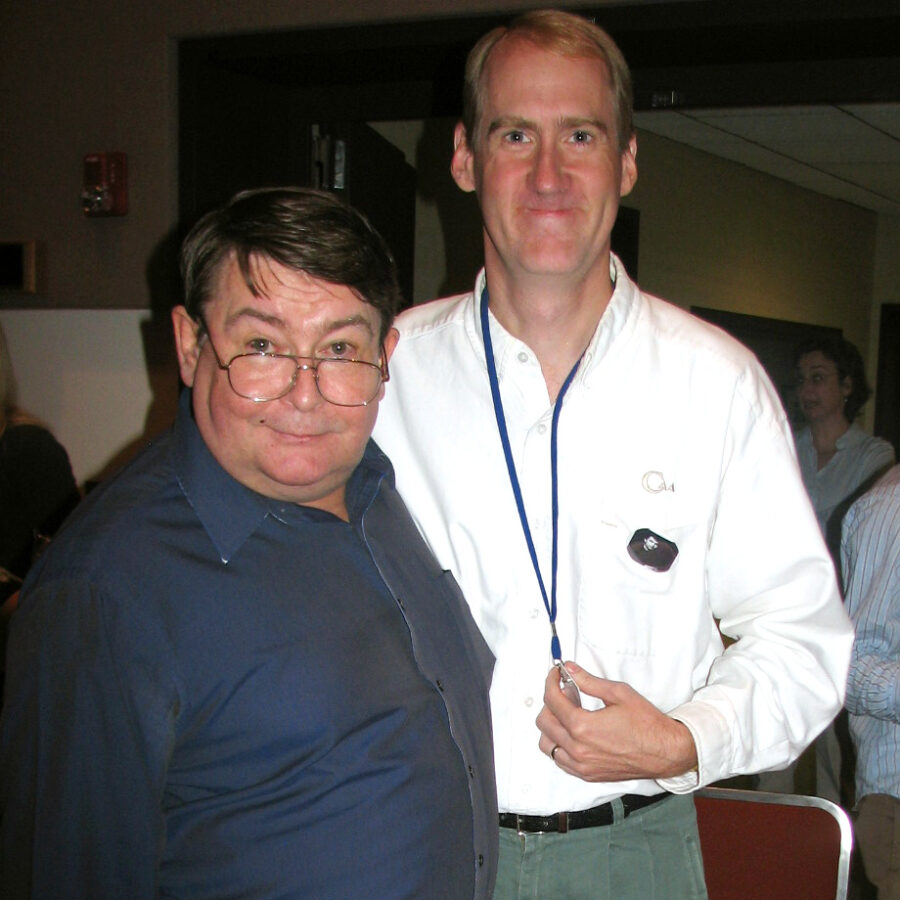
Don Tait and Peter van de Graaff at Don's WFMT retirement celebration, October 2007.
WFMT: How did you first find your way into the radio business?
VDG: Well I went to New Trier High School, grew up in the area here, and listened to WFMT all the time. I thought I was going to become a singer, but as I grew older, I began to realize that I might have more to contribute.
I had a deeper voice and a passion for music, so I thought radio might be a good fit to work my way through college. I majored in voice and got my degree in voice performance, but radio slowly worked into a full-time thing, and after a couple of years at the station where I started (KBYU) I saw there was an opening at WFMT.
I applied thinking they might give me some good feedback that would help my career. But then they called me back! I was 26 years old when I got the job: first alternating shifts as a regular host, and then the overnight shift after one year. It’s been 37 years since.
WFMT: What’s something that you’ll always remember from the early part of your career?
VDG: The first time I went on the air, I was petrified. I grew up listening to the legends: Studs Terkel, Norm Pellegrini, Jim Unrath, etc. And then there was me, just shaking. I mean, literally – I was almost in tears.
Soon after I began, the phone rang and I thought, oh no, here it comes: someone going, who is that bozo? It was a listener. They said, “Would you tell the announcer that I could tell he's nervous, but I think he's gonna be really good.”
Those words changed everything. It boosted my confidence and really helped me through my first shift.
I'll also remember learning from my colleagues. The next office over was Studs Terkel; I still have a picture of Norm Pellegrini on my desk. Rubbing shoulders with people who had so much experience, knowledge, and passion really inspired me.
For me, it’s about treating listeners with respect, civility, and intelligence, and I've always tried to do that.
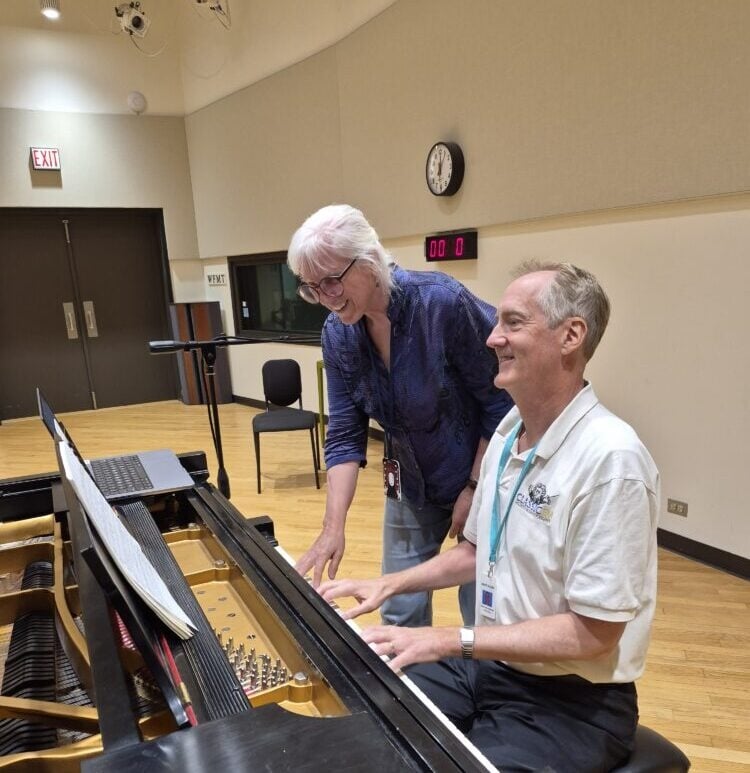
Cydne Gillard and Peter van de Graaff at the piano in WFMT's Levin Studio.
WFMT: What are your thoughts about Exploring Music and its legacy?
VDG: Oh, boy – what shoes to fill! What Bill McGlaughlin had done with the show is just amazing, so it's intimidating.
I had been an enormous fan of Bill’s for a long time. I'll never forget many years ago when he spent time with the Enigma Variations of Elgar – a piece everyone familiar with classical music knows. Bill would play each variation while talking about the characteristics of friends and family members of Elgar, and it totally changed the piece for me forever. That's the kind of genius that I hope to, in some way, emulate from Bill.
WFMT: Where does the research process begin with a show like Exploring Music?
VDG: Okay, I’ll be honest: we're building a home right now and all of my books and CDs are in storage, so I'm heavily dependent on Cydne (Gillard, producer) who supplies information for me from record jackets at WFMT. I remember Carl Grapentine would call it “record jacketology”. There's so much information that has been researched in these jackets, these liner notes, so we work from that to start. Then, of course, the internet is a huge help... there are doctoral theses on many of these subjects I want to explore.
I begin by programming a show from the top of my head, and then start going deeper with research to provide context. After that, writing the scripts is the next big challenge. But I've been researching music since I was eight years old: this job is just a continuation of that passion. It's been a bit of a stretch doing the overnight program as well as this, but it's a labor of love and passion.
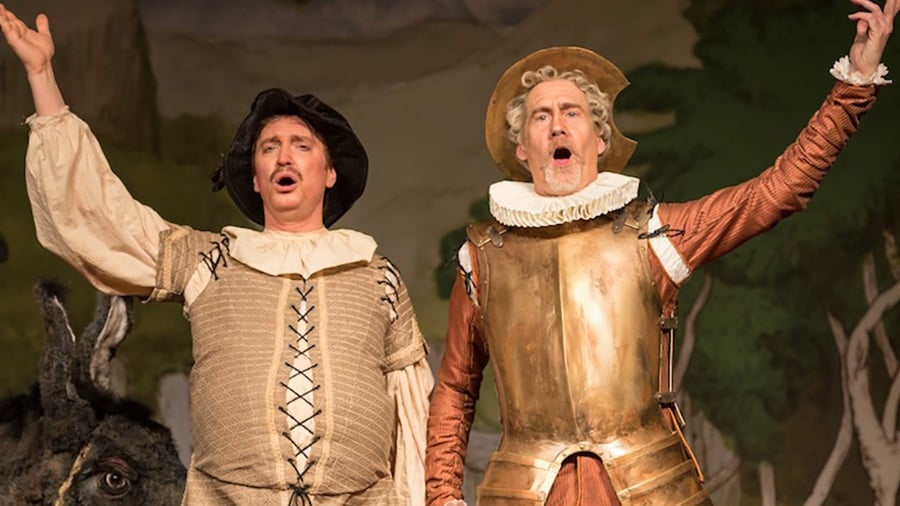
Ryan de Ryke and Peter van de Graaff in Telemann’s Don Quichotte at Haymarket Opera (Photo: Elliot Mandel)
WFMT: With all your work in radio, do you still find time to pursue your other musical hobbies such as singing?
VDG: I was very busy until COVID hit. Just before that happened, my wife and I performed a program of Robert and Clara Schumann in their own living room in Leipzig. Playing the music they wrote for each other in that very room… we looked at each other and thought, it might be all right if we stop now.
I gave one more Messiah performance after COVID ended, but at the same time, I'm in my mid-sixties. The voice starts to go and it becomes a good time to focus on other things. Gary Graffman touched on this concept in his autobiography, I Really Should Be Practicing. You always have to be practicing when you’re a performer. Right now, it’s kind of nice to just be listening and talking about music as opposed to performing it.
WFMT: How do you keep your passion fresh after almost 40 years in radio?
VDG: That question is actually very easy for me to answer! Every morning, I eat breakfast and read The New Grove Dictionary of Music and Musicians. I do that because it's fascinating and inexhaustible. There's always something to learn.
I’m also always thinking, what can I share? What interesting things can I bring on the air? This is my passion: sharing good music with people. There's a real healing element to music that improves the lives of listeners. And of the many jobs in the world, how many of them have that ability? How many can say, I spend my day bringing beautiful things to people? Not many.
That’s why it's easy to keep it fresh. I try to avoid duplicating something I've done in the past. There's so much out there to choose from – thousands of years. The number of recordings and performances that have been discovered, even in the last 40 years…it's just inexhaustible, and very exciting.
This interview has been edited for length and clarity.
Favorite Composer: Haydn! People often are surprised by that, but it's a very simple answer for me because there is a joy, simplicity, and directness in Haydn that no one else has. He's not the greatest composer – I think that’s probably Bach – but he's my favorite.
Instruments: I play keyboard and more specifically, harpsichord. I also played piano for 9 years, and studied a little violin, but I was so bad that the orchestra conductor tried to move me to viola instead! However, I'm a singer first and foremost: that's my instrument, so to speak.
Favorite Place in Chicago: No question: the Fine Arts Building. I'm a big nostalgia buff for things like old movies, old time radio... I sometimes think I was born in the wrong era. To walk into that building is like going back to 1920, and it's very, very exciting.
Favorite Piece: For singular pieces, it has to be the Saint Matthew Passion. As for genre, I often find myself talking about my favorite Haydn quartets. If ever I have a bad day or need to re-center myself, it's always a Haydn string quartet that does it for me.
Favorite Artist: One of my favorite artists of all time is the tenor Fritz Wunderlich. The passion, diction, beauty of tone, technique…he's my favorite singer of all time.