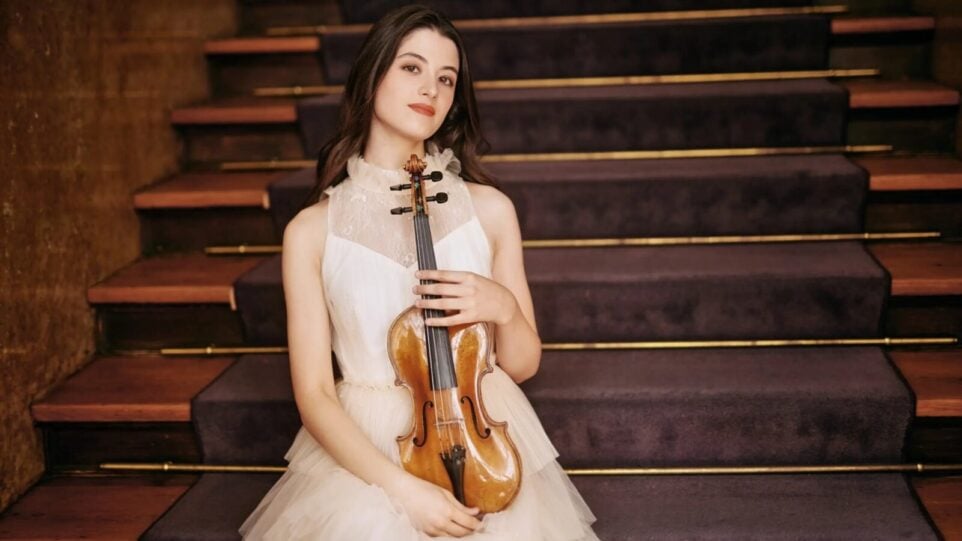
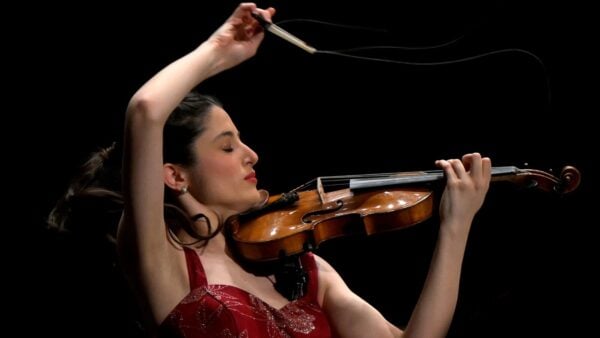
Maria Duenas. (Photo: C Koestlin)
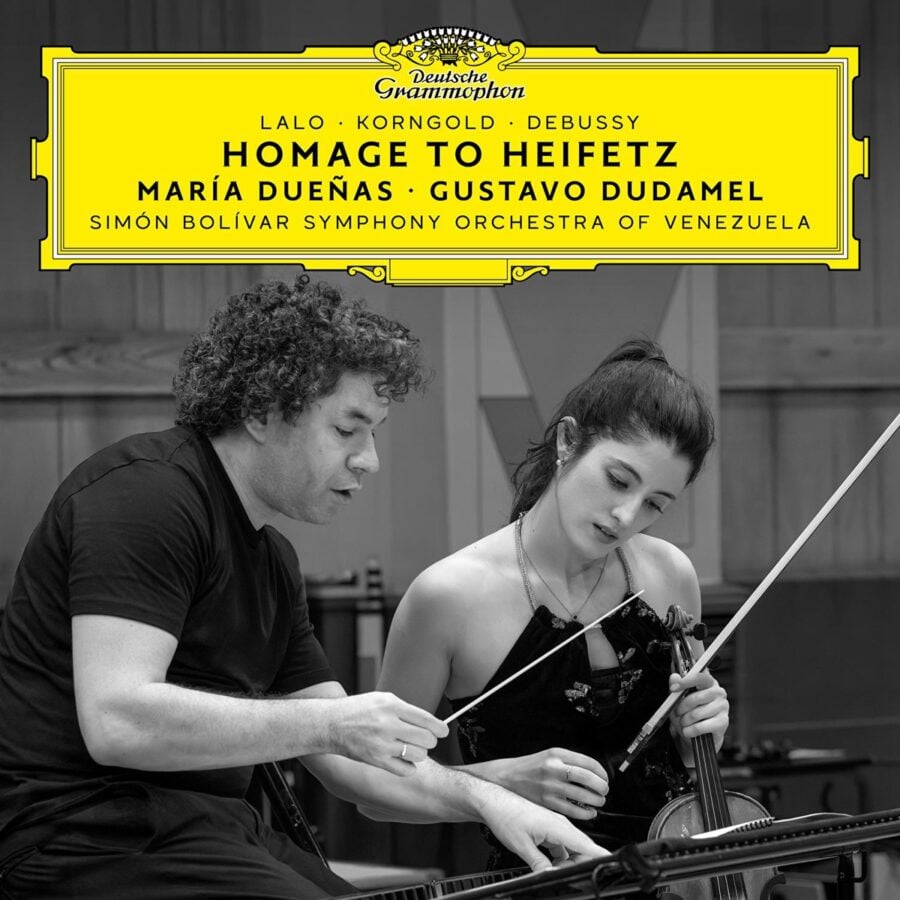
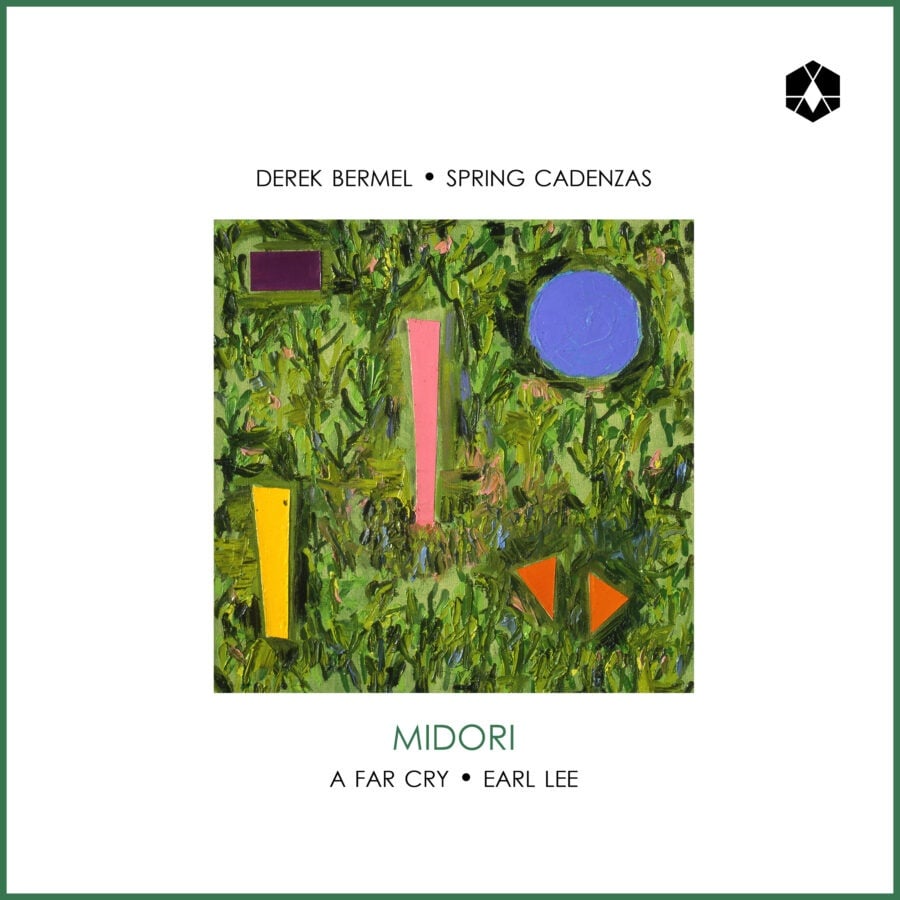
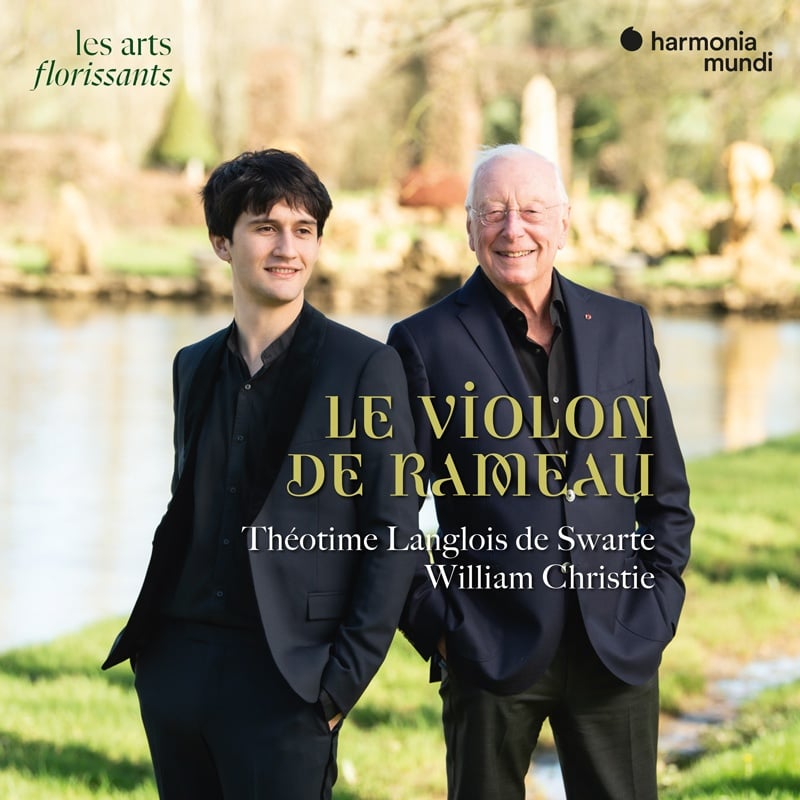
Four star violinists present special recordings near and dear to their hearts. Violinist Théotime Langlois de Swarte and keyboardist William Christie present an imaginary concert in which the violin and harpsichord or organ vie with each other in work by Rameau. Spanish violinist María Dueñas pays tribute to Jascha Heifetz alongside Gustavo Dudamel and Itamar Golan. Violinist Midori and the chamber orchestra A Far Cry present Derek Bermel’s violin concerto Spring Cadenzas. Eldbjørg Hemsing joins the Oslo Philharmonic under the direction of Gergely Madaras in Max Bruch’s Violin Concerto No. 1 in G minor, Op. 26.
In other releases, father/son duo of Julian and Gerard Schwarz present the world premiere recording of Arthur Foote’s Cello Concerto. Finally, clarinetist Michael Collins and the Escher Quartet present clarinet quintets by Brahms and Reger.
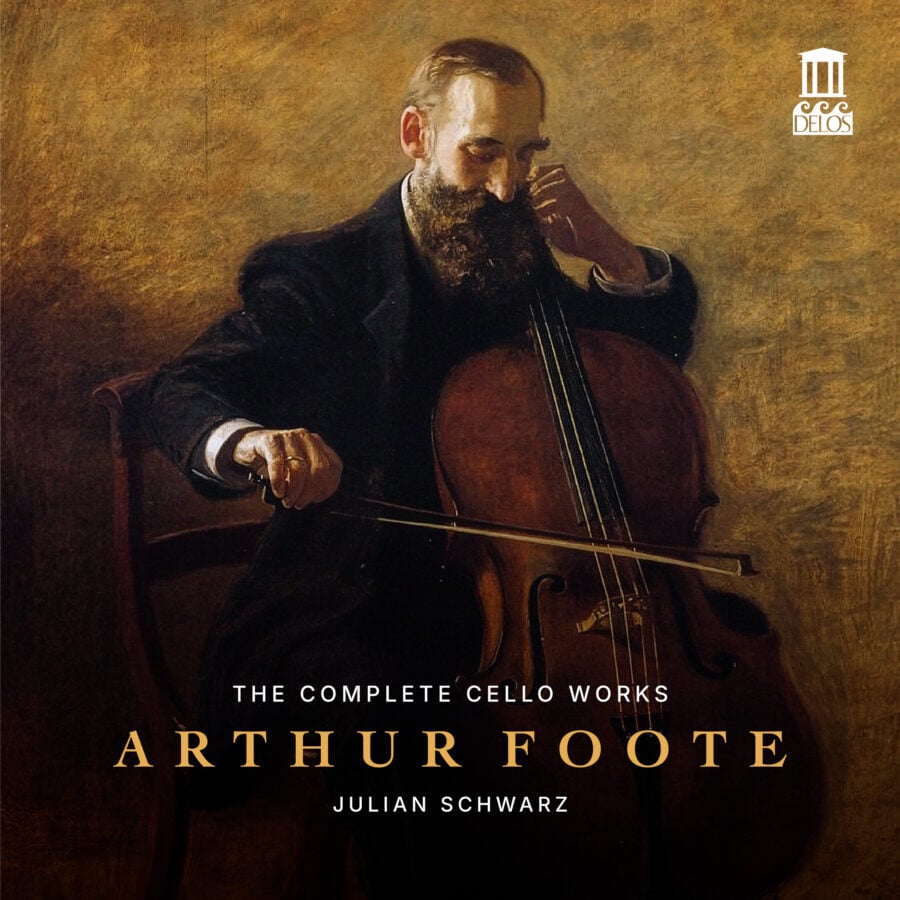
Cellist Julian Schwarz presents the complete cello works of Arthur Foote including the world premiere commercial recording of the Cello Concerto in G Minor, Op. 33 performed with Gerard Schwarz conducting the Buffalo Philharmonic Orchestra. The recording represents the culmination of a remarkable father-and-son effort to bring Foote’s concerto back to life. Julian Schwarz first discovered a listing for the work in an encyclopedia of American music but was unable to locate either a score or recording. With the help of librarians at the Seattle Symphony, Julian and Gerard Schwarz eventually located one set of 19th-century handwritten orchestral parts in the Free Library of Philadelphia’s Edwin A. Fleisher Music Collection. Working from these materials, they reconstructed the score from scratch. JoAnn Falletta, a champion of the project, subsequently arranged for the father and son to perform and record the work with the Buffalo Philharmonic Orchestra. The Schwarzes have since created a new published edition of the solo and orchestral parts through JSGS Publishing (ed. Julian Schwarz), making the concerto available to future generations of cellists and orchestras. Julian and the Boston Chamber Symphony gave the Boston premiere of the work earlier this year. The recording also features Foote’s 3 Pieces for Cello and Piano, Op. 1; Aubade, Op. 77; Scherzo, Op. 22, and Cello Sonata in E Minor, Op. 78, recorded with pianist Marika Bournaki.
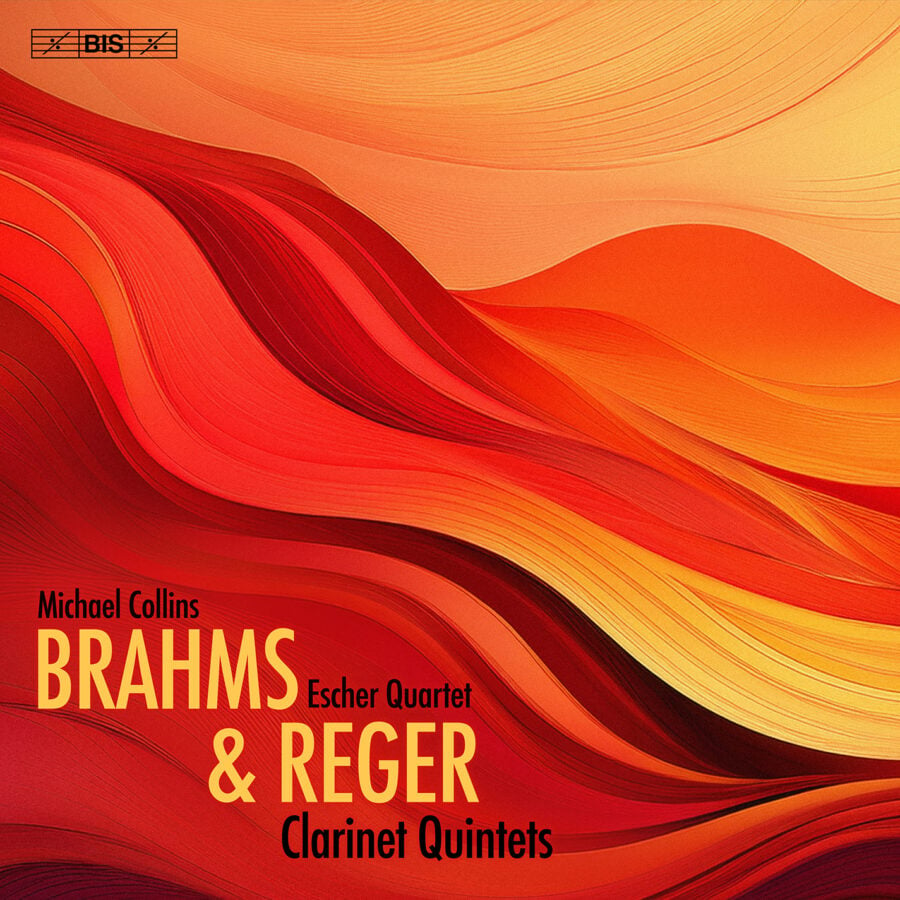
Clarinetist Michael Collins and the Escher Quartet present one of the masterpieces of the clarinet chamber repertoire: Johannes Brahms’s Clarinet Quintet. Composed at the twilight of his career, Brahms’s quintet radiates aching nostalgia and a poignant sense of lost love, ultimately settling into a melancholy serenity. Modeled on those by Mozart and Brahms, Max Reger’s Clarinet Quintet complements the Brahms on this album. “Throughout this deeply elegiac work we feel the resignation of one who has turned away from the hustle and bustle of the world and abandons himself to a transfigured peace.” Those are the words of a German critic reviewing the first performance, not of Brahms’s Quintet but of the one by Reger in 1917. It was his final composition before his untimely death.
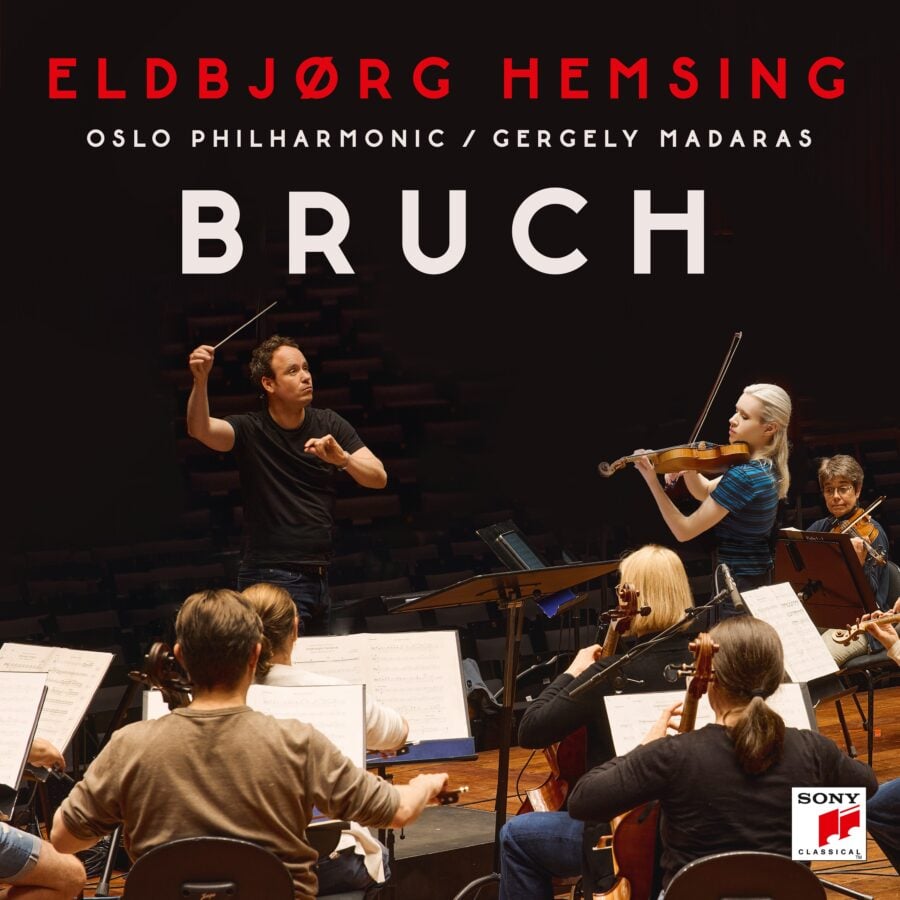
Eldbjørg Hemsing and Oslo Philharmonic under the direction of Gergely Madaras present Max Bruch’s Violin Concerto No. 1 in G minor, Op. 26. The recording reflects Hemsing’s long-standing engagement with one of the major works of the Romantic violin repertoire. She first performed the concerto with the Oslo Philharmonic as a child; now she considers her interpretation ready to be recorded. “The Bruch Violin Concerto has been a lifelong companion for me — I have essentially grown up with this piece. What is remarkable is how many colours, emotions, and layers of meaning have revealed themselves to me over the years. I feel that I have now reached a point in my relationship with the work that justifies making a recording,” says Eldbjørg Hemsing. The album includes additional works by Bruch: the Romance, Op. 85, originally written for viola and orchestra, as well as a new arrangement of In der Nacht, Op. 72 for solo violin and orchestra.
María Dueñas pays tribute to Jascha Heifetz, whose recordings have shaped the Spanish violinist since childhood. The album pairs – as Heifetz once did – Korngold’s Violin Concerto with Lalo’s Symphonie espagnole, and was recorded at London’s Abbey Road Studios with Gustavo Dudamel and the Simón Bolívar Symphony Orchestra of Venezuela. The program also features Debussy’s La fille aux cheveux de lin in an orchestral version, as well as miniatures by Debussy and Ponce with pianist Itamar Golan. For Estrellita, La chevelure, and La plus que lente, Dueñas played the 1731 “Heifetz, Piel” Stradivarius, once owned by Jascha Heifetz.
Violinist Midori and the chamber orchestra A Far Cry present Derek Bermel’s violin concerto Spring Cadenzas. The concerto was commissioned by Midori during the pandemic for her Orchestra Residencies Program to bring young musicians together despite the challenges of remote performance. What emerged is a vivid and deeply personal concerto built around a sequence of interconnected cadenzas, with the solo violin acting as the work’s guiding voice. Written in close collaboration with Midori, the work reflects the “extraordinary artistry, brilliant technique, and inquisitive yet exacting nature” that Bermel found so inspiring throughout the composition process. Inspired by three haiku of Matsuo Bashō, the concerto unfolds in three continuous movements, moving from bubbling energy and icy brilliance to lyrical introspection and restless, searching gestures. A Far Cry is led by Earl Lee, and is joined by young musicians from Boston’s acclaimed Project STEP program.
With the attention given to Rameau’s harpsichord pieces and operas, we often forget that he was also an accomplished violinist. Théotime Langlois de Swarte and William Christie present an imaginary concert in which the violin and harpsichord or organ vie with each other in creative inventiveness. The program draws on the best-known opera scenes and arias by Rameau, but also includes some of his contemporaries — (Charles-Antoine Branche (1722–1779?), jean-Baotiste Cupis (1711–1788), Toussaint Bordet (1721?–1799?) Jacques Aubert (1689–1753), André-Joseph Exaudet (ca.1710–1762), and Théodore-Jean Tarade (1731–1788) — in a poetic journey between the theatre, dance and song. De Swarte performs on the Violon de Carlo Bergonzi de 1733.