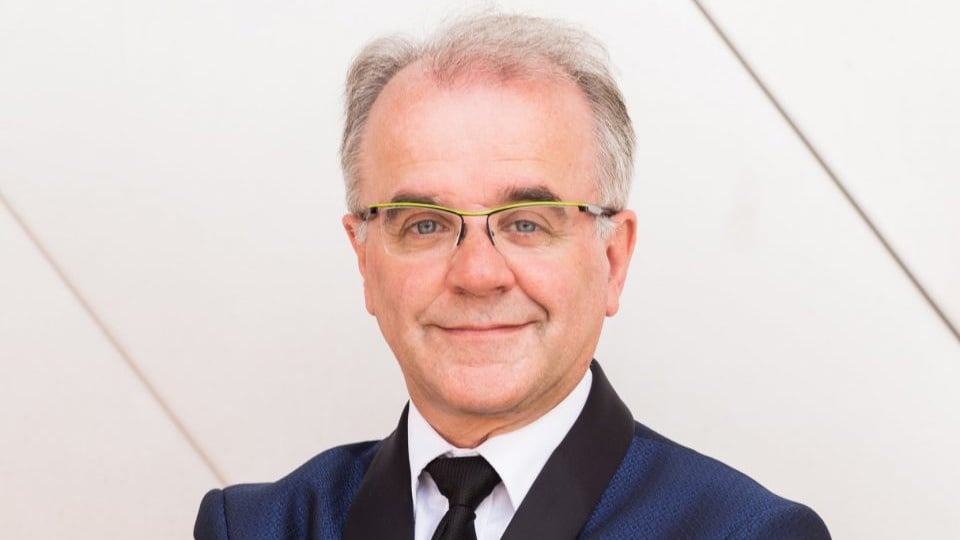
Christopher Bell
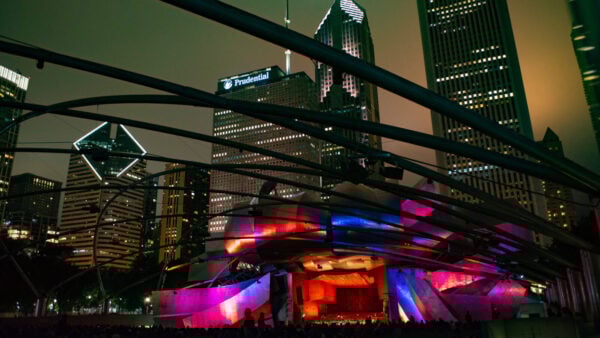
Each August, the end of the Grant Park Music Festival heralds the conclusion of the summer arts calendar in Chicago. Most years, the culmination of the widely loved, free, open-air concert series is a masterwork, which unites orchestra, chorus, and superstar vocal soloists.
This year is no exception. On August 15 and 16th, the Festival culminates with a performance of Carl Orff’s grand, epic Carmina burana, featuring soprano Jana McIntyre, countertenor Reginald Mobley, baritone Troy Cook.
The German composer’s cantata stands as one of the most performed and recognizable masterworks of the 20th century, having been used in film, advertising, and other media. The 1937 work is based on a folio of Medieval poems of the same name. And the piece’s best remembered excerpt harnesses the incredible power of the chorus.
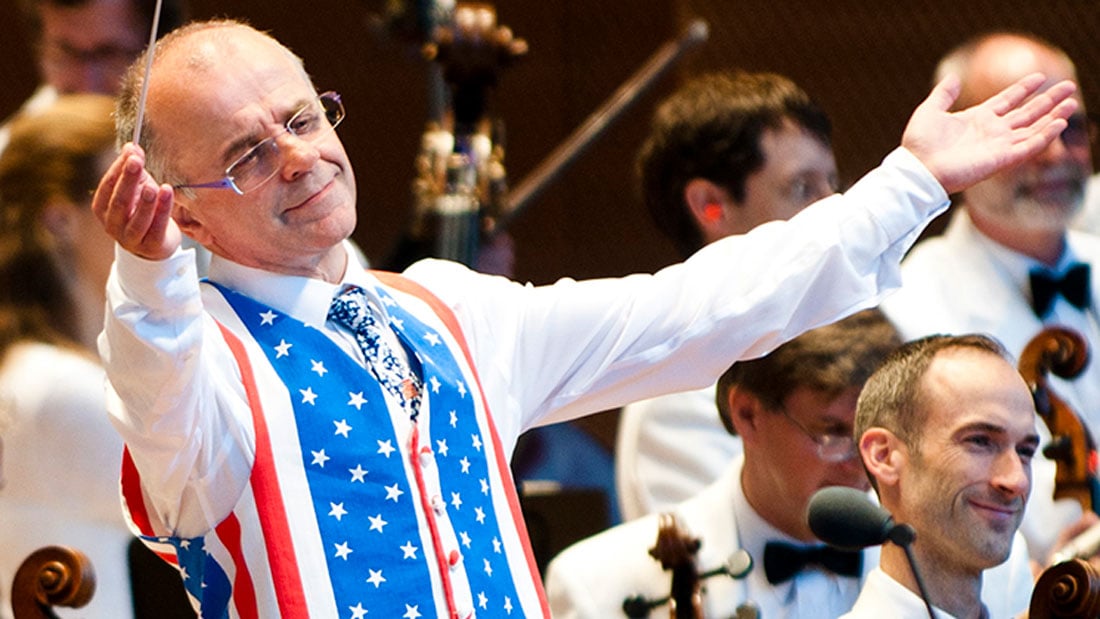
WFMT spoke with longtime Grant Park Chorus Director Christopher Bell about the distinctive draws and challenges of Carmina burana.
WFMT: Talk about the significance of Carmina burana. How would you describe the role of the chorus in the piece?
Christopher Bell: Carmina burana gets done a lot. It is part of a trio of pieces — the other two pieces are hardly ever done. I’m sad to say, the others are a lot less attractive and interesting than Carmina is.
Carmina comes in two versions: the original full orchestra and a version for two pianos and percussion. It’s always great fun. I quite enjoy doing it with the Grant Park Chorus. It’s such a strong group and the rehearsal is very fast.
The best known parts are O Fortuna. They bookend the piece.
There are ten pieces in the first half; the chorus sings most of them. The chorus takes on a storytelling role. Then later on, they’re taking the part of clergy, monks, bibulous, in the pub, drinking, that sort of thing.
The music, especially O Fortuna, is very dramatic. Very powerful. Because it’s been used in films that are somewhat occult, some people think that the text is about that. It can sound Satanic or ritualistic. In fact, it’s not about that at all. It’s about the wheel of fortune spinning and the various consequences of where you land on the wheel. And then there are songs of love, songs of flirtation, drinking songs.
Carl Orff’s musical style is quite repetitive. Lots of the music is strophic — made of verses. You get the same music three times. Sometimes the repetitions are faster. He leans into a quasi-Medieval style. A sort of plainchant. But there isn’t any recognizable actual plainchant in there.
WFMT: From a musician’s perspective, what are some of the challenges of tackling such a familiar or popular piece?
Bell: It reminds me of another very piece: the Requiem by Fauré. It’s not very hard to sing, but it is hard to sing well. So getting the singers to engage with it can be part of the challenge.
When we started the rehearsal for Carmina, we had 86 choristers in the room. I asked how many had never done it before, and the answer was five! Everyone else already had experience with it, and some had sung it many times.
Overfamiliarity is indeed a challenge. I want to make sure they’re prepared for the conductor, but I want to keep their interest and perhaps find something to bring to it that makes the rehearsal process a little more interesting. It’s not easy!
It takes special people to find special things in a piece we’re very familiar with.
WFMT: Does your preparation differ for a performance like a Grant Park concert, where you’re performing outside and in a city center?
Bell: No, pretty much not. We take it as a standard performance of a piece. My job is to prepare it for the conductor. Make sure all the notes and rhythms are correct.
One difference, though, is that at Grant Park, we are singing for microphones. Although it’s not a mic directly up to your face, they are quite close. There is a lot of ambient noise in the city: traffic, people, air conditioners in the height of summer.
So I do tend to emphasize good articulation so the audience can pick up the words that we are singing.
WFMT: Why do you think this particular piece connects with audiences the way that it does?
Bell: Yes, and why do the other two pieces in the trilogy not connect? I think the ones that don’t connect have musical material that is even more simple and even more sparse.
In Carmina, the music connects really well because it’s not so simple, but it is very, very direct. It’s very easy to latch onto for the listener. It’s got a groove, it’s got an energy, it has a sense of melody. That’s why it’s quite appealing right across the range.
People who know it well want a good performance. You don’t just want the notes. The conductor needs to whip up a bit of excitement. There needs to be a bit of fear, a bit of energy, a bit of drive. I’m looking forward to seeing what Giancarlo does with Carmina.
Every year, I close up my house in Scotland to come to Chicago for three months. I walk into that rehearsal room, and the Grant Park Chorus, made up of the city’s finest singers, opens the music. I remember why I’m here. There is a bit of what I call the “Grant Park Magic” that happens on that stage.
Giancarlo Guerrero conducts vocal soloists, the Grant Park Orchestra, and the Christopher Bell-prepared Grant Park Chorus in Carmina burana to conclude the Grant Park Music Festival’s 2025 season. Performances will be held on Friday, August 15 (also airing live on WFMT) and Saturday, August 16. For more information, visit gpmf.org.
This interview has been edited for length and clarity