Mandolin music of Italy, Iberia, and the Black Sea in Song of the Birds, and orchestral music by women composers in Breaking Waves. And albums focusing on works by Florence Price, Valentin Silvestrov, and Georg Philipp Telemann.
New Releases Aug. 12: Birds and Waves
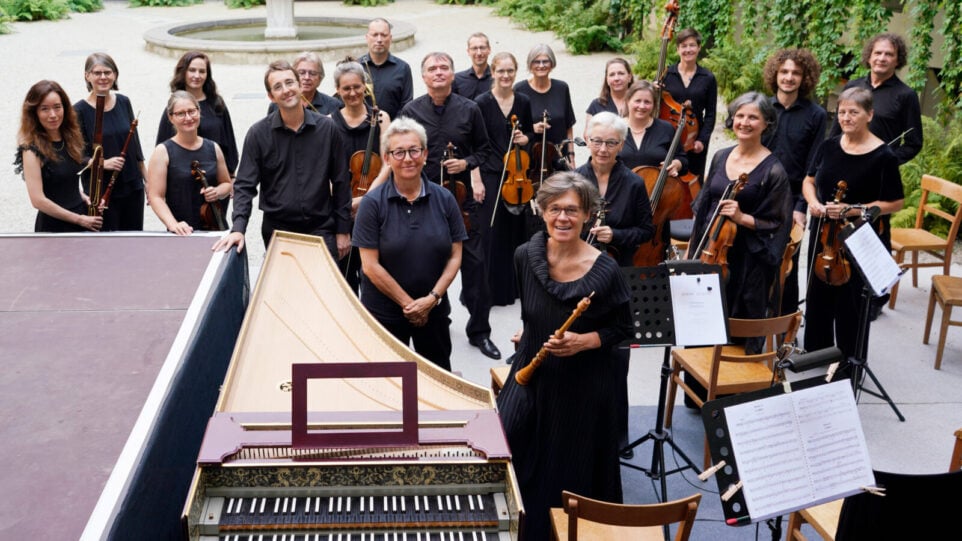
L'Orfeo Barockorchester (Photo: Reinhard Winkler)

Mandolinist Avi Avital explores the music of Italy, Iberia, and the Black Sea interweaving folk and Western classical musics from the past and present. Avital is joined by his ensemble Between Worlds and renowned musical ambassadors (Flamenco singer Marina Heredia from Spain, singer Alessia Tondo from southern Italy, and the Georgian choir Ensemble Rustavi) to bring centuries-old traditions and compositions by Béla Bartók, Manuel de Falla and Fazil Say to life. Song of the Birds is an artistic statement of cultural diversity, of collaboration across borders and, above all, of the unifying power of music.
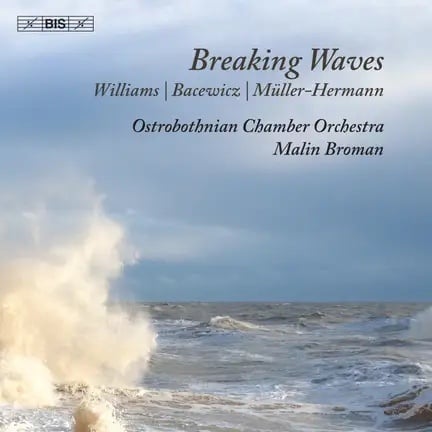
This album comprises three works by three composers of three different nationalities performed by Finland’s Ostrobothnian Chamber Orchestra led by artistic director Malin Broman (who is also an accomplished violinist). The Sea Sketches by Welsh composer Grace Williams opens the program, inspired by the beaches of Glamorganshire and by its seascape. Grażyna Bacewicz’s Fourth String Quartet is played here in an arrangement for string orchestra. Bacewicz was an important figure on the Polish music scene in the mid-20th century, and this quartet is her best-known composition: an approachable work with folk music influences. Vienna-born Johanna Müller-Hermann’s post-romantic String Quartet, also in an arrangement for string orchestra, concludes the program, evoking the golden age of Vienna and the music of Mahler, Strauss, and Müller-Hermann’s teacher Zemlinsky.
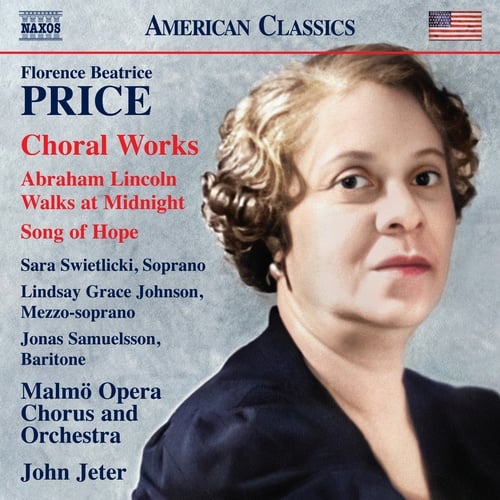
The Malmö Opera Chorus and Orchestra led by John Jeter, a noted champion of the music of Florence Price, present world premiere recordings of Price’s largest choral work, Abraham Lincoln Walks at Midnight, and of the spiritual-inspired Song of Hope, set to the composer’s own text. A series of shorter choral works with piano accompaniment complement the two pieces with orchestra including the world premiere of The Witch of the Meadow, six songs celebrating the natural world, and two sacred compositions. The final song on the album, Resignation, is sung a cappella.
Many of Valentin Silvestrov’s smaller form works for piano are addressed to fellow composers both past and present, including Mozart, Schubert, Chopin, Purcell, Glinka, and Silvestrov’s contemporaries Leonid Hrabovsky, Alexander Knaifel, Arvo Pärt, and Andre Volkonsky. Pianist Alexei Lubimov, who has been performing Silvestrov’s works for more than half a century, curated this program as a musical dialogue with those composers—friends and fellow spirits united by admiration and shared feelings. As Lubimov says in the liner notes for the album: “These pieces are not imitations but meditations on his favorite music, they are his responses to its musical essence. In almost every piece one can hear the stylistic features of the addressee, but all of them contain Silvestrov’s recognizable volatility.”

Telemann remains a paradox: the deeper one delves into his oeuvre, the more boundless his legacy seems. The sheer abundance of his orchestral works and concertos seems to grow exponentially with each new publication. Six previously lost overtures from 1736, of which only a single printed copy survives, have unexpectedly resurfaced and are presented here by L’Orfeo Barockorchester. The collection features an assortment of Baroque dance forms interspersed with exotic elements such as the Polonaise and Mourky, imaginative character sketches, and various fashionable pieces, all presented in a kaleidoscope of orchestral colors.