The first full week of March brings with it joyous releases from fan-favorites and fresh faces alike.
Cedille Records celebrates the 93rd birthday of Justice Ruth Bader Ginsburg with music that adapts a letter written from her son to the label’s founder and president. Cuban-American cellist Dr. Tommy Mesa releases his second solo album bridging tradition and innovation, while Chicago composer and pianist Myron Silberstein follows in the footsteps of earlier American composers.
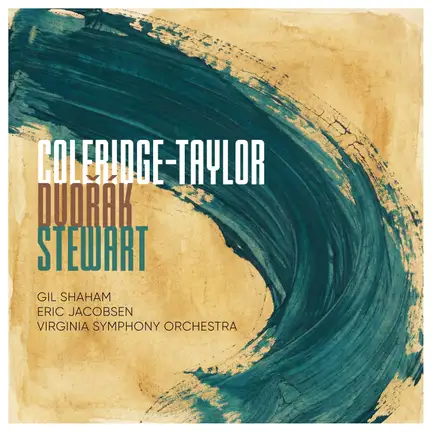
Renowned woodwind chamber group Windsync decides to pay homage to one of classical music’s most famous teachers. Elswhere in the realm of chamber music, supergroup Anzû Quartet presents their interpretation of a pivotal 20th-century piece. Finally, Gil Shaham joins conductor Eric Jacobsen and the Virginia Symphony Orchesta in exploring two vastly different violin concertos: the Concerto in G Minor, op. 80 by Samuel Coleridge-Taylor, and the Concerto in A Minor, Op. 53 by Antonín Dvořák.
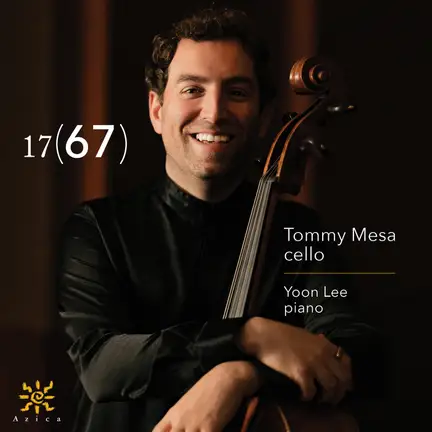
Cuban-American cellist Dr. Tommy Mesa second solo album features works for cello and piano by Saint-Saëns, Jocelyn Morlock, Jules Massenet, Ernesto Lecuona, Florence Price, Francisco Braga, Andrea Casarrubios, Marlos Nobre, Jennifer Higdon, Ernest Bloch, and Kinan Azmeh. The album title draws its meaning from two worlds: 1767, the birth year of the Nicolò Gagliano cello Mesa plays throughout the album, and 6-7, a wildly popular modern slang term. Together, they frame the album’s central idea: the meeting of tradition and innovation. “This is the artistic space I cherish most: where historical craftsmanship and modern creativity coexist,” says Mesa. “17(67) pays tribute to the journeys of composers who came before us while championing the voices of my peers, whose music helps shape the classical world of today and tomorrow.” The repertoire on 17(67) — spanning eras, styles, and sound worlds — reveals how new works can feel as timeless as the classics, and how the canon continually renews itself when placed in modern conversation.
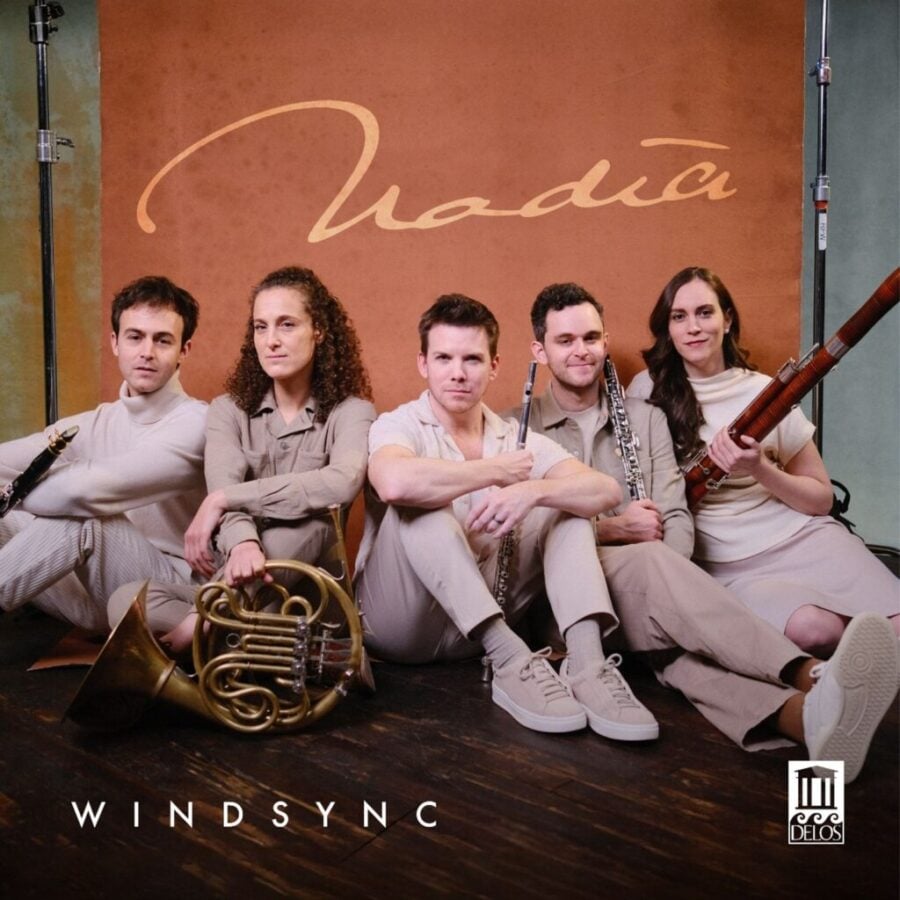
WindSync’s new album pays homage to the French composer, conductor, music theorist, and legendary composition pedagogue Nadia Boulanger, who wielded immense influence over American music and musicians. Boulanger found a way to nurture each composer’s individual voice, and in doing so sowed the seeds of the kaleidoscopic breadth of styles that emerged in American music in the 20th century. The album opens with wind arrangements of Boulanger’s Prelude in F minor and Three Pieces, both originally composed for organ. These are followed by the world premiere recording of the Woodwind Quintet of Marion Bauer, who met Boulanger in Paris in 1906 and became her first American student, trading lessons in counterpoint and harmony for English lessons. Philip Glass’s Etude No. 17 reflects the process of building musical skills from the ground up that he describes as comprising his training with Boulanger. Elliott Carter’s virtuosic Woodwind Quintet bears a dedication “To Mademoiselle Nadia Boulanger” and was written to “emphasize the individuality of each instrument and [make] a virtue of their inability to blend completely.” Finally, Quincy Jones credited his study with Boulanger in the 1950s with illuminating for him the structure and science of music. The Midnight Sun Will Never Set is included here in honor of the recently departed composer.
Comprising violinist Olivia De Prato, cellist Ashley Bathgate, clarinetist Ken Thomson, and pianist Karl Larson on piano, the Anzû Quartet brings to the table a vast collective experience with groups like Bang on a Can All-Stars, Mivos Quartet, Eighth Blackbird, Ensemble Signal, and Bearthoven. For their second album in as many years, this new-music supergroup presents the work that inspired their formation, applying an exacting interpretive style, honed by a devotion to contemporary compositions, to one of the pivotal works of the 20th century. Anzû’s pianist Karl Larson says, “For many classical musicians, the [Quartet for the End of Time] is the most modern piece in their repertoire, perhaps representing a sort of culmination or conclusion for what came before it. For the Anzû Quartet, the Quatuor pour la fin du temps is the oldest piece in our repertoire, and we view it as a catalyst for much of the contemporary music we perform today.”
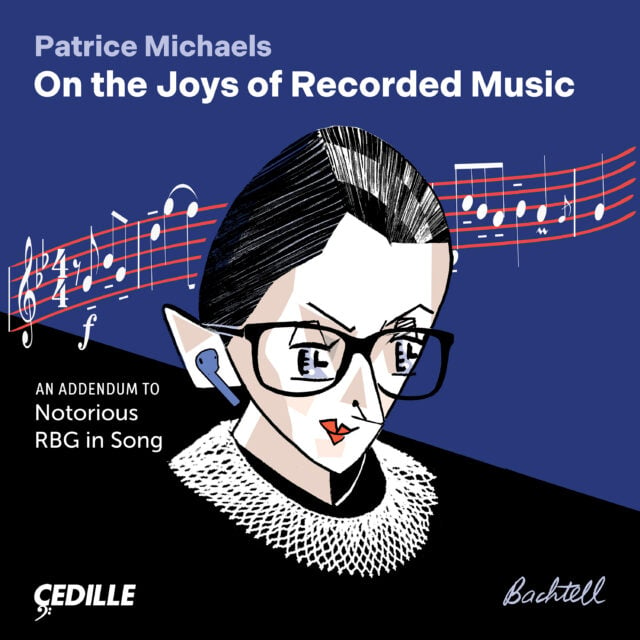
Cedille Records marks the 93rd anniversary of the birth of Justice Ruth Bader Ginsburg (b. March 15, 1933) with the digital single release of Patrice Michaels’s “On the Joys of Recorded Music.” Performed by soprano Alisa Jordheim and pianist Kuang-Hao Huang, the previously unreleased song was originally intended for Michaels’s cycle The Long View, featured on the album Notorious RBG in Song. The song is set to Michaels’s lightly adapted text of a 1999 letter from Justice David H. Souter to James Ginsburg, founder and President of Cedille Records — and son of RBG. In the letter, Justice Souter expresses his admiration for the emotional power of Rachel Barton Pine‘s recording of the complete Handel Violin Sonatas, and his utter amazement that a recording could move him as deeply as a live performance.
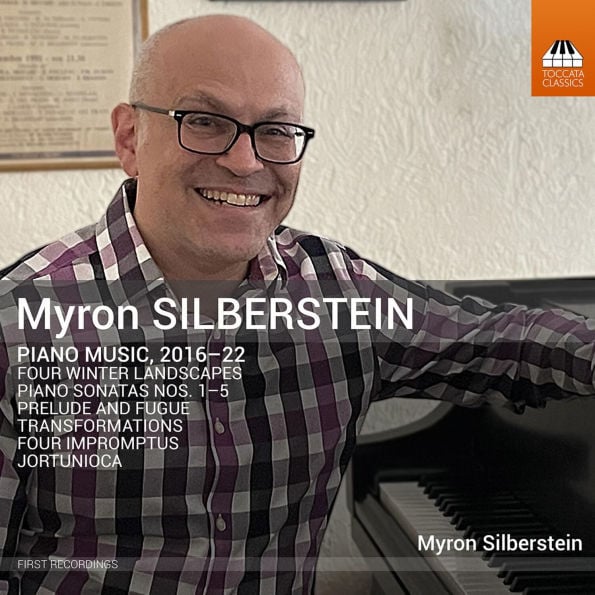
Myron Silberstein, Brooklyn-born (in 1974) and a long-term resident of Chicago, belongs to that centuries-old tradition of the composer-pianist. But here the distant roots are not so much in Mozart and Beethoven as in Copland and Barber. Silberstein’s language echoes the tradition of earlier American composers like Paul Creston, Peter Mennin, and Vincent Persichetti, and his tonal harmony may remind some listeners of mid-twentieth-century jazz, especially in its sense of improvisatory freedom. Like much of American culture more generally, it is open, outgoing, and often positive in spirit.
Gil Shaham’s latest album with conductor Eric Jacobsen and the Virginia Symphony Orchestra explores the violin concerto as a vehicle for cultural memory and continuity. The program pairs Samuel Coleridge-Taylor’s Violin Concerto in G minor, Op. 80, and Antonín Dvořák’s Violin Concerto in A minor, Op. 53, with the world-premiere recording of “F. Harper,” from The Famous People by Curtis Stewart. Coleridge-Taylor’s concerto reveals a Romantic voice shaped by lyricism and rhythmic vitality, while Dvořák’s work reflects folk influence and communal musical expression. Stewart’s F. Harper responds through a contemporary lens, engaging questions of naming, lineage, and identity. Inspired by the layered meanings of “Slavonic,” the work draws parallels between European histories of enslavement and the ways Black Americans continue to shape pride and cultural legacy today.