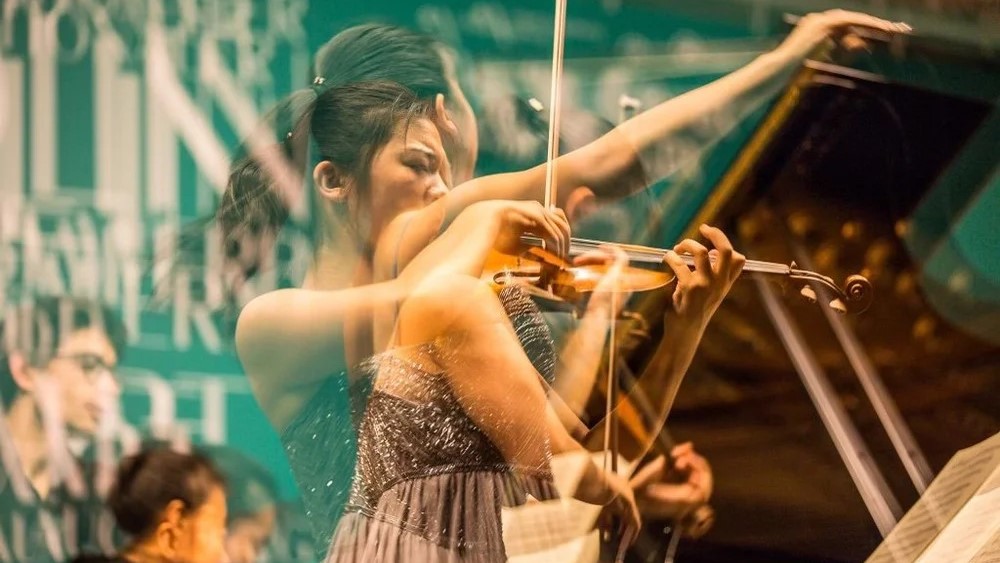
Karisa Chiu in competition (Photo: Christian Menkel)
American violinist Karisa Chiu was seemingly destined for a life in music. Raised in a musical family – her father, Cornelius Chiu, is a first violinist in the Chicago Symphony Orchestra, and her mother and uncle are celebrated pianists – she entered major competitions early and amassed an impressive list of honors, including top prizes at the Menuhin, Leopold Mozart, and Stulberg competitions. So when she fell short of winning Cedille Records’ inaugural Emerging Artist Competition in 2021, Chiu assumed the label’s coveted grand prize had slipped out of reach.
But her thoughtful performance that year made an impact. Shortly after the competition, Cedille Records president Jim Ginsburg contacted Chiu with an unexpected proposal: the label wanted to sponsor her debut recording anyway. That decision marked Cedille’s first time in two decades working with a new solo violinist.
Despite the pandemic, travel complications, and other challenges, Chiu collaborated with pianist Zhu Wang and Cedille to shape a personal debut album that reflects her Chicago roots and family heritage, and explores what grounds her sense of home.
With the album now complete, Chiu spoke with WFMT about the stories behind the music and the idea of “home” that shaped the project.
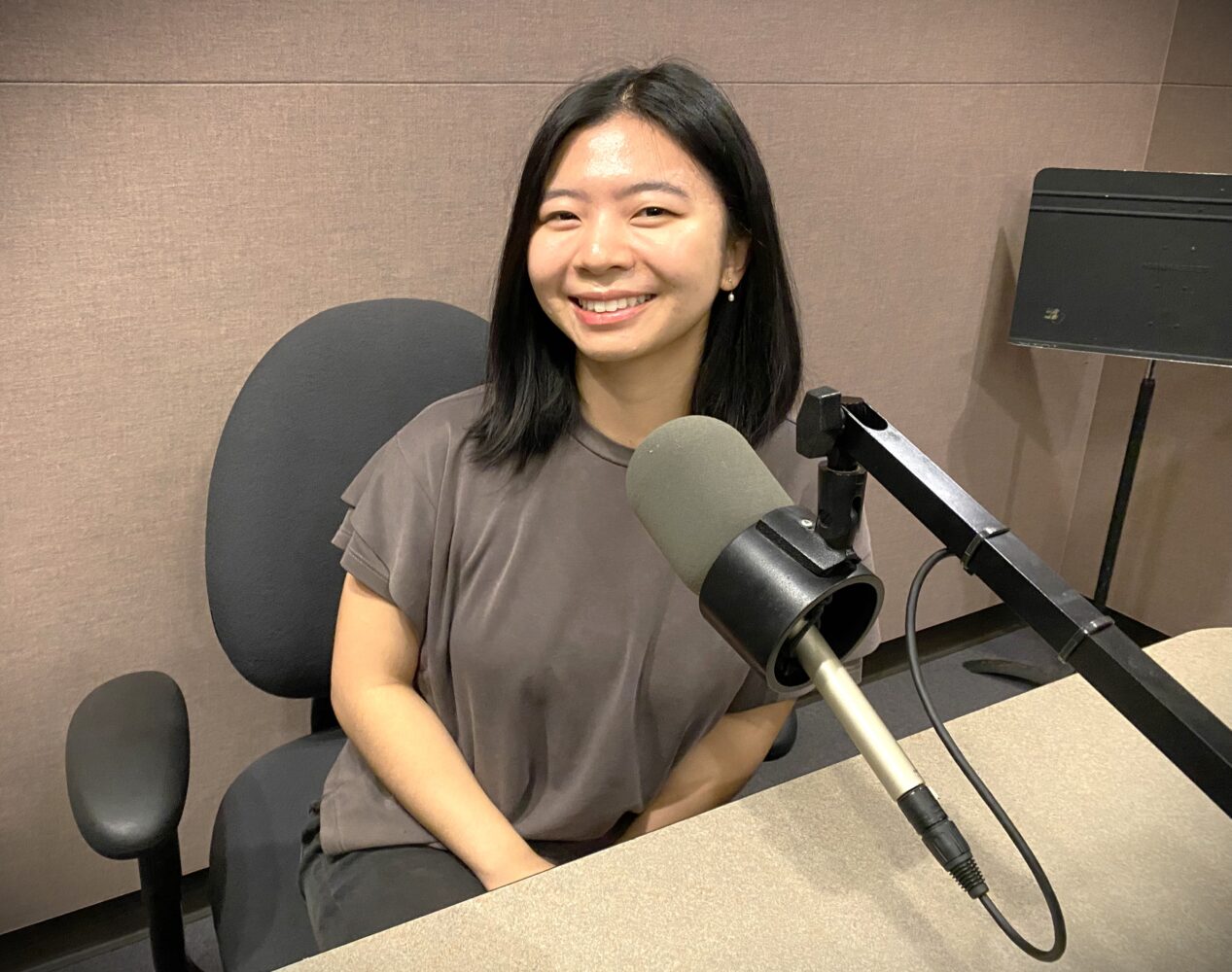
Karisa Chiu at the WFMT studios.
WFMT: When were you first approached by Cedille Records about recording this album?
Chiu: I participated in the inaugural Emerging Artists Competition hosted by Cedille Records in 2021, where the winner had the honor of recording an album in their studio. I ended up being runner up and didn’t win the competition. It was really a pleasant surprise when Jim Ginsberg (President of Cedille) reached out and expressed that he still wanted to work together.
At that point, I was not really expecting anything: I played my best as I always try to do, but not every competition works out in your favor. And yet he reached out! I was so honored.
WFMT: How much of a part did Cedille Records play in choosing the music and direction of the album?
Chiu: Jim was the producer and Bill Malone was the recording engineer. We recorded at Gannon Hall at DePaul University. I didn't really know what to expect in the recording process. But they were total professionals, very respectful of the opinions that I had, and offered so much guidance. I chose the works. It was really a collaboration.
They first asked me if there were any pianists with whom I like to collaborate. I had met Zu Wang when I was doing my undergrad work and he was doing an artist diploma at the Curtis Institute of Music. He is just a phenomenal pianist and person. Recording with a friend was such a lovely experience, because you have that comfort, you can be honest with each other about the things that you're feeling.
We rehearsed for a month before the project. The type of music that's featured on this album required a lot of flexibility; he [Wang] is strong yet flexible. The piano parts he played weren’t easy, and he really hit it out of the park.
WFMT: Why the theme of home?
Chiu: I think in your twenties, you tend to do a lot of soul searching. This opportunity came at a moment where I was doing a lot of self-reflection. When you have the chance to record a debut album, I think the question that immediately comes to mind is – who am I? What kind of album can I present that represents who I am?
I realized there were pieces that meant a great deal to me. I got to thinking that home is something fundamental to all of us, despite it meaning something different to everyone. It's not just the literal home where you might have grown up: it can mean your culture, or people that mean a great deal to you. I wanted the listeners to feel like they could reflect on what home means to them as well.
WFMT: How did you choose to reflect your physical home – Chicago – in these pieces?
Chiu: Well, I think in a way there were several pieces about Chicago. Maybe the most overt was the Augusta Reed Thomas piece that I had learned while studying at the Music Institute of Chicago Academy with Almita Vamos. It's just a gorgeous, semi-lullaby... and immediately captivated me. I had the opportunity to work with Mrs. Thomas at the Curtis Institute, and I knew that she had a lot of Chicago ties and was composer-in-residence at the Chicago Symphony where my dad works. It became a cool tie between the home I was building at Curtis and my home in Chicago.
The Sibelius Five Pieces and the Debussy Violin Sonata also represent Chicago to me. They're both pieces that I heard a lot growing up in my childhood home. My parents are musicians, so those are the two pieces I associate with my childhood
WFMT: As somebody who started her musical journey in Chicago, how would you characterize the classical music scene here?
Chiu: I’ve really come to appreciate how amazing Chicago is for the arts, and the city’s incredible cultural scene, beginning with the number of opportunities I had to explore my musicality as a child.
I was a guest on WFMT’s program Introductions a few times throughout the course of my high school career: sometimes with a group, sometimes by myself and my mom. As a kid, doing an interview is always kind of nerve-wracking: I remember being very nervous right before. Then when I got to WFMT, I was at ease because it was just so easy to talk to the person interviewing me. It was just a really cool experience, I think, to be in this space and to know that my music was being broadcast to Chicago.
I also found a community at the Music Institute of Chicago where I was surrounded by people pursuing the same things as me. There were competitions that we could do in Chicago; I had so many people that I could look up to – Rachel Barton Pine, Ben Bleman, Matt Lippman – the list goes on and on. I just knew that I wanted to follow in their footsteps and the path that they laid out.
WFMT: You had also mentioned your cultural heritage coming into play on this album
Chiu: Yeah, absolutely. My dad is Chinese and my mom immigrated here from Korea when she was 14, so that has been a huge part of my upbringing and how I define home. Because my mom is a pianist, I've been playing with her longer than any other pianist in my life. It always feels like home to be playing together with her. I remember a concert in Korea in 2022 where we played the Fauré Violin Sonata. The Fauré is in the back of my mind as I recall that trip – it'll always be a very special memory to me. That’s why it’s on the album as well
WFMT: What do you hope this album invokes in its listeners?
Chiu: What I began to realize as I was recording this album is that sometimes, what is most creative is what is most personal. It just comes with digging deep into oneself and trying to figure out who you are. That has been such a valuable experience for me. Knowing who we are on the inside, everything that makes us who we are, is essential in how we go about our life and how we interact with other people.
I hope this album is an encouragement for people to be curious about each other in a world where it’s becoming increasingly difficult to connect. I think the point of art is to bring people together and to create a community, but also to connect with yourself.
Karisa Chiu will be making her debut at Carnegie Hall on April 14, 2026. Learn more about her new album HOME here.