The centerpiece of this week’s collection is an album released just in time for Earth Day. Terra Infirma features world premiere recordings of major new works by Reena Esmail, including a titular work inspired by ancient Hindustani ragas and the catastrophic Los Angeles fires of 2025. Baritone Samuel Hasselhorn and pianist Ammiel Bushakevitz also mark an important occassion by releasing another album in their annual series marking the 200th anniversary of Schubert’s final five years. Canadian pianist Jan Lisiecki returns to the concertos of Mozart a decade after his Deutsche Grammophon debut, this time with the Bamberg Symphony, while internationally acclaimed Bach experts Il Gardellino return with a new album dedicated to one of Bach’s contemporaries. Finally, Finnish conductor Eva Ollikainen leads the Iceland Symphony Orchestra in the four symphonies of Arvo Pärt.
New Releases Apr 21: Songs and Strings
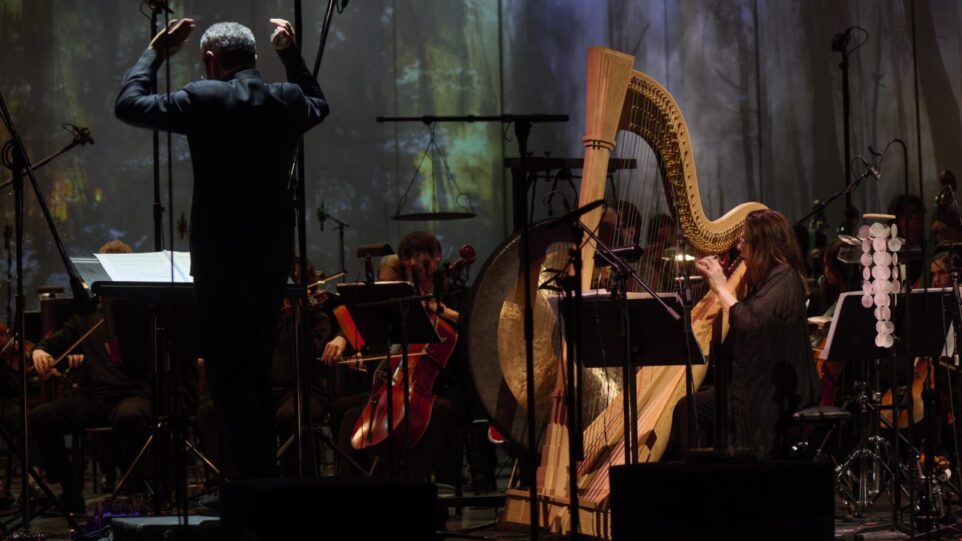
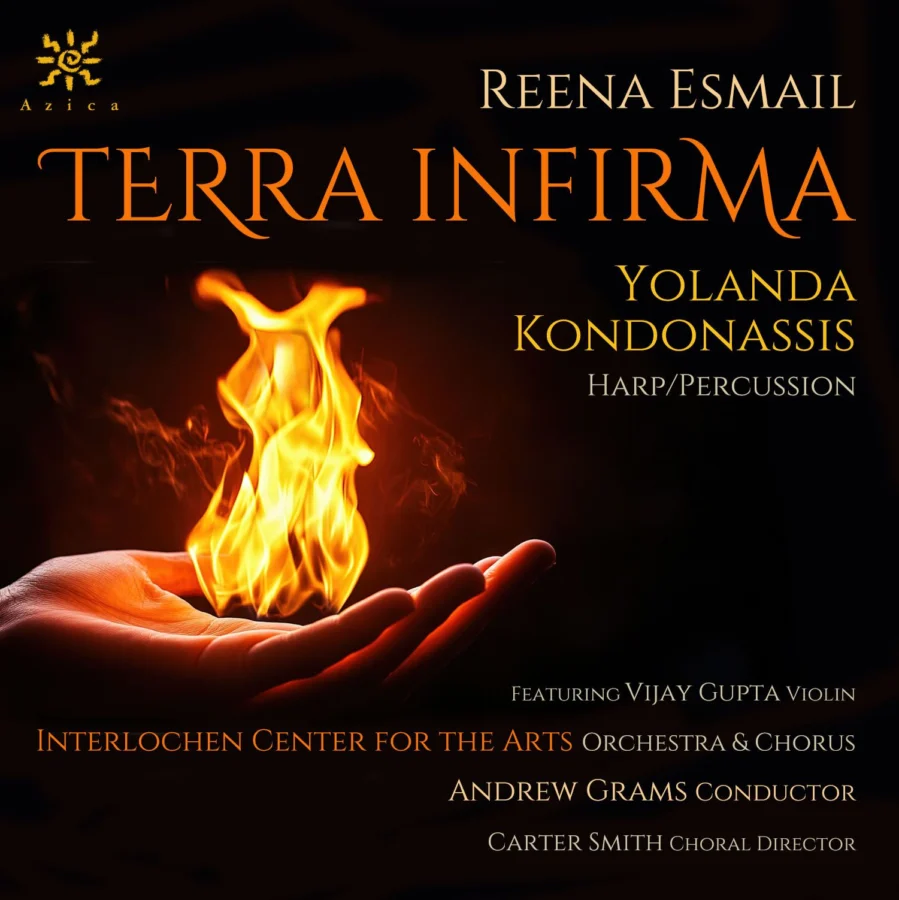
Marking Earth Day, Grammy-nominated harpist Yolanda Kondonassis releases her new album Terra Infirma featuring the titular work by Reena Esmail – a concerto for harp and percussion both performed by Kondonassis with the Interlochen Center for the Arts Orchestra conducted by Andrew Grams. Terra Infirma was directly informed by Esmail’s experience living in Los Angeles during the catastrophic fires of January 2025. She writes in the liner notes, “Though the idea had been set in motion four years earlier, the timing of its creation was uncanny. I began writing this concerto in January 2025, a few days before wildfire ravaged my neighborhood of Altadena, CA. The material for immolation came to me as I walked the hills of Los Angeles while we were evacuated. The piece draws on the ancient Hindustani ragas of Deepak, which evokes fire, and Megh, which extinguishes it through rain.” Terra Infirma reflects not only the environmental passion and advocacy of both Esmail and Kondonassis, but also their inspiration to innovate and expand the concerto form. In this bold new work, the harp symbolizes the protagonist Earth, both fragile and powerful. The towering instrument is moved choreographically by Kondonassis across the stage as she journeys through various arrays of suspended percussion. Esmail describes the work as “part virtuoso concerto, part performance art, and part theater.” Kondonassis says, “The personal and musical resonance that I feel with Reena has resulted in a work that’s deeply personal, uniquely colorful, and ground-breaking in so many ways. The harp is a highly visual instrument, and Terra Infirma utilizes that element to the fullest. In this work, the harp is actually a character in the musical drama onstage, and that gives me the chance to portray an enormous range of artistic emotion.”
The album of world premiere recordings of major new works by Reena Esmail includes Sandhiprakash for violin and harp featuring violinist Vijay Gupta, and Earth Speaks: Curiosity for chorus and solo harp featuring the Interlochen Center for the Arts Chorus directed by Carter Smith.
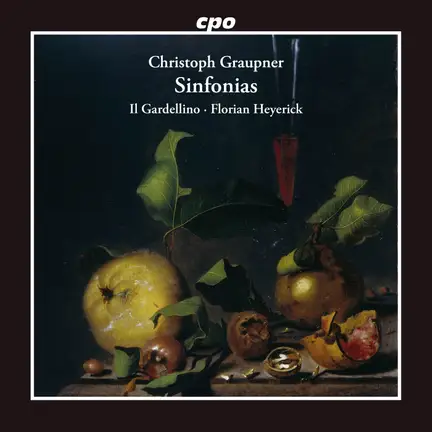
Founded in 1988, Il Gardellino is a Flemish Baroque orchestra whose name is taken from the virtuosic goldfinch in Vivaldi’s eponymous concerto. What was applied as a playful metaphor almost 40 years ago, now encapsulates the identity of this internationally acclaimed Belgian period instrument ensemble acclaimed for their focus on works by Johann Sebastian Bach and his contemporaries Johann Friedrich Fasch, Carl Heinrich Graun, Handel, Johann Gottlieb Janitsch, Telemann, and Vivaldi. Their latest album showcases diverse and unique orchestral compositions by Christoph Graupner, whose employer, the Landgrave of Hesse-Darmstadt, prevented him from accepting the post of music director of the Thomaskirche in Leipzig in 1723 — a job that went to J.S. Bach. “Would he have been just as successful with the dignified councilors on the Pleibe as he was under the aegis of his aristocratic employer?” muses conductor Florian Heyerick. “By the end of this two-and-a-half-hour selection at the latest, we must thank His Serene Highness for not letting Graupner go three hundred years ago.”
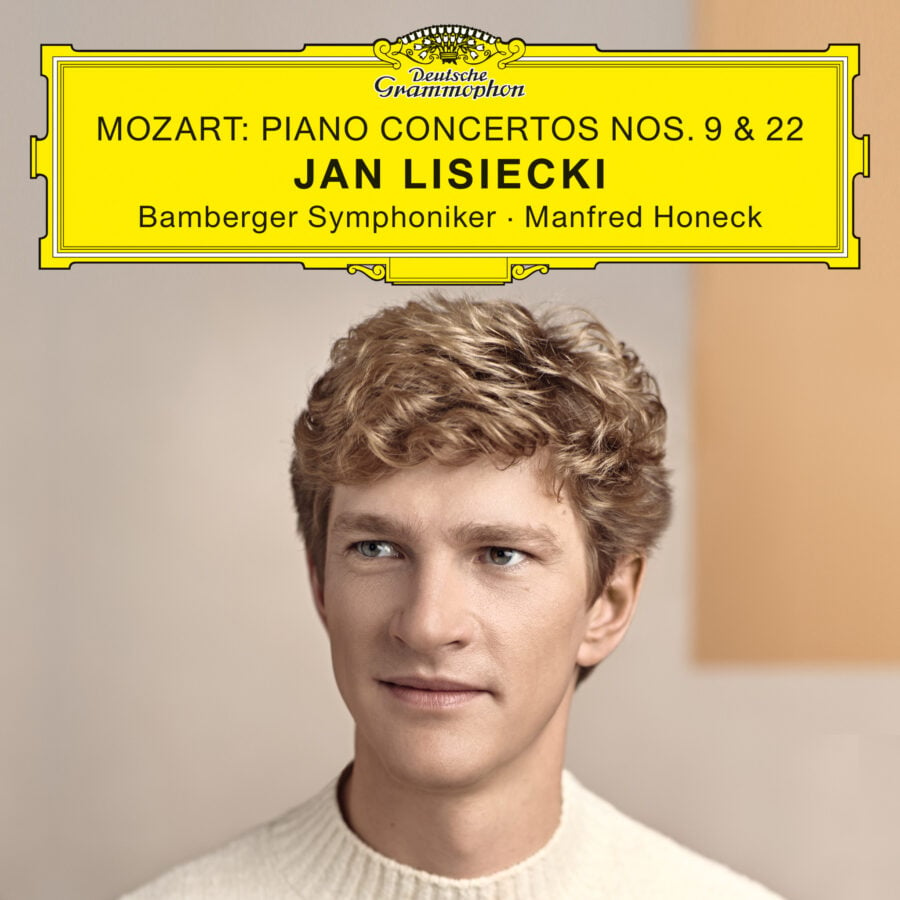
Canadian pianist Jan Lisiecki returns to the concertos of Mozart a decade after recording Nos. 20 and 21 for his Deutsche Grammophon debut. Joined by the Bamberg Symphony directed by Manfred Honeck, Lisiecki’s latest recording presents a contrasting but complementary pair of works in E-flat major: Concertos Nos. 9 and 22. “Recording these two works was a dream of mine,” says Lisiecki, “and I’m very glad to have been able to do so with a dream team, too.” Ever since he first worked with Maestro Honeck in Chicago in 2019, Jan Lisiecki had been keen to record with him. “I immediately felt that he had such an affinity and respect for Mozart’s music and was able to communicate it with the orchestra – the phrasing, the elegance, the beauty,” he recalls. “So to work with him on a recording of Mozart is an absolute joy and privilege.”of the two concertos presented here, Lisiecki adds, “Mozart had an innate connection with E flat major and was able to write such beautiful works in this key. Sometimes composers feel at home in certain places and certain keys, and one senses that here.”
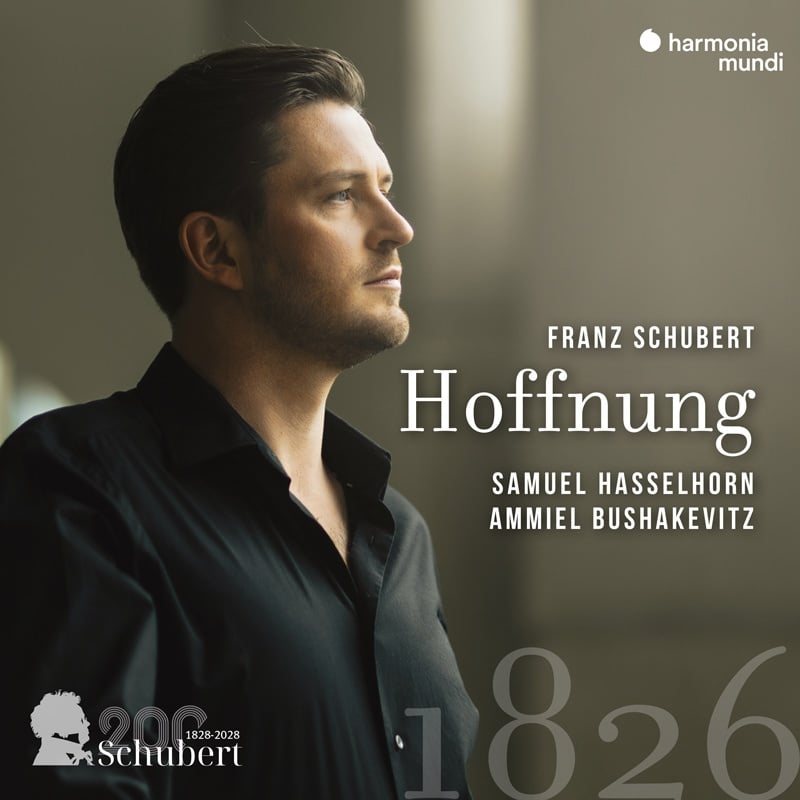
The years 2023-2028 mark 200 years since the final five years of the life of Franz Schubert, leading up to the 200th anniversary of the composer’s death in Vienna on November 19, 2028. Paying homage to this important event, baritone Samuel Hasselhorn and pianist Ammiel Bushakevitz created SCHUBERT 200: a multi-genre international project aimed at a new, young generation of Lieder enthusiasts. The project goal is to discover the extent to which Schubert’s songs are relevant to our lives in the 21st century and how this connection can be made tangible. A major focus of SCHUBERT 200 is to record one album of Schubert Lieder per year mirroring the songs written exactly 200 years earlier. Hoffnung (Hope), the third volume of the series, celebrates the composer’s re-found exuberance. 1826 was a year of renewal for Schubert, bringing an astounding rush of artistic energy. These Lieder, pitched between nostalgia and quiet confidence, sing of a hope transcending the vagaries of life.
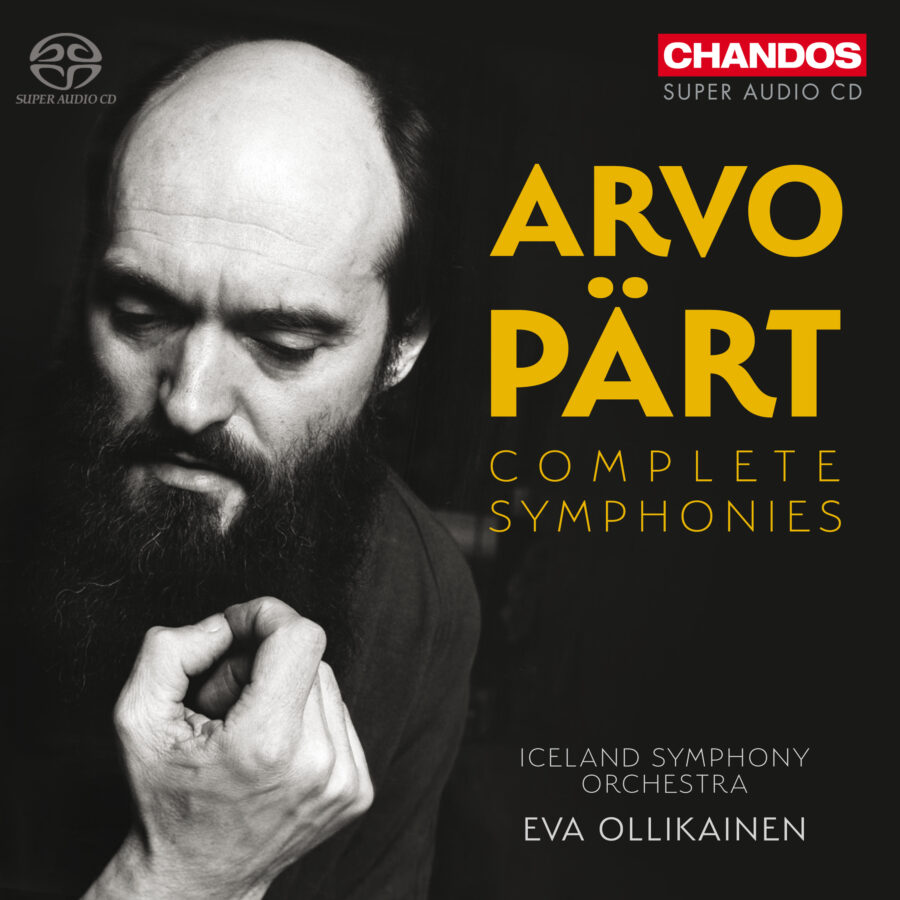
Finnish conductor Eva Ollikainen leads the Iceland Symphony Orchestra, where she has held the post of Chief Conductor and Artistic Director since 2020, in the four symphonies of Arvo Pärt. Composed over a span of forty-five years and bearing little or no relationship to one another, the symphonies represent the composer’s output at separate parts of his creative journey. The First Symphony was composed in 1963, shortly after Pärt had graduated from the Tallinn Conservatory. Its two-movement structure looks to Baroque forms, but the harmonic language is extremely advanced, reminiscent of twelve-tone serialism. The Second Symphony, from 1966, in three movements, employs a combination of serialism and textures hinting at Penderecki and the Polish school. The Third Symphony from 1971, again in three movements, reflects the time Pärt spent in the late 1960s studying chant and mediaeval music. Symphony No. 4, “Los Angeles,” came much later, in 2007–8, with a style directly inspired by sacred music. Pärt took as his models for this last symphony two great litanies of the Orthodox Church: the Canon of Repentance, and the Canon to the Holy Guardian Angel. Unusually scored for strings, harp, timpani, and percussion, this final work is also cast in three movements.