This week is dedicated to music of an inconquerable spirit. Multi-Grammy-nominated pianist Marta Aznavoorian performs in a concerto she commissioned from Stacy Garrop titled Invictus. Kip Winger, best known for his work with Alice Cooper and his own band Winger, displays power and restraint in his new violin concerto commissioned by Giancarlo Guerrero. On the other side of the ocean, Spanish violinist Cristina Prats Costa presents her debut solo debut album, a vibrant portrait shaped by the cultures of the Mediterranean. Kaleidoscope Chamber Collective concludes their series of Brahms pairings with an album featuring Dora Pejačević, while I Giardino Armonico releases their 19th volume in their quest to record all of Haydn’s symphonies.
New Releases May 12: Unconquered
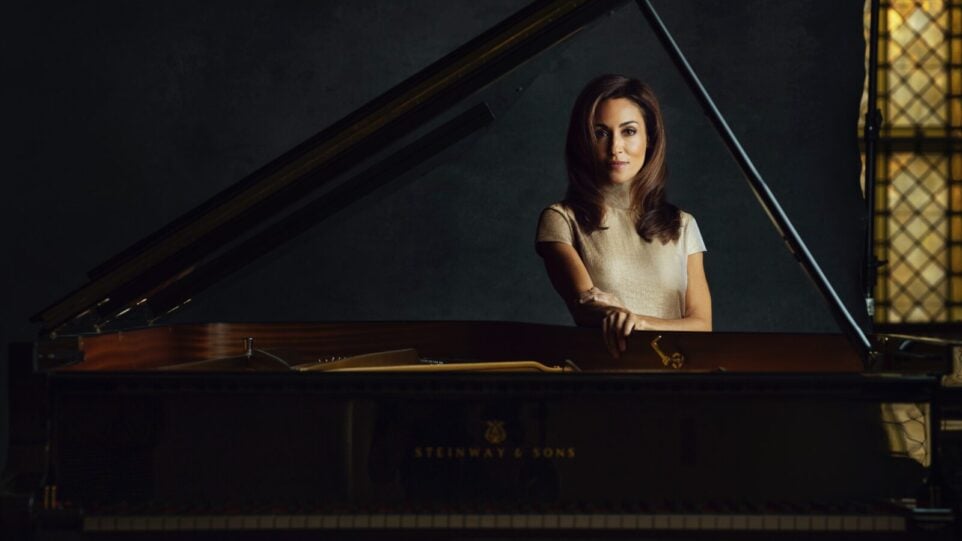
Pianist Marta Aznavoorian. Hair and Makeup by Kasha Rodig (Photo: Todd Rosenberg Photography).
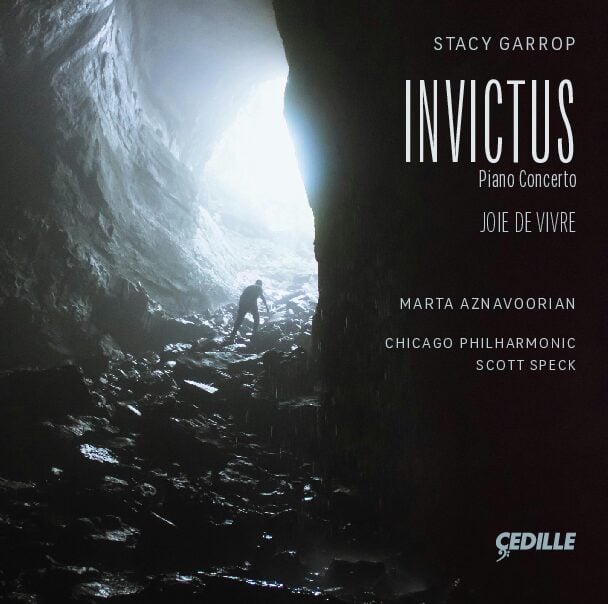
Inspired by William Ernest Henley’s (1849–1903) iconic poem of the same name, Stacy Garrop’s new piano concerto INVICTUS was commissioned by and written for Chicago native and multi-Grammy-nominated pianist Marta Aznavoorian, who performs it with the Chicago Philharmonic under Artistic Director Scott Speck. Despite a difficult life beleaguered with health issues, William Ernest Henley’s poem Invictus, Latin for “unconquered,” is a motivational piece that encourages strength in the face of adversity. Famous figures such as imprisoned anti-apartheid leader Nelson Mandela, labor activist Eugene V. Debs, and Prince Harry, who founded the 2014 “Invictus Games” to help wounded service members, have recited and paid homage to this poem as a source of inspiration. The world-premiere recording of INVICTUS is a souvenir from last fall’s Ear Taxi Festival, a citywide celebration of contemporary music. In their review for the world-premiere performance, Chicago Classical Review praised Garrop for her “accessible, exciting, shrewdly crafted music” while hailing Aznavoorian for “[having risen] to the rigors of the big-boned solo part like the consummate virtuoso she is.” The release also includes the world-premiere recording of Garrop’s bright solo piano piece, Joie de vivre.
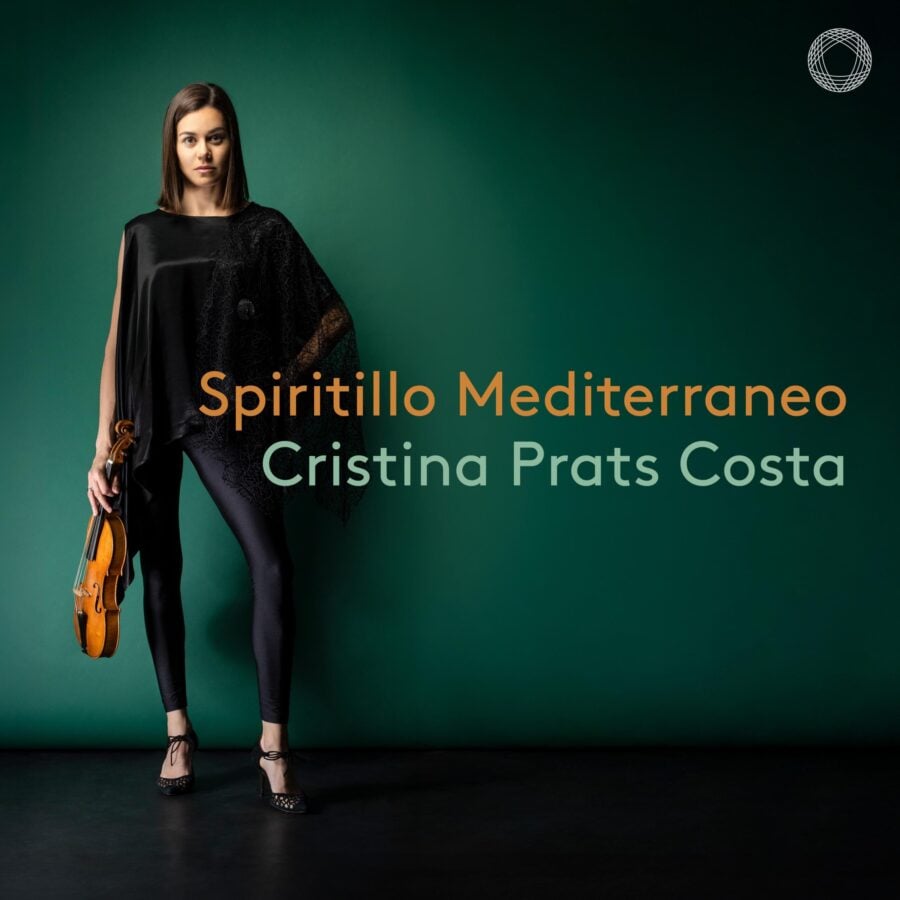
Spanish violinist Cristina Prats Costa presents her debut solo debut album, a vibrant portrait of the sound world of 17th and early 18th century music shaped by the cultures of the Mediterranean. Inspired by Andrea Falconieri’s Il Spiritillo Brando, the album takes the spiritillo – a mischievous, animating sprite – as a metaphor for the Baroque imagination: a realm of invention, improvisation, and richly ornamented dialogue. The Mediterranean emerges here not as a boundary but as a crossroads, where Italian virtuosity, Spanish rhythmic fire, and French elegance converge. The program features music by Andrea Falconieri, Nicola Matteis, Johann Schop, Heinrich Biber, Jean Féry Rebel, and Antonio Vivaldi. Cristina Prats Costa includes her own arrangements of works by Spanish composers Santiago de Murcia, Gaspar Sanzm and José de Nebra. The addition of castanets in the Spanish pieces and the inclusion of percussion and Baroque guitar throughout add an unmistakable Iberian rhythmic vitality.
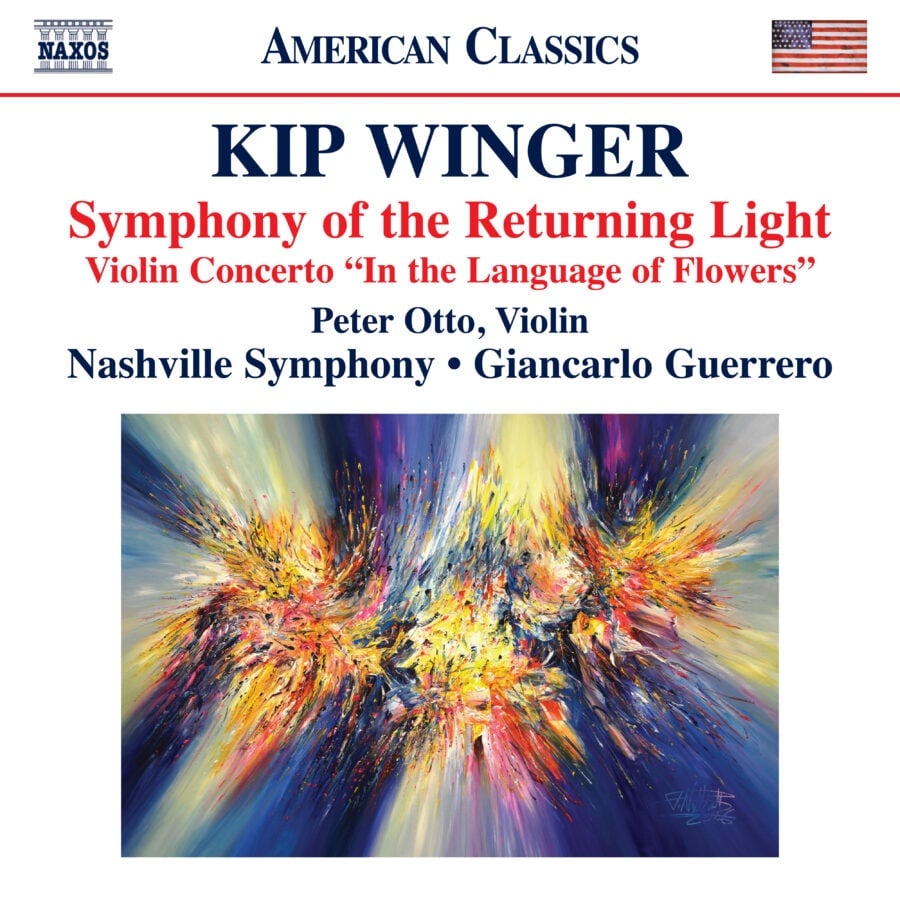
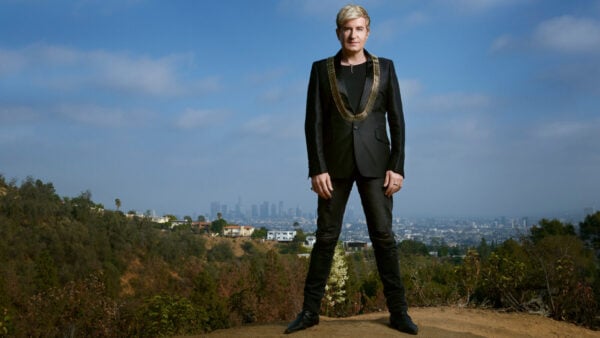
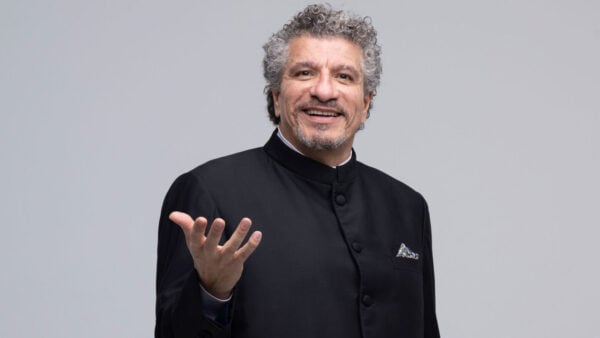
Kip Winger is a genre-bridging composer with a long and successful career in rock music affiliated with luminaries of the genre such as Alice Cooper, Alan Parsons, Roger Daltrey and Bob Dylan. Over the past two decades, however, Winger has been establishing himself as a composer of orchestral classical music. His celebrated ballet score, Conversations with Nijinsky, led conductor Giancarlo Guerrero to commission the two works on this album. The violin concerto In the Language of Flowers incorporates ideas of floriography – in other words, codes based on flowers. The use of extra-musical symbolism continues with the second piece, Symphony of the Returning Light, which is an autobiographical fantasy in the tradition of Berlioz that incorporates the use of Morse code rhythms and centers on the theme of atonement. Maestro Guerrero, Music Director Laureate of the Nashville Symphony, leads the performances recorded live in concert with concertmaster Peter Otto as soloist in the violin concerto.
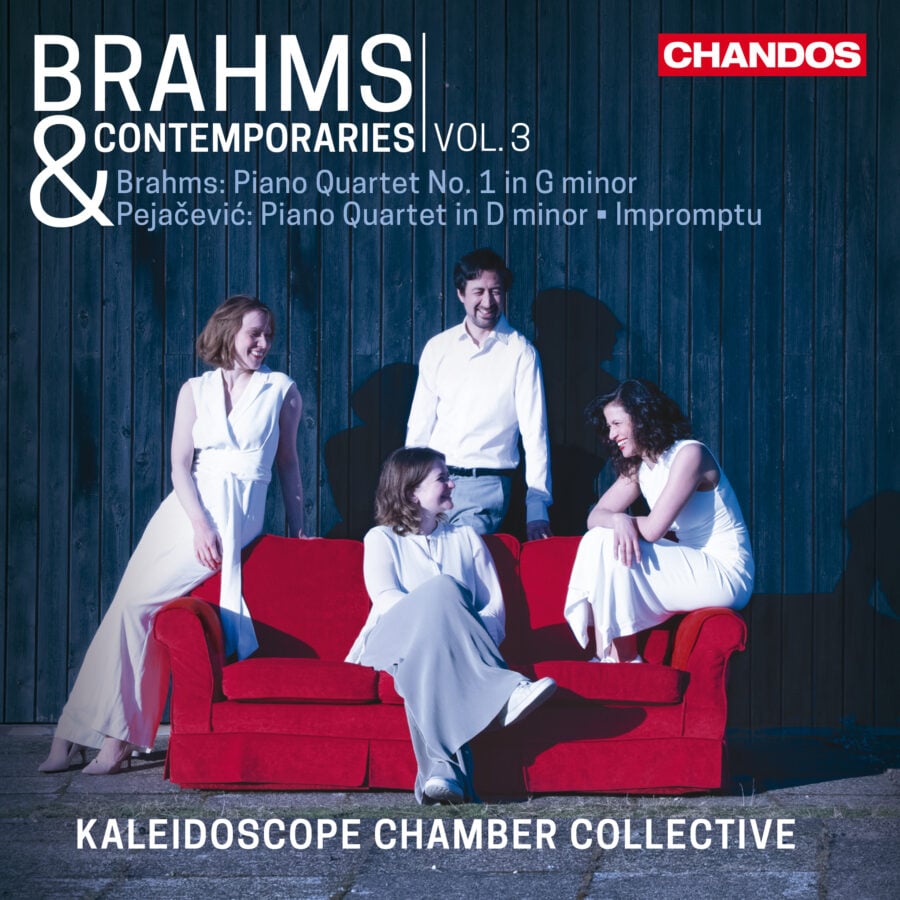
Kaleidoscope Chamber Collective concludes their series of pairing Brahms’s three piano quartets with lesser known contemporaries. The final installment features the Quartet No. 1 paired with Dora Pejačević’s Piano Quartet in D Minor, Op. 25 and her Impromptu for Piano Quartet, Op. 9b. “We can imagine some eyebrows being raised at the description of Dora Pejačević as a contemporary of Brahms; the two composers were born more than fifty years apart, and their lives only overlapped by twelve years. Yet both works by Pejačević are unmistakably from the same compositional lineage as that by Brahms; and both are works written early on in Pejačević’s remarkable (and, sadly, all-too-short) life. Both pieces belong clearly to the romantic tradition, displaying no hint of the more modernist directions which her later works would take. We were immediately intoxicated by the passionate sweep of Pejačević’s Piano Quartet, but also the tenderness of its slow movement, and felt it would make the perfect bedfellow for the First Piano Quartet of Brahms…justly one of the best-loved of all chamber works” – Kaleidoscope Chamber Collective.
This 19th volume of Haydn’s complete symphonies coincides with the 40th anniversary of Il Giardino Armonico – the ensemble created and conducted by Giovanni Antonini, artistic director of the Haydn 2032 series. The Symphony No. 44 in E minor, featured in this volume, was the first work by Haydn performed by the ensemble and Antonini. The title of this symphony, known as the “Funeral Symphony,” inspired the inclusion in this program of Samuel Scheidt’s Paduana à 4, SSWV 43, published in 1621 at the beginning of the bloody Thirty Years’ War, and Arvo Pärt’s Da pacem Domine, dedicated to the memory of the victims of the 2004 Madrid train bombings. “[Da pacem Domine‘s] contemplative fixity and the sad Pavana dolorosa take on an almost cathartic function which, in my opinion, shows a perfect integration between music that is so stylistically and chronologically distant,’ sorays Antonini. The album also includes Haydn’s Symphonies No. 52 in C minor and Symphony No. 108 in B-flat major.