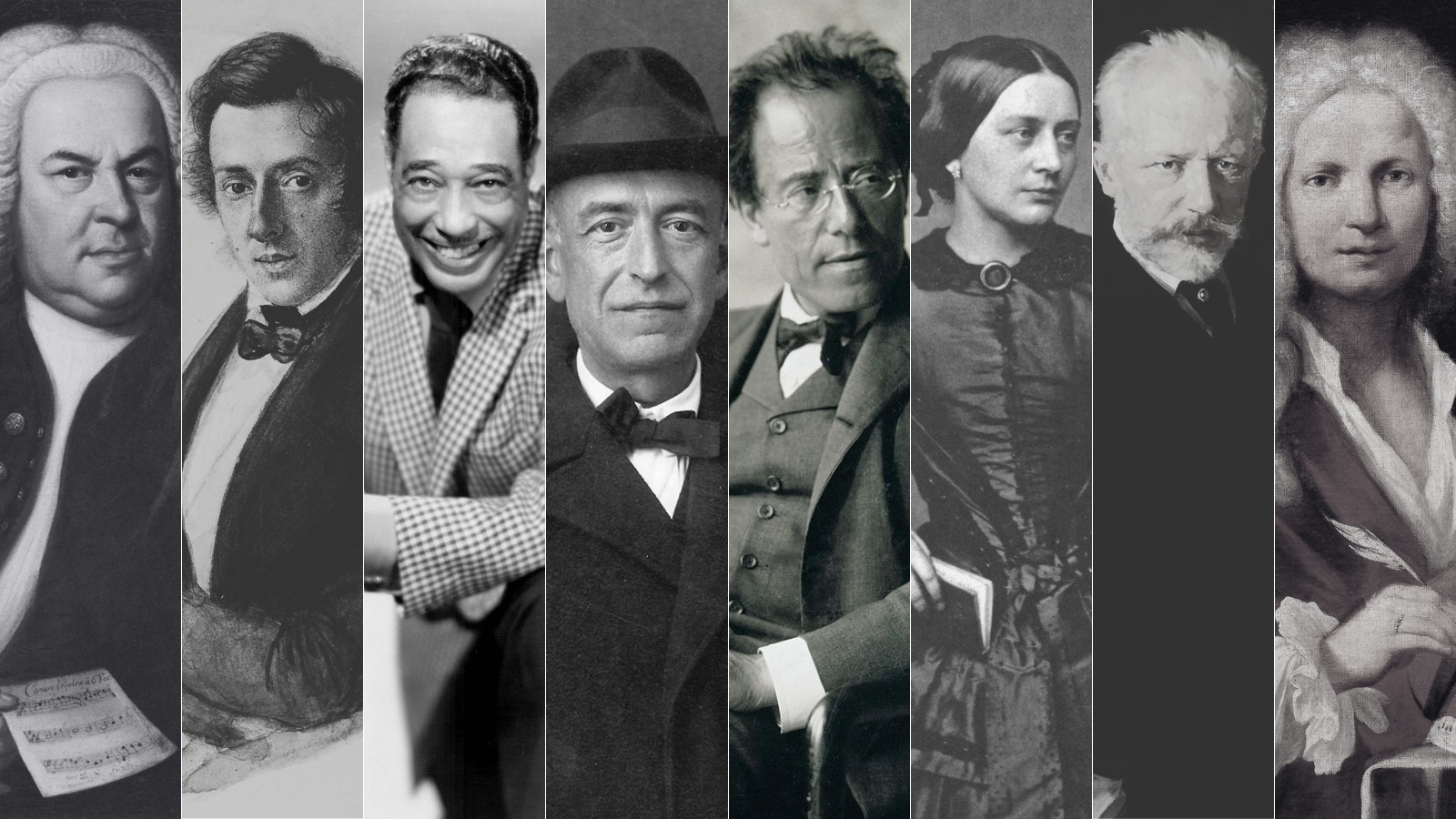
With schools across the country back in session, it’s a fitting time for WFMT listeners to do a little learning of their own. This A-to-Z guide highlights composers worth knowing in the world of classical music, with one for every letter of the alphabet. Whether you’re just beginning to explore or have spent years immersed in the repertoire, there’s someone here to discover – or rediscover!
A - John Adams
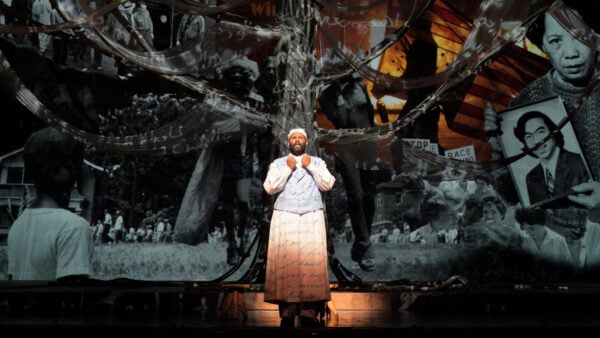
One of today’s most often-performed living composers, John Adams is best known for his opera works, as well as orchestral and chamber pieces. His characteristic, post-modernist style draws from elements of minimalism and neo-romanticism, and tends to be inspired by events from recent history.
B - Johann Sebastian Bach
While there are many incredible composers whose last names start with B, the range of Bach’s music and his influence on classical music as a genre today cannot be understated: from his piano studies in the Well-Tempered Clavier, to works for orchestra, chorus, and solo instruments, few composers have left such a lasting impact on classical music as a whole.
C - Frédéric Chopin
One of the most prominent Polish pianists and composers of all time only lived to be 39 years old. Though he succumbed early to tuberculousis, Chopin's output of Romantic piano repertoire informed many composers in their approach to harmony - even songwriters in other genres!
D - Claude Debussy
Though he disliked the term “Impressionist,” Debussy helped usher in an era of music defined by color and atmosphere, favoring dreamlike landscapes over precise narratives. His shifting harmonies, whole-tone scales, and exploration of unusual timbres left a lasting mark on classical music, from intimate works for solo piano to sweeping orchestral scores.
E - Duke Ellington
Duke Ellington and jazz are practically synonymous, but his contributions to classical music shouldn’t be overlooked. Across suites, concert works, and sacred music, Ellington brought the rhythms and harmonies of jazz to larger forms, creating a body of work that defied easy categorization.
F - Manuel de Falla
One of Spain’s greatest composers, Manuel de Falla was a defining voice of 20th-century classical music. Many of his best-known works fuse the rhythms, melodies, and colors of Spanish folk traditions with a rich, post-Romantic musical language, creating a style that is unmistakably his own.
G - Philip Glass
A definitive voice of the minimalist movement, Philip Glass pushes ideas of repetition and motifs over time to the extreme in his compositions. His influence can be found everywhere, but particularly in the world of film and contemporary chamber music.
H - Franz Joseph Haydn
The classical composer known as “Papa Haydn” earned his nickname from the variety of musical forms he helped to popularize. From the string quartet to the symphony and even sonata form, “Papa” Haydn was instrumental in the development of classical music as we know it – and string music in particular.
I - Jacques Ibert
A French composer from the early 20th century, Ibert is known for his vast and eclectic compositional output that includes seven operas, five ballets, and an array of music for strings, winds, and voice.
J - Scott Joplin
The American composer Scott Joplin was pivotal in the development of ragtime, a style known for its infectious syncopated rhythms. But his ambitions extended well beyond the piano: Joplin also wrote music for strings and opera, revealing a range that received greater recognition only after his death.
K - Erich Wolfgang Korngold
Though Korngold also penned concertos and opera, perhaps his greatest legacy lies in the realm of film music. The 16 film scores he leaves behind contain many of the classic and lush Hollywood sounds that inspired a whole generation of 20th and 21st century composers, including John Williams.
L - Jean Baptiste Lully
The worlds of ballet and opera would not be the same without Jean-Baptiste Lully. A dominant figure of the Baroque era, the 17th-century composer helped shape French opera and ballet while working at the court of King Louis XIV, leaving an enduring mark on music and dance.
M - Gustav Mahler
“A symphony must be like the world, it must embrace everything” is a quote frequently attributed to the Austrian composer Gustav Mahler. He bridged the musical gap between the Romantic era and modern orchestration, producing some of the biggest and longest symphonies ever created.
N - Carl Nielsen
One of Denmark’s most famous composers, Nielsen strove to infuse his classical composition with the spirit and melodies from Danish folk songs. His work as a symphonist is particularly admired among classical musicians today.
O - Jacques Offenbach
This German-born French composer created an influential style of French comic opera called the opérette, and wrote nearly 100 stage works throughout his lifetime.
P - Giacomo Puccini
Puccini is widely regarded as one of the greatest opera composers of all time, representing the Italian opera style of verismo. The majority of his operas are seated firmly within the opera canon, though he also left behind some impressive choral and orchestral works.
Q - Johann Joachim Quantz
While the name Quantz may be unfamiliar to the average classical music fan, his influence on the world of wind music was considerable. The late-Baroque composer spent much of his career at the court of Frederick the Great, composing hundreds of works for flute and even giving the king lessons. His compositions and influential treatise on flute playing were studied by generations of musicians, including Bach, Mozart and Haydn.
R - Sergei Rachmaninoff
A Russian pianist-composer from the 20th century, Rachmaninoff’s compositions often contain virtuoso lines for piano: from solo piano works to chamber pieces and full concertos. Yet it has been reported that one of the composer’s own favorite compositions was his choral work All-Night Vigil, with words taken from Russian Orthodox tradition.
S - Clara Schumann
An in-demand concert pianist during her lifetime, Clara Schumann's brilliant knowledge of instrumental arrangements and gorgeous melodic lines influenced many of the musicians that heard her - even today! She also shared deep musical and personal relationships with two other Romantic-era composers: her husband Robert Schumann, and her friend Johannes Brahms, both of whom only narrowly missed this list.
T - Pyotr Ilyich Tchaikovsky
The Russian composer is responsible for some of the Romantic era’s most beautiful and passionate melodies. From ballets and operas to orchestral works and piano pieces, Tchaikovsky paired an extraordinary gift for melody with a deeply expressive, often melancholic style that remains instantly recognizable.
U - Nobuo Uematsu
Video game music contributed greatly from the contributions of Nobuo Uematsu. While his most famous work can be found in the Final Fantasy series, Uematsu spent most of his life combining orchestral sounds and melodies with new electronic accompaniment.
V - Antonio Vivaldi
One of the Baroque era’s greatest names, Antonio Vivaldi more than lived up to his reputation. The Italian composer transformed the concerto, writing hundreds of works while experimenting with instrumentation, form and orchestral color. His innovations helped shape the sound of Baroque music and influenced generations of composers who followed.
W - Richard Wagner
One of the Baroque era’s greatest names, Antonio Vivaldi more than lived up to his reputation. The Italian composer transformed the concerto, writing hundreds of works while experimenting with instrumentation, form and orchestral color. His innovations helped shape the sound of Baroque music and influenced generations of composers who followed.
X - Iannis Xenakis
Iannis Xenakis was as much an inventor and engineer as he was a composer. The Greek-born musician brought mathematics, architecture and science into his work, most notably through his pioneering use of stochastic music, a compositional approach that uses probability and mathematical processes to shape sound.
Y - Eugène Ysaÿe
The virtuoso violinist is best known for having vastly contributed to the world of modern violin repertoire, pushing new limits on the instrument. He had also written the only opera ever composed in Walloon, a dialect spoken only in certain regions of Brussels and France.
Z - Ellen Taaffe Zwilich
The first female composer to win the Pulitzer Prize, Zwilich is a living American composer known for works ranging in style from atonal to post modernist and even some neoromantic. Her works are regularly performed in major concert halls worldwide.
Check out the full playlist below and follow WFMT on Spotify. Be sure to visit our other lists of composers you should know, including these recommendations by Lisa Flynn!